SEAT Leon FR 2.0 TSI Stage 1 ECU Remap – Power Gains
SEAT Leon FR 2.0 TSI Stage 1 ECU Remap Gains Explained
SEAT Leon FR 2.0 TSI Stage 1 ECU remap gains can be very worthwhile because the car already has a strong turbo petrol engine, but the factory software often leaves some safe and usable performance unused. A well set up Stage 1 remap can improve power, torque, throttle response and everyday drivability without changing the standard hardware.
For many UK owners, the main benefit is simple. The Leon FR feels sharper, pulls harder through the middle of the rev range and becomes easier to drive quickly without feeling difficult or too aggressive. If you want stronger overtaking power without fitting extra parts, Stage 1 tuning is often the most sensible place to start.
DKU Performance is a Walsall based automotive performance specialist with around two decades of hands on experience, offering ECU remapping, custom stainless steel exhaust systems, carbon cleaning, DPF services and vehicle security. For Leon FR owners across Walsall, Birmingham and the wider West Midlands, that means proper checks, custom software work and testing instead of guesswork.
What Is A Stage 1 ECU Remap On The SEAT Leon FR 2.0 TSI?
A Stage 1 ECU remap is a software tune that changes how the engine control unit manages the 2.0 TSI engine. The ECU is the engine's main control system, and it manages fuel, ignition timing, turbo boost, throttle response and torque delivery. If you want a simple background explanation before looking at tuning, the engine control unit page gives a useful neutral overview.
On a SEAT Leon FR 2.0 TSI, Stage 1 tuning keeps the standard intake, turbo, intercooler, exhaust and engine parts in place. The gains come from improving the factory settings, which are usually designed to suit many climates, fuel grades, emissions rules and driver types. That factory setup is safe and sensible, but it is not always the sharpest version of what the engine can deliver.
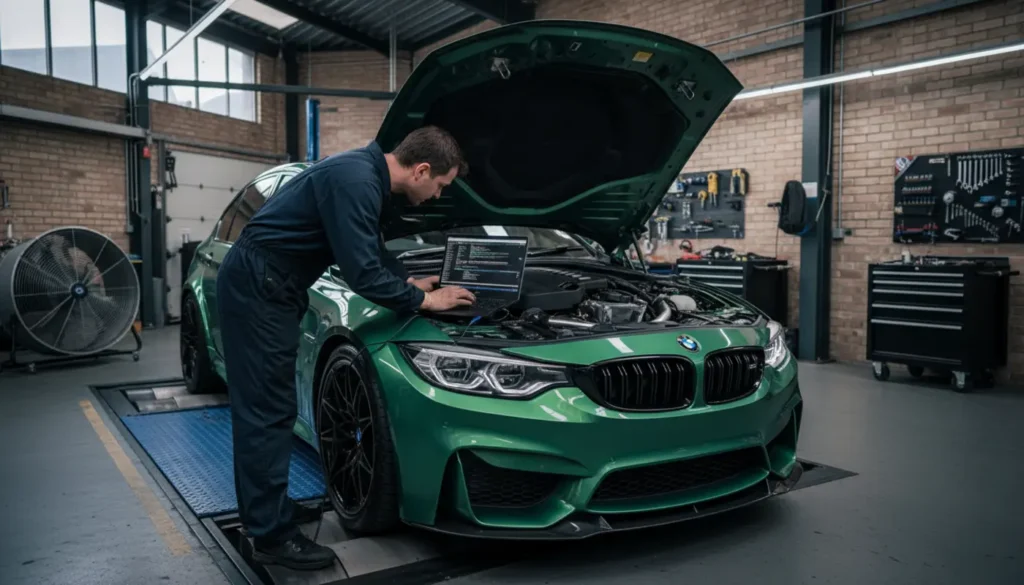
DKU Performance carries out ECU remapping using modern OBD equipment, careful data checks and testing. OBD simply means the diagnostic port used to communicate with the vehicle, read information and apply ECU software where suitable.
What Changes Inside The ECU Software?
A Stage 1 remap improves several key areas at the same time. Boost pressure targets are adjusted so the turbo can deliver stronger airflow where the engine can safely use it. In simple terms, the turbo helps the engine breathe better when you ask for power. Fuel maps are refined so the engine gets the right amount of fuel under load. Ignition timing is carefully set so combustion happens at the right moment, helping the engine make power without encouraging knock, which is unwanted combustion that can put stress on the engine.
Throttle response can also be improved, and this is often one of the first things drivers notice. The accelerator feels more connected, and the car reacts more quickly when you ask for power. It will not turn a tired engine into a perfect one, but it can help a healthy 2.0 TSI perform closer to its true ability.
SEAT Leon FR 2.0 TSI Stage 1 Remap Power Gains
SEAT Leon FR 2.0 TSI Stage 1 remap power gains depend on the exact model year, engine version, gearbox, fuel quality and the condition of the car. Different Leon FR 2.0 TSI models have been sold with factory power figures in the region of 190 PS to 211 PS, with torque figures commonly around 280 Nm to 320 Nm depending on the generation and specification.
As a realistic guide, a healthy 2.0 TSI Leon FR can see a clear uplift that moves it into a much stronger performance range. Many owners find the car feels closer to higher output Volkswagen Group models, especially through the middle of the rev range where turbo torque matters most. Exact dyno figures should always be confirmed on the individual vehicle rather than copied from an online comment at one in the morning.
Typical Stage 1 results for this type of engine can often place the car around the mid 230 PS to mid 250 PS area, with torque potentially rising into the high 300 Nm range on suitable engines. These are realistic expectations, not guaranteed numbers, because every car responds slightly differently. A well maintained car running quality fuel will usually give the tuner a better base than one with old spark plugs, tired coils and missing service history.
Before And After Driving Feel
The biggest change is usually not only the peak power figure. It is the way the car pulls from lower and middle revs. Joining a motorway, overtaking on an A road and accelerating out of a roundabout all feel easier because the engine delivers more torque with less effort.
In standard form, the Leon FR 2.0 TSI is already a capable daily performance hatch. After a careful Stage 1 remap, it can feel more alert and flexible, with less need to drop gears. DSG models can feel especially strong because the extra torque works well with quick gear changes, while manual cars gain that satisfying push when boost comes in smoothly.
Factory 0 to 62 mph times for different versions sit around the low 7 second range. With a strong Stage 1 tune, good tyres, suitable conditions and a healthy drivetrain, some owners may see this drop towards the mid 6 second area. Treat that as a sensible expectation rather than a promise, as traction, gearbox type, temperature and road surface all play a part.
How DKU Performance Tunes The SEAT Leon FR 2.0 TSI
DKU Performance follows a careful ECU tuning process that starts with understanding the car in front of them. The team checks current engine performance, reviews key data and uses live vehicle information before making changes. This matters because two cars that look the same can behave differently once you check boost, timing correction, fuel delivery and fault codes.
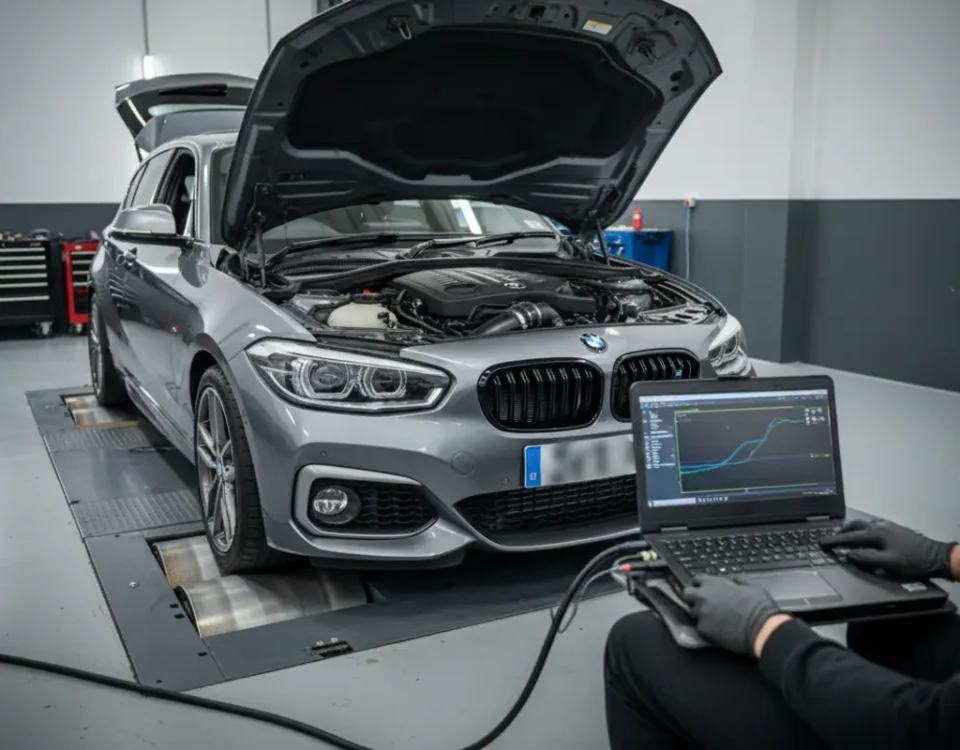
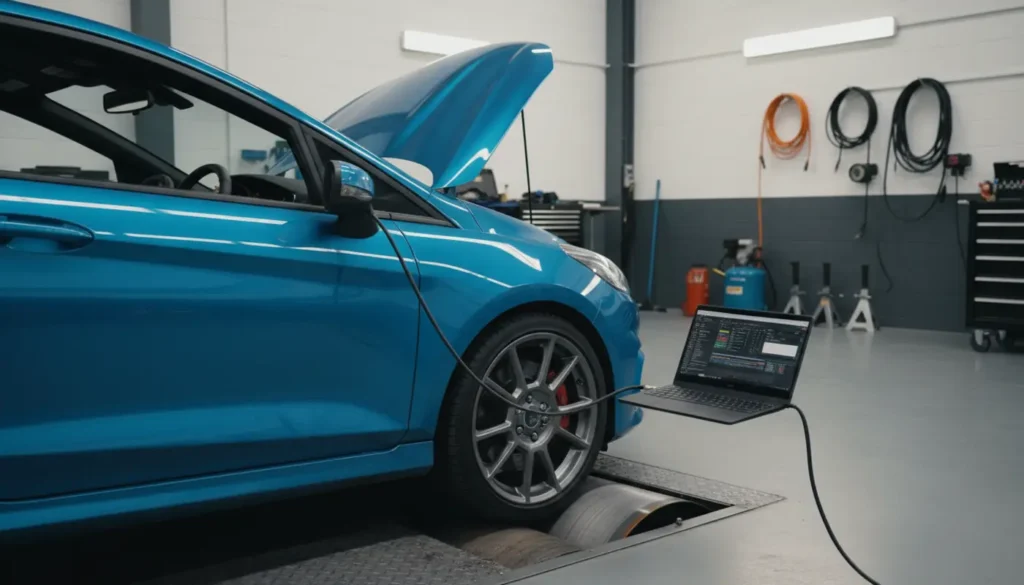
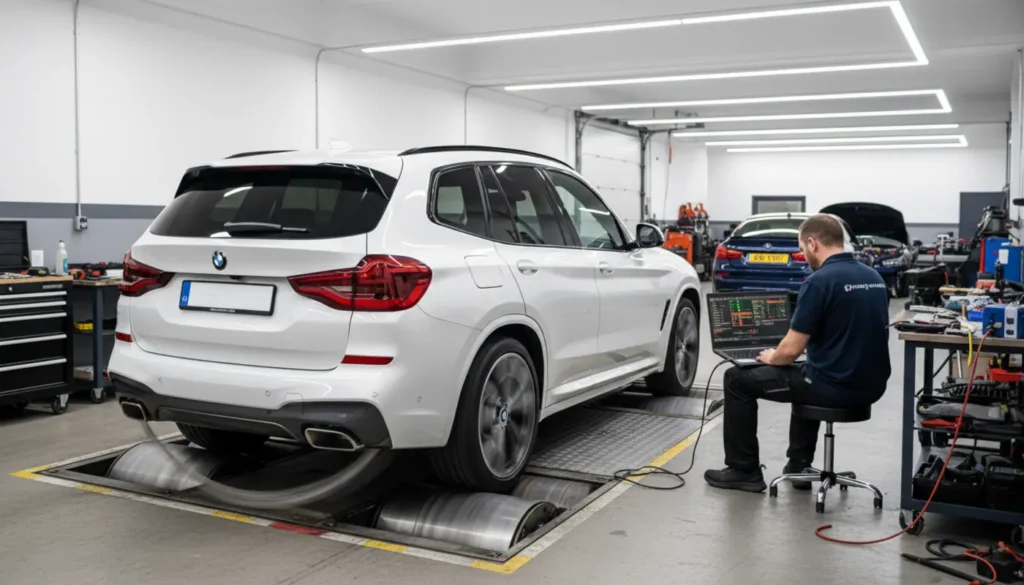
The DKU team accesses the original ECU data through the OBD port where suitable, then reviews it so they can adjust the software to suit the engine and the owner's goals. They can fine tune ignition timing and fuel delivery to improve performance while keeping reliability in mind. The team then tests and checks the results using dyno equipment and real driving, with a detailed performance report giving the customer clear information.
This approach is why professional tuning is different from loading a generic file and hoping for the best. A proper remap respects the condition of the engine, the fuel the owner uses and how the car will be driven on UK roads. For a broader look at professional tuning and upgrades, DKU also provides tuning upgrades for drivers who want a more complete performance route.
What Is Included In A Stage 1 Remap?
A proper Stage 1 remap for the SEAT Leon FR 2.0 TSI focuses on safe improvement rather than chasing wild numbers. The main areas normally include boost pressure optimisation, fuel map refinement, ignition timing adjustment and throttle response tuning. Torque limiters may also be reviewed. These are software limits that help manage how much turning force the engine and gearbox can deliver, so any changes need to be controlled rather than rushed.
The best results come from balance. Too much boost without the right fuel and timing can create heat and stress. Too much ignition advance can increase the risk of knock. A good tuner looks at the whole picture, then leaves sensible margins so the car remains enjoyable on a wet Tuesday commute as well as a dry Sunday drive.
- Boost Pressure Optimisation: Helps the turbo deliver stronger airflow where the engine can use it safely.
- Fuel Map Refinement: Supports clean combustion and steady power under load.
- Ignition Timing Adjustment: Improves efficiency and power while respecting knock control limits.
- Throttle Response Tuning: Makes the car feel sharper and more responsive to driver input.
- Data Logging And Testing: Records how the engine behaves before and after tuning, so the results can be checked properly.
Stage 1 Vs Stage 2 For The SEAT Leon FR 2.0 TSI
Stage 1 is usually the best fit for UK daily drivers because it gives a clear improvement without needing supporting hardware. It keeps costs sensible, maintains a factory like ownership feel and works well for commuters who want more punch without changing the character of the car. If you want a strong but simple upgrade rather than a bigger build, Stage 1 is often the right place to begin.
Stage 2 is a bigger step. It normally involves supporting modifications such as improved intake flow, a freer flowing exhaust setup, uprated intercooling or other parts depending on the exact engine and goals. At that point, software is written around the hardware rather than the standard setup. DKU Performance is known for designing and building custom stainless steel exhaust systems in house, so owners planning a wider upgrade path can also explore custom exhaust systems where relevant.
If you are comparing both routes, the key question is not simply which makes more power. It is which stage suits your driving, insurance position, budget and comfort with extra modifications. For a deeper look at the next step, DKU has a helpful article on Stage 2 remapping.
Fuel Economy And Daily Driving After A Stage 1 Remap
A Stage 1 remap can improve fuel economy in the right conditions because the engine may need less throttle input to maintain the same speed. On steady motorway runs or gentle A road driving, the extra torque can make the car feel more relaxed. That can be useful for West Midlands drivers travelling between Walsall, Birmingham, Wolverhampton and nearby areas.
There is an honest catch. If you use the extra power all the time, fuel use will increase. More boost and stronger acceleration need more fuel, so your right foot still has the final say. The remap gives the engine more ability, but it cannot make spirited driving use the same fuel as gentle cruising.
For daily use, many owners value the driving feel as much as the MPG. The car feels less strained, responds faster and makes overtaking feel more confident because you spend less time waiting for the engine to wake up. A well set up Stage 1 tune should feel smooth and natural, not aggressive or jerky.
Insurance MOT And Legal Points For UK Owners
A Stage 1 ECU remap is a performance modification, so UK owners should declare it to their insurer. Even though there may be no visible hardware change, the car no longer matches its factory performance specification. Declaring the remap is the safer route and helps avoid problems if you ever need to make a claim.
For MOT purposes, a Stage 1 software tune on a petrol car should not involve removing emissions equipment or making the vehicle illegal for road use. The important point is that the car must still meet the required emissions standards and remain roadworthy. DKU Performance takes a responsible approach to legality and safety, following the clear rule that using an illegally modified vehicle on public roads is an offence.
Warranty is another area to think about. If your SEAT is still covered by manufacturer warranty, a remap may affect related claims. It is worth checking your documents before tuning, especially if the car is newer or on a finance agreement. Sensible tuning starts with clear expectations, not awkward surprises later.
Keeping Your 2.0 TSI Reliable After Remapping
Reliability starts before the remap. A healthy engine with fresh oil, good spark plugs, sound ignition coils and no boost leaks is far better prepared for tuning. If the car already has warning lights, poor idle, misfires or unknown service history, those issues should be fixed first.
After a Stage 1 remap, maintenance becomes even more important. Use good quality fuel, keep oil changes sensible and listen for changes in how the car behaves. If something feels wrong, get it checked rather than carrying on until a small issue becomes an expensive one.
DKU Performance's experience across a wide range of vehicles helps here, as the workshop sees both everyday cars and performance models. Their published work includes SEAT projects such as a SEAT Leon FR 2.0 case study, showing the team's familiarity with Leon platforms and enthusiast led upgrades.
Why West Midlands Leon FR Owners Choose DKU Performance
SEAT Leon FR owners across Walsall, Birmingham and the wider West Midlands choose DKU Performance because the team combines tuning knowledge with practical workshop experience. The company was built by an enthusiast with a long background in high performance cars, custom stainless steel exhaust fabrication and hands on vehicle upgrades.
That background matters when you are trusting someone with your ECU. A good remap is not just about making a dyno graph look impressive. It is about making the car stronger, smoother and more enjoyable while keeping it suitable for daily UK driving. DKU Performance supports that with OBD based ECU work, dyno and road checks, tuning around driver goals and customer focused service.
If your SEAT Leon FR 2.0 TSI feels like it has more to give, a Stage 1 ECU remap can be one of the most effective upgrades available. Done properly, it unlocks stronger power, better torque and sharper response without turning the car into something difficult to live with. If you would like friendly advice, a health check or a quote for a Stage 1 remap, contact DKU Performance and speak to the team about the best route for your Leon FR.
Frequently Asked Questions
Does A Stage 1 Remap Need Hardware Changes?
No, Stage 1 is designed for standard hardware. The gains come from ECU software optimisation rather than fitting extra parts.
How Much Power Can A SEAT Leon FR 2.0 TSI Gain?
Many healthy 2.0 TSI engines can see a strong increase, often moving into the mid 230 PS to mid 250 PS range depending on the exact version. A dyno test is the best way to confirm real figures.
Will A Stage 1 Remap Improve Fuel Economy?
It can improve MPG during gentle cruising because the engine may need less throttle input. Hard driving will use more fuel because you are asking the engine for more power.
Do I Need To Tell My Insurance Company?
Yes, a remap changes the vehicle from factory specification and should be declared. Always speak to your insurer before or immediately after tuning.
Is Stage 1 Safe For Daily Driving?
Stage 1 can be safe for daily use when the car is healthy and the software is set up professionally. Regular servicing and good fuel help keep the tuned engine running properly.
Is The Car Checked Before Tuning?
Yes, a professional Stage 1 remap should include checks before the software is adjusted. DKU Performance reviews the vehicle, checks key data and makes sure the car is suitable before tuning begins.