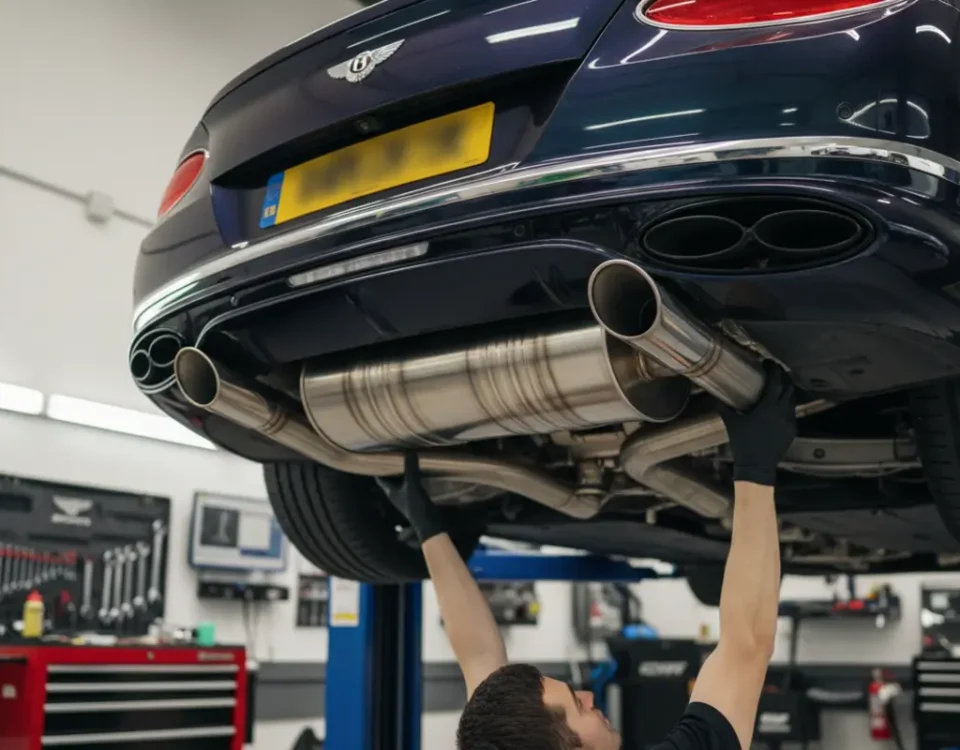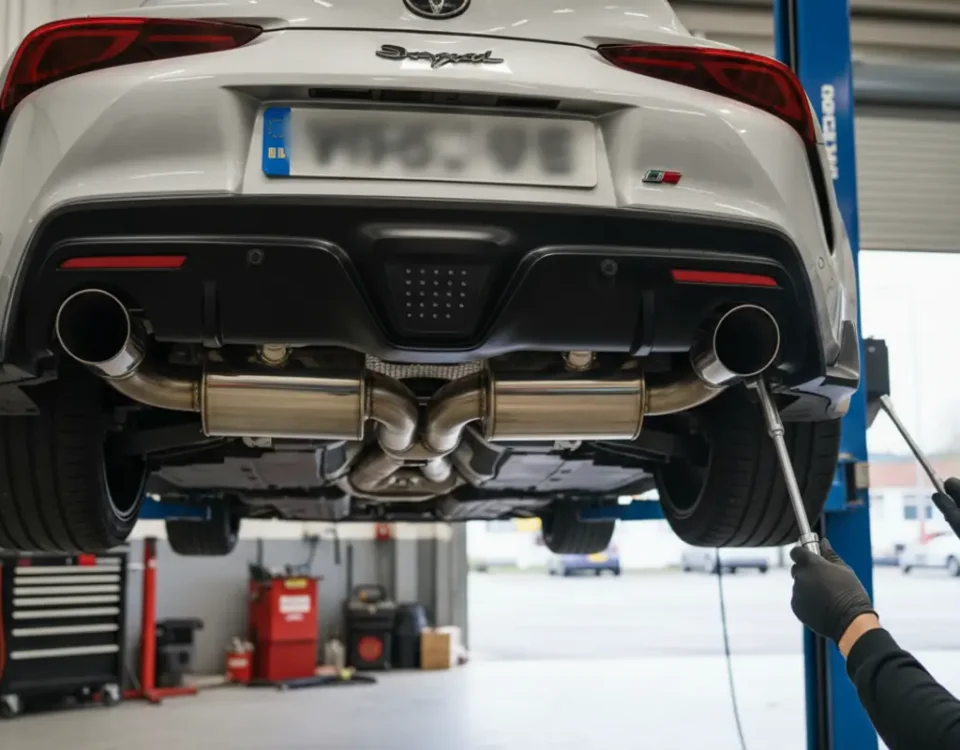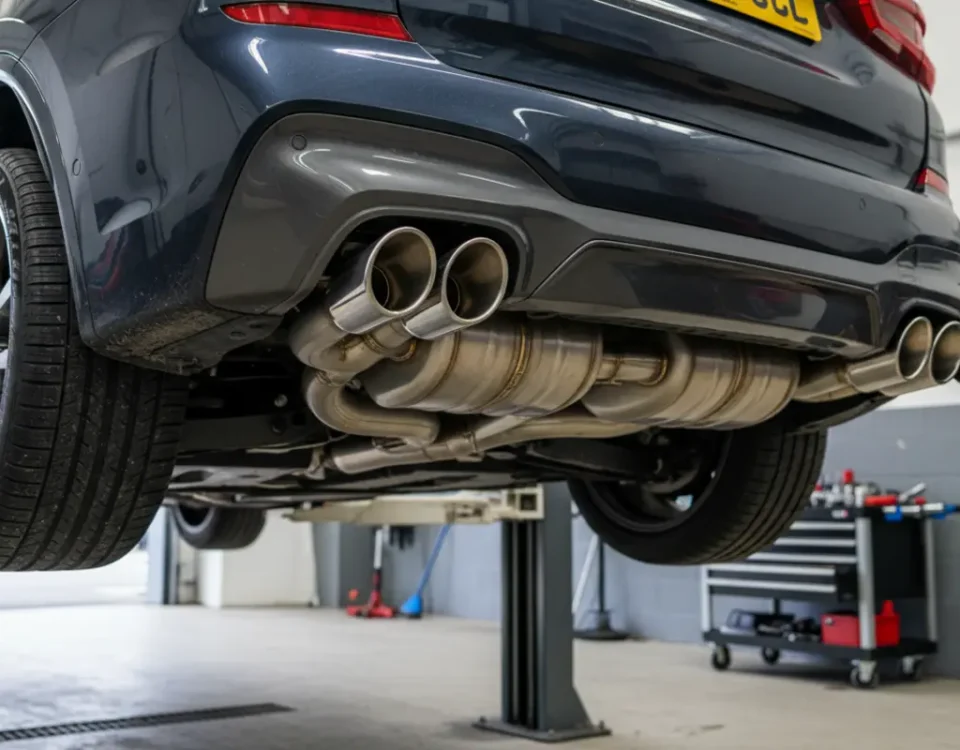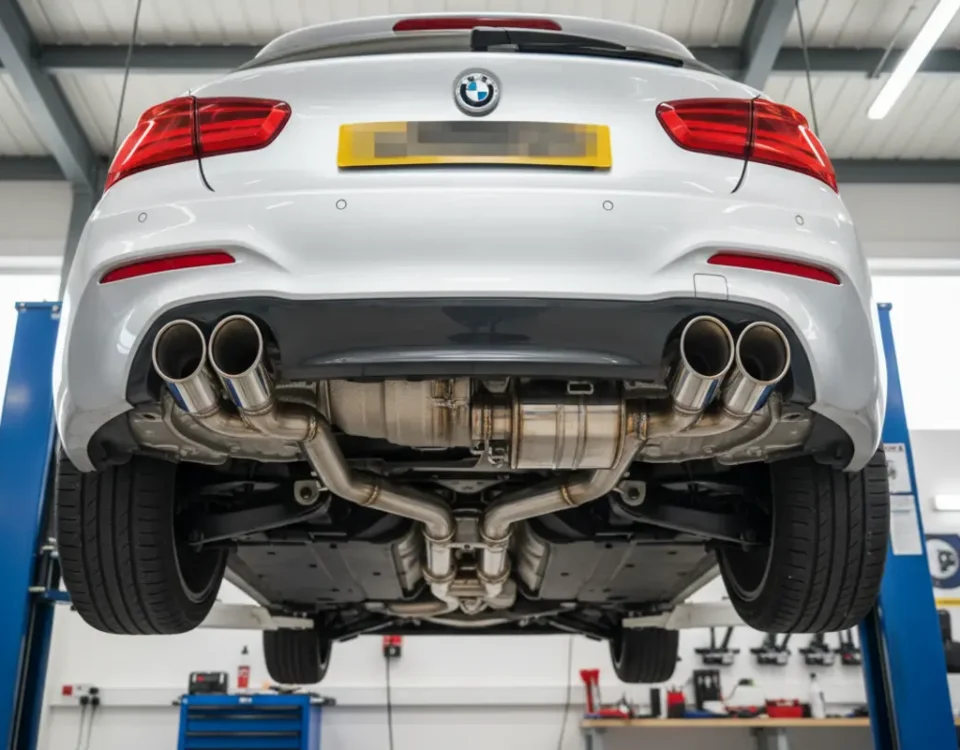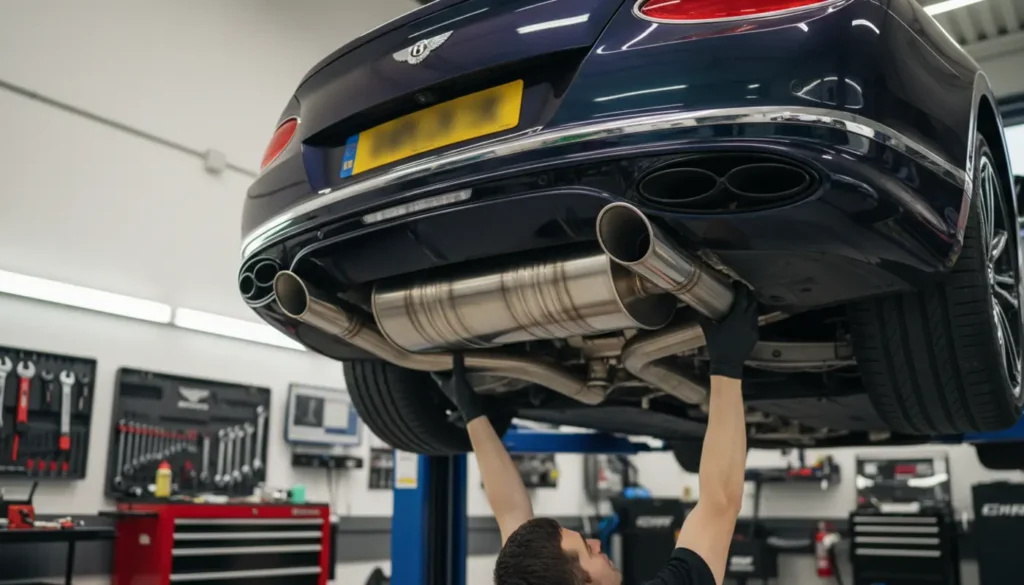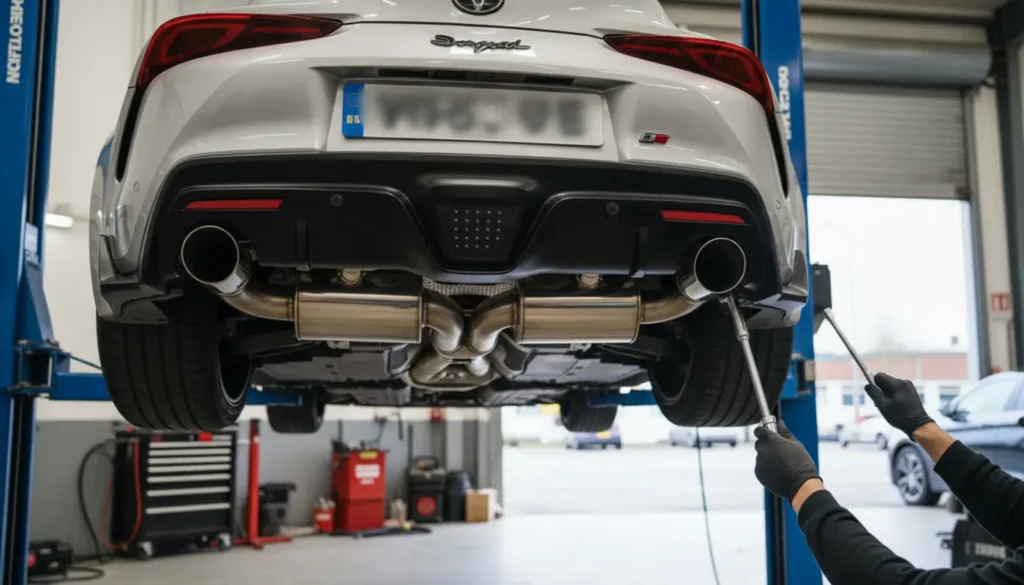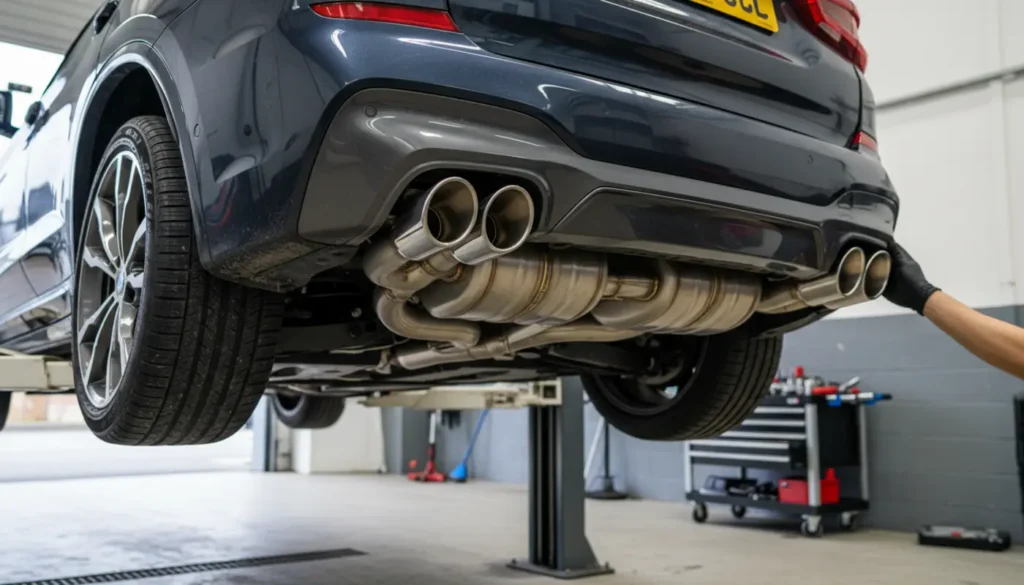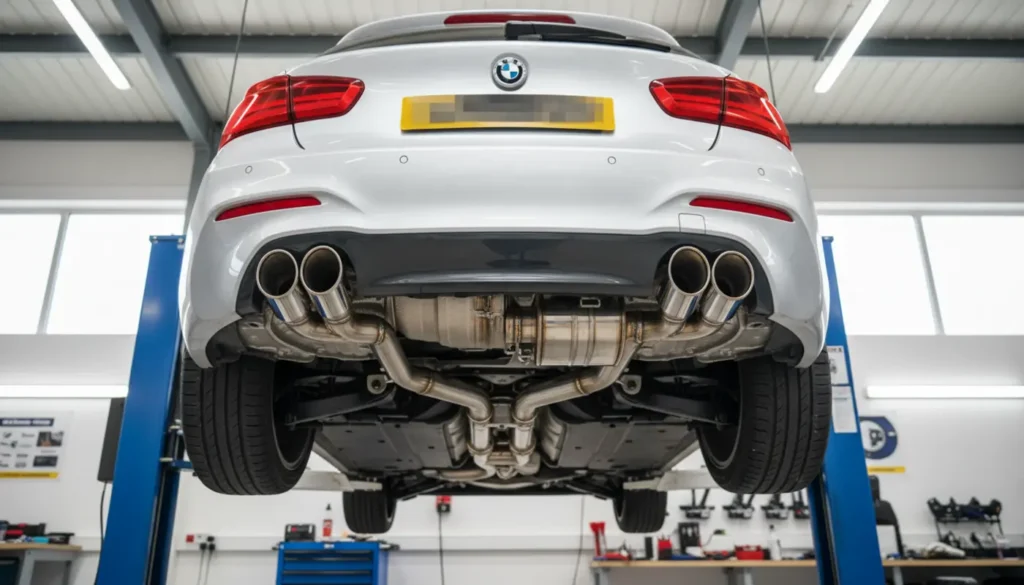
Range Rover Sport SVR Performance Exhaust Near Walsall
A Range Rover Sport SVR performance exhaust near Walsall is ideal if you want your supercharged V8 to sound richer, breathe better and feel more responsive without making every journey noisy or tiring. The SVR already has serious factory character, but a well designed bespoke exhaust can bring out more depth, sharper tone and a more personal finish while keeping the car suitable for real UK roads.
Many SVR owners want more drama from the standard system, but they also want comfort on the motorway, clean fitment and a premium look at the rear of the car. That is where a custom build makes sense, because the exhaust can be made around how you actually use the vehicle.
DKU Performance helps Range Rover Sport SVR owners across Walsall and the West Midlands with in house custom stainless steel exhaust design, fabrication and fitting. The work is backed by hands on performance car experience and a lifetime guarantee on custom exhaust systems.
Range Rover Sport SVR Performance Exhaust Near Walsall
A Range Rover Sport SVR performance exhaust near Walsall gives owners a tailored way to improve V8 sound, exhaust flow and rear end style without relying on a standard off the shelf system. The supercharged 5.0 litre V8 is a strong base for this upgrade because it already has a deep note and moves a large amount of exhaust gas, so the right system can make the car feel more alive.
The exhaust on a high power SUV has an important job. It must move hot gases away from the engine, control noise, protect comfort and still let the car feel special when you press the throttle. The original system has to suit a wide range of markets, noise limits and driver tastes, which means it cannot be perfect for every owner.
A bespoke system can be built around your priorities instead. You may want a stronger cold start, a deeper idle, more growl under load, cleaner tailpipes or a smoother performance feel. If you want to understand the basics first, DKU Performance has a helpful page on custom exhaust systems and how they are built around sound, flow and fitment.
Why The Factory SVR Exhaust Still Leaves Room For More
The factory SVR exhaust is not quiet, and it already gives the car plenty of character. Even so, it is still built with compromise in mind. It has to be civilised for early starts, calm enough for long journeys and suitable for many different owners, including people who may not want a loud V8 all the time.
A bespoke performance exhaust lets the sound profile be tuned with more care. Instead of simply making the car louder, a proper system focuses on tone, volume, resonance and flow. On a supercharged V8, the usual aim is a deeper idle, a cleaner growl through the rev range and a more exciting sound when the throttle opens. Done well, it feels like the SVR has finally cleared its throat. Done badly, it can boom through the cabin on the M6, and nobody needs that on a long drive.
Why Walsall And West Midlands Owners Choose Bespoke Exhausts
Walsall and West Midlands owners often choose bespoke exhausts because their Range Rover Sport SVR has to cope with mixed driving, from daily commutes and school runs to motorway trips and weekend drives. A one size fits all exhaust is not always the best answer when the same car needs to be exciting one day and easy to live with the next.
For example, a driver who spends plenty of time on the M6 may want strong V8 sound without cabin boom at cruising speed. Someone who mainly uses the car at weekends may want a more aggressive tone. Another owner may care most about premium tailpipe style and long term resistance to rust. DKU Performance builds made to measure stainless steel systems in house, so the conversation starts with what you want the car to do, not what happens to be sitting on a shelf.
Performance Benefits Of A Range Rover Sport SVR Exhaust
A Range Rover Sport SVR exhaust can improve gas flow, reduce restriction and help the engine push exhaust gases out more easily. In simple terms, the engine can breathe out with less effort, which can support sharper throttle response, a stronger performance feel and more eager power delivery, especially when the exhaust is part of a wider tuning plan.
It is important to keep expectations realistic. An exhaust alone should not be treated as a magic power fix, especially on a modern performance SUV that is already highly developed. The biggest difference most owners notice first is sound and response. The car feels more alive, more immediate and more connected to the throttle. DKU Performance can also support wider performance upgrades where the exhaust is part of a larger plan rather than a single change.
Improved Flow And Reduced Back Pressure Explained Simply
Back pressure is resistance inside the exhaust system. Some control is normal, but too much restriction can make it harder for the engine to clear exhaust gases. A well designed performance exhaust uses the right pipe size, smooth bends and carefully chosen silencers to improve flow without harming day to day driving.
This is where fabrication quality matters. Bigger pipework is not always better, and removing every silencer is not clever engineering. The right design keeps gas speed healthy, manages heat and protects the sound character you actually want. On a large V8 SUV, balance is everything because the car needs to feel special under load while staying comfortable on normal roads.
DKU Performance Exhaust Fabrication Near Walsall
DKU Performance is a West Midlands performance specialist with around two decades of hands on experience, including custom stainless steel exhaust fabrication, ECU remapping, carbon cleaning, DPF work and vehicle security systems. The team designs, fabricates and fits custom exhausts in house, using high quality T304 stainless steel and mandrel bends to create clean, strong and accurate pipework.
For Range Rover Sport SVR owners, that means the system can be tailored around the vehicle, the desired sound and the way the car is used. The workshop can guide you through silencer and resonator choices, tailpipe style and the level of sound you want. You can also view completed work through the DKU Performance Range Rover SVR V8 case study, which is useful if you want to see real project experience rather than just hear nice words.
When you contact DKU Performance, the process starts with a proper conversation. How do you use the car day to day? Do you want motorway comfort, a deeper idle or a more dramatic weekend sound? The team can talk through sound goals, material choice, tailpipe style, daily use and MOT expectations before any fabrication begins.
Material Choices For A Range Rover Sport SVR Exhaust Build
The material used for a Range Rover Sport SVR exhaust affects durability, cost, weight, appearance and long term ownership. For most UK performance exhaust builds, T304 stainless steel is the sensible premium choice because it offers strong resistance to corrosion and excellent durability for road use. DKU Performance uses high quality T304 stainless steel for its custom systems, which suits the British climate well, including wet roads, winter grime and salted surfaces.
T316 stainless steel is often discussed because it offers greater corrosion resistance in harsh conditions, especially where salt exposure is extreme. It can be a strong choice for owners who want maximum protection, although it may cost more and is not always needed for every road car. Titanium is the lightweight premium option. It can reduce weight and has excellent corrosion resistance, but the price is usually much higher, and the sound can be sharper than stainless steel. For a heavy luxury performance SUV, many owners still find T304 stainless steel the best balance of strength, tone and value.
- T304 Stainless Steel: Strong, durable, corrosion resistant and ideal for most UK performance exhaust builds.
- T316 Stainless Steel: Offers extra corrosion protection, useful for owners who want a more specialised material choice.
- Titanium: Lightweight and premium, but usually more expensive and not always the most practical daily road option.
Cat Back, Secondary Cat Delete And Full System Options
Cat back, secondary cat delete and full system options suit different Range Rover Sport SVR owners depending on how much sound, flow and change they want. A cat back exhaust replaces the section after the catalytic converters, usually including centre sections, rear silencers and tailpipes. It is often the most sensible road focused option because it can improve sound and flow while keeping emissions equipment in place.
A secondary cat delete changes the sound more strongly and may reduce restriction, but it needs careful thought because changes to catalytic converter sections can affect emissions compliance and road legality. A full system goes further again, replacing more of the exhaust path and usually needing more planning. Because the SVR uses a supercharged V8 rather than a turbocharged engine, options are usually discussed as cat back, secondary cat changes or wider full exhaust work rather than turbo based exhaust systems. Before choosing any route, it is worth reading about cat back exhaust systems so you understand what is being changed and what is being left alone.
The best option depends on how you use the car. If your SVR is a daily driver, a refined cat back system with tuned silencers may be ideal. If it is a weekend car, you may want more volume and drama. If you are chasing maximum performance as part of a larger package, exhaust work may sit alongside ECU remapping, where the engine control software is adjusted to suit your performance goals.
Sound Engineering Without Unwanted Drone
Sound engineering without unwanted drone means shaping the exhaust note so the SVR sounds strong when you want it to, but stays calm during steady driving. Good exhaust sound is not just about volume. It is about frequency, tone and how the system behaves at different engine speeds. Drone happens when the exhaust creates a constant booming sound inside the cabin, usually at steady cruising rpm.
To reduce drone, a specialist fabricator can use the correct silencers, resonators, pipe routing and internal design. Resonators help tune unwanted frequencies, while silencers control overall volume and smooth harshness. Pipe diameter also matters because overly large pipework can change gas speed and sound in ways that feel unpleasant. The aim is simple, full V8 theatre when you want it and calm manners when you do not.
Some SVR owners prefer a valved system, where sound can be adjusted depending on driving mode or throttle input. Others like a fixed sound that is always present but still refined. Neither choice is automatically better. The right answer depends on your tolerance for noise, where you drive and whether passengers regularly use the car. If family comfort matters, say so at the start. A good exhaust specialist will not judge you for wanting your supercharged V8 to behave near sleeping children. Probably.
Craftsmanship And Fitment Standards That Matter
Craftsmanship and fitment standards matter because a Range Rover Sport SVR exhaust has to fit safely, sound right and look correct from the rear of the vehicle. Custom exhaust fabrication is not just about welding pipes together. The system has to fit around the vehicle underside, suspension movement, heat areas, rear bumper layout and factory mounting points.
Poor fitment can cause rattles, knocks, stress cracks and heat issues. It can also make the rear of the car look uneven, which is a small detail until you notice it every time you walk up to the boot. DKU Performance uses T304 mandrel bends, which help maintain a smooth internal diameter through curved sections. That supports flow and gives the finished pipework a cleaner, more professional shape.
Strong brackets, suitable clamps and correctly positioned hangers also matter because the exhaust expands when hot and moves with the car. A system that is too tight or badly supported can become noisy for all the wrong reasons. Welding quality is another important sign of a proper build. Neat TIG welding supports strong joints, clean sealing and a premium finish that looks as good as it performs. With a bespoke exhaust, every section should have a purpose, from the bend angle to the silencer choice.
UK MOT Compliance And Road Legality For SVR Exhausts
UK MOT compliance and road legality should be considered before any Range Rover Sport SVR exhaust work begins. An exhaust must be secure, in good condition and not clearly louder than is reasonable for road use. DVSA guidance and MOT standards expect road exhausts to be suitable for normal UK road use, which means they should not be excessively loud.
Emissions equipment also matters, and removing or altering parts that affect emissions can create MOT and legal problems. The safest approach is to discuss road use, MOT expectations and emissions compliance before choosing a system design. For neutral background on MOT inspection standards, the official MOT inspection manual is a useful reference. It is not bedtime reading unless you really love testing rules, but it helps show why responsible exhaust design matters.
DKU Performance takes a responsible approach and does not encourage illegal road use. If a modification is intended for public roads, it should be planned with compliance in mind. If a vehicle is modified in a way that no longer meets the standards it was designed to meet, that can lead to trouble. The sensible route is to be honest about your goals, your usage and whether the car needs to remain fully road friendly.
Why SVR Owners Across Walsall And Birmingham Choose DKU Performance
SVR owners across Walsall and Birmingham choose DKU Performance because they want a specialist that understands performance cars, custom fabrication and customer service. The company was built from a genuine passion for high performance vehicles, with experience that began in custom stainless steel exhausts and grew into a wider performance workshop serving many marques, including Land Rover and Range Rover models.
The appeal is not just the sound. It is the full process. You can discuss what you want, choose a suitable sound level, agree the look, understand your material options and have the system built and fitted in house. DKU Performance also offers a lifetime guarantee on custom exhaust systems and 0% APR finance over selected terms, which can make a premium build easier to plan.
If you are near Walsall, Birmingham or the wider West Midlands, the best next step is to speak with the team about how you use your SVR. Bring your wish list, your concerns and your honest noise tolerance. From there, DKU Performance can help shape a bespoke exhaust that suits the car, the roads you drive and the way you want the V8 to feel every day.
Frequently Asked Questions
Will A Performance Exhaust Make My Range Rover Sport SVR Much Louder?
It can, but it does not have to be excessive. A bespoke system can be designed for anything from a deeper refined tone to a much more aggressive V8 sound.
Is A Cat Back Exhaust A Good Choice For UK Road Use?
Yes, a cat back system is often a sensible road focused option because it usually keeps emissions equipment in place while improving sound and flow.
Can DKU Performance Build A Drone Free SVR Exhaust?
DKU Performance can tune the system using suitable pipework, silencers and resonators to reduce unwanted cabin drone while keeping strong V8 character.
Will An Exhaust Upgrade Affect My MOT?
It depends on what is changed. Exhausts should remain secure, emissions compliant and suitable for road use, so always discuss MOT expectations before work begins.
Is Stainless Steel Better Than Titanium For An SVR Exhaust?
For many UK owners, T304 stainless steel offers the best mix of durability, sound and value. Titanium is lighter and more premium, but it is usually much more expensive.