Ford Mustang GT 5.0 V8 ECU Remap – Performance Upgrade UK
A Ford Mustang GT 5.0 V8 ECU remap is a software performance upgrade that adjusts the way the engine responds, delivers power, and uses fuel under load. For UK owners, the aim is usually not to change the Mustang's character, but to make the Coyote V8 feel sharper, smoother, and more connected to the throttle while keeping the car reliable and usable on the road.
If you own a Mustang GT in the UK, you probably already love the noise, the drama, and that big V8 feeling. A careful remap can improve the way the car reacts when you press the pedal, especially when overtaking, pulling through the mid range, or enjoying the car on open roads. The best results come from realistic expectations, good fuel, and a healthy engine before tuning begins.
The Mustang GT is not a small turbo car where software alone can add huge boost and create a big jump in power. It is a high capacity V8 that responds best to careful settings, proper testing, and sensible support from the right hardware. DKU Performance helps UK Mustang owners approach this properly, with ECU remapping, rolling road testing, real road checks, custom stainless steel exhaust work, and a workshop approach focused on safe, customer led upgrades.
Ford Mustang GT 5.0 V8 ECU Remap For UK Performance
A Ford Mustang GT 5.0 V8 ECU remap improves UK performance by adjusting the engine software to suit the car, the fuel it uses, and the way it is driven. The factory settings must work across many countries, climates, fuel grades, and driving conditions, so there is often room to improve throttle response, power delivery, and overall drivability on UK roads.
For many owners, the goal is not to turn the Mustang into a track only car. It is to make the Coyote V8 feel more alert without losing the smooth idle, easy cruising ability, and everyday comfort that make the car enjoyable. A well written remap should help the engine respond more naturally, pull more cleanly through the rev range, and feel less held back when you ask for power.
Professional ECU remapping makes sense when the tune is built around the condition of the car rather than loaded as a generic file. The Mustang should still start cleanly, idle smoothly, behave well in traffic, and remain practical for normal use. A tune that feels exciting for one hard pull but awkward for the rest of the week is not a good road tune.
What An ECU Remap Changes On The 5.0 Coyote V8
An ECU remap changes the engine control settings that manage fuel delivery, ignition timing, throttle response, and safe operating limits. The ECU is the car's engine control centre, using sensor data to decide how the engine runs in different conditions. For a simple background explanation, the engine control unit overview is a useful reference.
On the Ford Mustang GT 5.0 V8, tuning is about careful adjustment rather than quick tricks. Fuel settings help the engine receive the right amount of fuel for the air it is using. Ignition timing controls when the spark fires, which can improve power and response when set safely. Throttle mapping changes how pedal movement becomes engine response, making the car feel more eager without making it jumpy or hard to drive smoothly.
Some limiter settings may also be reviewed, but this should always be done with care. The Coyote V8 enjoys revs, but that does not mean it should be pushed beyond safe limits without thought for oil temperature, engine health, fuel quality, and long term reliability. A proper tune is checked with data, tested under load, and reviewed carefully instead of simply being flashed onto the car and forgotten.
Why Naturally Aspirated Mustang Tuning Needs Realistic Expectations
Naturally aspirated Mustang tuning needs realistic expectations because the 5.0 V8 does not have turbo boost to increase through software. On many turbocharged cars, a tuner can request more boost pressure if the hardware allows it, which can create larger power gains. On the Coyote V8, gains come from improving the way the engine uses the air it can already breathe.
A remap alone can make the car feel sharper, cleaner, and better matched to premium UK pump fuel, but it will not deliver the same increase as a supercharger. The real value is often in how the power arrives. A stronger mid range, quicker response, and smoother pull through higher revs can make the car feel more enjoyable every time you drive, even if the peak power gain is sensible rather than wild.
Later Coyote engines are already strong from the factory, with impressive output and clever valve timing. That is good news for owners, because the base engine is excellent, but it also means safe tuning headroom should be treated with respect. A professional tuner looks for clean power, stable air to fuel readings, controlled ignition timing, and no signs of harmful knock, because reliability matters more than a tiny extra number on a dyno graph.
Realistic Before And After Remap Results
Before and after remap results on a Mustang GT depend on the model year, fuel quality, engine condition, transmission type, intake setup, exhaust setup, and testing conditions. A standard car may show a modest improvement from software alone, while a car with a better flowing exhaust and intake may respond more strongly once the ECU settings are matched to those changes.
The most honest way to view a Mustang ECU remap is as a drivability and response upgrade first, with power gains as part of the package. You may notice that the car picks up more cleanly from low revs, feels more alert through the mid range, and pulls with more confidence towards the top end. On the road, that can matter more than a headline figure because throttle feel and overtaking response are what you notice most often.
Dyno results should be compared properly. The same dyno, the same fuel, similar weather, and clear before and after testing give a much better picture than random numbers from different cars online. If a claim sounds far too high for a naturally aspirated remap with no supporting hardware, it is wise to question it before spending money.
How DKU Performance Approaches Mustang GT Remapping
DKU Performance approaches Mustang GT remapping by checking the car first, understanding the owner's goals, and then building the tune around the vehicle. A remap will not fix weak spark plugs, poor servicing, hidden faults, or tired components, so the starting point must always be a healthy engine. Tuning a car with an unresolved issue can make the problem worse rather than improve performance.
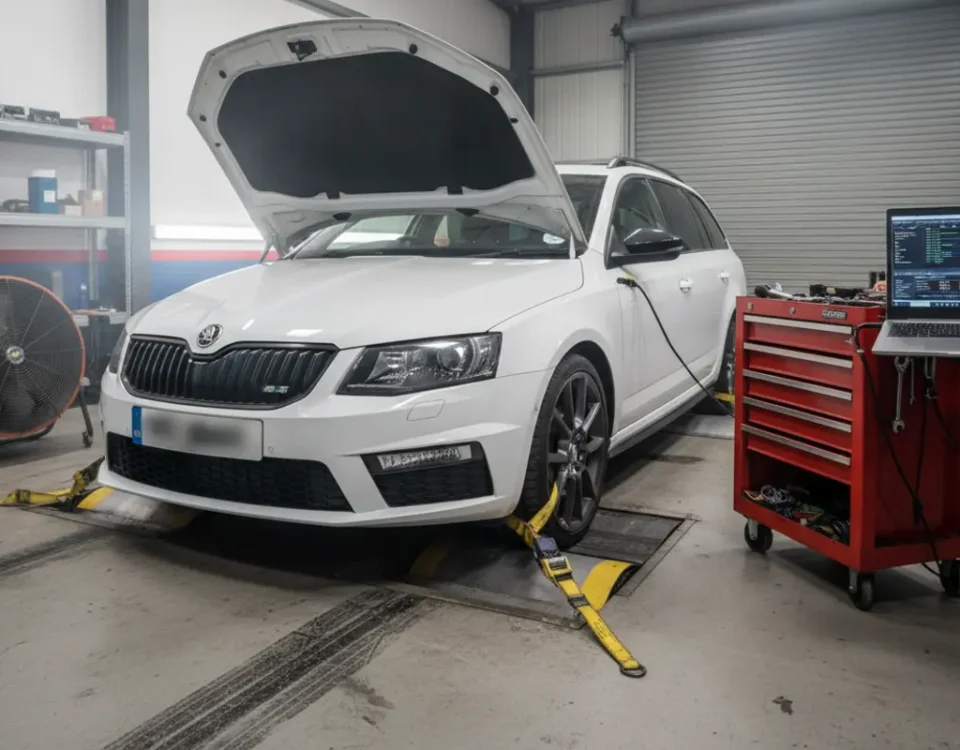
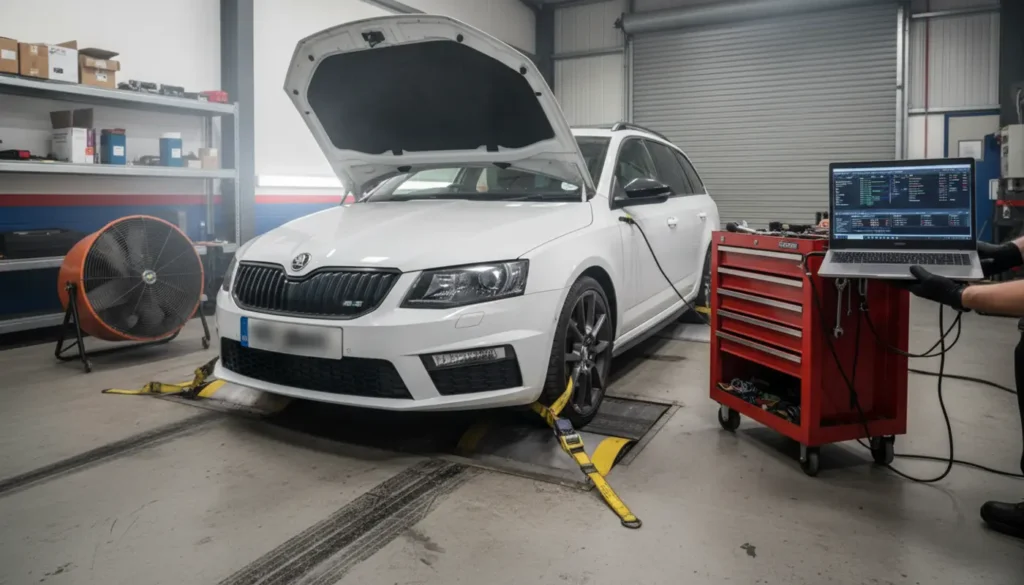
Using modern equipment through the OBD port, which is the car's diagnostic connection, data can be read and reviewed before changes are made. Fuel delivery, ignition timing, throttle response, and other key settings can then be adjusted with a clear purpose. Rolling road testing and real road checks help confirm that the car performs well under load and still feels right in normal driving.
This workshop based approach is especially useful for American V8 cars in the UK, because fuel, road use, weather, and owner goals can vary a lot. Some drivers want a sharper daily road tune, some want software to support exhaust upgrades, and others want a longer staged build plan. A custom approach keeps the tune suited to the car rather than forcing the car to fit a one size file.
Remap, Cold Air Intake, Exhaust Or Supercharger
The best Mustang GT upgrade depends on your budget, power goals, noise preference, insurance position, and how you use the car. A remap is often the most sensible first software step because it improves the engine settings without major mechanical changes. It can also help the car make better use of carefully chosen supporting parts.
A cold air intake can add induction sound and may support airflow when it is well designed, but results depend on the part and whether the ECU is set up to suit it. A custom exhaust can improve sound, reduce restriction, and make the Mustang feel more special every time it starts. A supercharger is the serious power route, but it brings higher cost, more heat, more traction demands, insurance changes, and extra maintenance considerations.
For many UK Mustang GT owners, the best route is a planned package rather than chasing the biggest number straight away. That may mean a quality exhaust, sensible intake improvements, a professional remap, and a strong servicing routine. If you want a richer V8 sound, better flow, and a setup built around your taste, DKU custom exhaust systems are made in house from quality T304 stainless steel and can be tailored to suit the look and sound you want.
Supporting Modifications That Help A Mustang GT Remap
Supporting modifications help a Mustang GT remap when they improve airflow, reduce restriction, or give the tuner a better base to work with. Exhaust upgrades are especially popular because they change both sound and flow. A cat back system, resonator change, or valve control setup can make the car more exciting without making every early morning start a test of neighbour patience.
DKU Performance has hands on experience with Mustang exhaust work, including projects such as a Ford Mustang GT valve control exhaust, where sound, flow, and everyday use are considered together. This matters because a UK road car should feel special without becoming tiring on long motorway journeys.
Maintenance is just as important as bolt on parts. Fresh oil, healthy spark plugs, clean filters, good fuel, and a fault free engine give the tuner a stronger starting point. If the car has running issues, old service parts, or warning lights, those should be sorted before asking the ECU for more performance. Strong foundations make safer, smoother results.
Rolling Road Dyno Testing And Live Data Logging
Rolling road dyno testing gives a controlled way to measure how the Mustang GT behaves under load. It shows the shape of the power curve, where torque builds, how the car responds to throttle, and whether the tune stays stable through the rev range. For a naturally aspirated V8, this is valuable because the improvement is often seen in smoothness and consistency as well as peak output.
Live data logging is the process of watching important engine information while the car is working. A tuner can check fuel behaviour, ignition timing, temperatures, throttle response, and other signals to confirm that the map is safe and repeatable. This helps make sure the car performs well in real driving, not only during one short dyno pull.
DKU Performance combines rolling road equipment with real world checks as part of the ECU remapping process. That gives a more complete view of the tune and helps make sure the Mustang feels right on the road. A good map should drive well every day, not only look impressive in a social media screenshot.
UK Insurance, MOT And Legal Responsibilities
An ECU remap is a vehicle modification, so it should be declared to your insurer. If the car's performance has been changed and your insurer has not been told, you may face problems if you need to make a claim. It is much better to have a clear conversation before tuning than a difficult one after an accident.
MOT and road legality also matter. A road car should keep the emissions equipment required for its type and should not be modified in a way that makes it illegal for public road use. Exhaust changes, catalyst changes, and ECU work should be planned responsibly, especially if the Mustang is used daily or for long trips.
DKU Performance keeps safe workmanship, road use, and legal responsibilities in mind when planning tuning and exhaust work. The same careful thinking applies whether the job is ECU software, custom exhaust fabrication, or general performance work. If you want more detail on choosing the right workshop, the advice on using a professional workshop for tuning is a helpful next read.
Why West Midlands Mustang Owners Choose DKU Performance
West Midlands Mustang owners choose DKU Performance because the workshop understands that tuning is not only about chasing numbers. It is about making the car better for the person who drives it, whether that means sharper response, a deeper V8 sound, improved exhaust flow, or a carefully planned upgrade path.
Based near Walsall and serving owners across Birmingham and the wider West Midlands, DKU Performance brings around two decades of hands on automotive experience. The workshop has strong roots in high performance cars, custom stainless steel exhaust fabrication, ECU remapping, carbon and DPF cleaning, vehicle security systems, and practical performance upgrades. 0% APR finance options are also available across purchases, which can help owners plan upgrades more comfortably.
For a Ford Mustang GT 5.0 V8, that mix of services is useful because the best result often comes from more than one decision. The right route might be a remap now, an exhaust next, or a staged plan that keeps the car reliable, legal, and enjoyable. If you are thinking about remapping your Mustang GT, speak with DKU Performance before buying parts or chasing online power claims, so the upgrade route suits your car and the way you actually drive.
Frequently Asked Questions
Is An ECU Remap Worth It On A Ford Mustang GT 5.0 V8?
Yes, an ECU remap is worth it if you want sharper throttle response, smoother delivery, and settings suited to your car. The power gains are usually more modest than on a turbocharged car, but the Mustang can feel cleaner, more eager, and more enjoyable to drive.
Will A Mustang GT Remap Damage The Engine?
A professional remap on a healthy engine should be written with safe fuel settings, ignition timing, and reliability in mind. Engine problems are more likely when a poor tune is used, faults are ignored, or the owner expects unrealistic gains from a standard naturally aspirated setup.
Do I Need An Exhaust Before Remapping My Mustang GT?
You do not always need an exhaust before remapping, but a quality exhaust can support airflow and improve the overall driving experience. If you plan to upgrade the exhaust, it is sensible to discuss the full package before tuning so the ECU settings suit the final setup.
Do I Have To Tell My Insurer About An ECU Remap?
Yes, you should declare an ECU remap to your insurer because it is a performance modification. Not declaring it can affect your policy and may cause serious problems if you need to make a claim.
Can DKU Performance Tune My Mustang GT In Walsall?
Yes, DKU Performance offers ECU remapping and performance upgrades from its West Midlands workshop. Get in touch with the team to discuss your Mustang GT, current setup, fuel, driving style, and tuning goals.