Land Rover Defender DPF Cleaning Service in Walsall
Land Rover Defender DPF Cleaning In Walsall
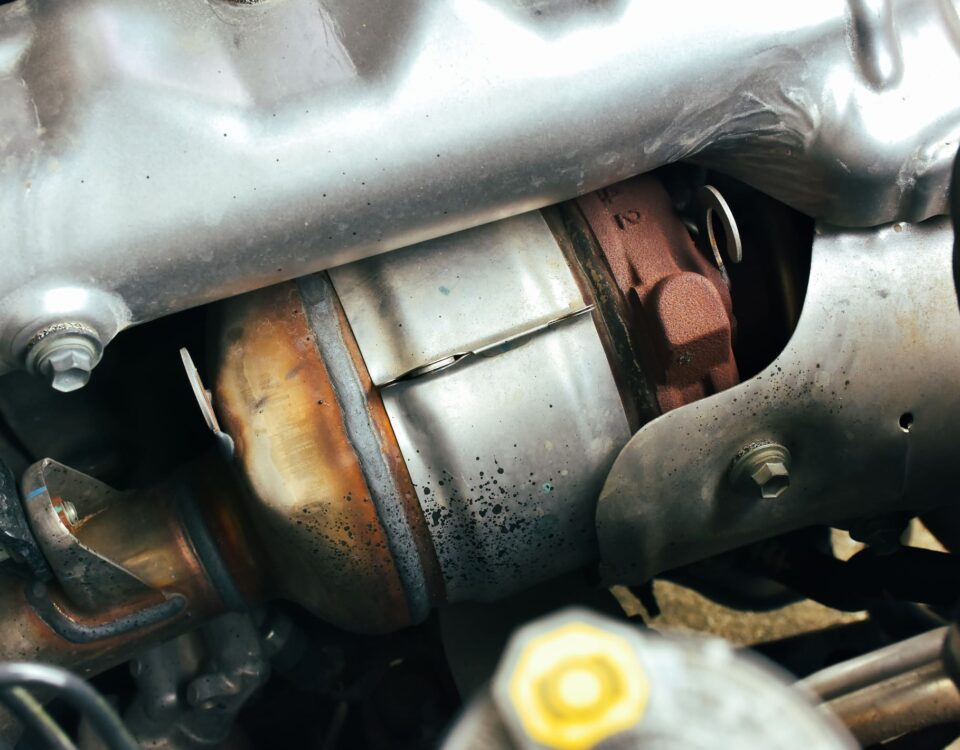
If your Defender has started losing power or suddenly shown a warning light, you are not alone. DPF issues are a common problem for diesel drivers across the West Midlands, and they never seem to happen at a convenient time. The diesel particulate filter, often called the DPF, plays an important role by trapping soot from the exhaust. This helps reduce harmful emissions and keeps the vehicle within UK regulations.
Driving around Walsall does not always help. Short trips, traffic and constant stop start driving prevent the exhaust from reaching the temperature needed to clear the filter naturally. DKU Performance is a Walsall based specialist with hands on experience in exhaust fabrication, ECU diagnostics and DPF care. If a DPF issue is affecting performance or putting your MOT at risk, they can diagnose the fault, carry out a professional DPF cleaning service and explain the next steps in plain English.
Understanding Land Rover Defender DPF Cleaning Issues Across The West Midlands
Modern diesel Defenders are built to meet strict emissions standards. To do that, they store soot inside the DPF until it can be burned off during a process known as regeneration. Over time, soot and ash build up and the system needs support. In busy areas such as Walsall, Wolverhampton and Birmingham, regular short journeys mean the vehicle often does not get hot enough to complete this process properly.
You will usually notice a problem when a warning light appears or the Defender feels sluggish and less responsive. It can be frustrating, especially if you rely on your vehicle every day. Acting early can save money and prevent further damage. With proper diagnostics and proven cleaning methods, the team at DKU Performance work to restore performance while keeping everything road legal.
Why Land Rover Defender Diesel Engines Suffer DPF Blockages On UK Roads
Diesel engines naturally produce soot, and a Defender designed for pulling power can generate a fair amount, particularly when towing or carrying heavy loads. The challenge is that many urban journeys are too short to allow the exhaust system to stay hot for long enough to clear the soot.
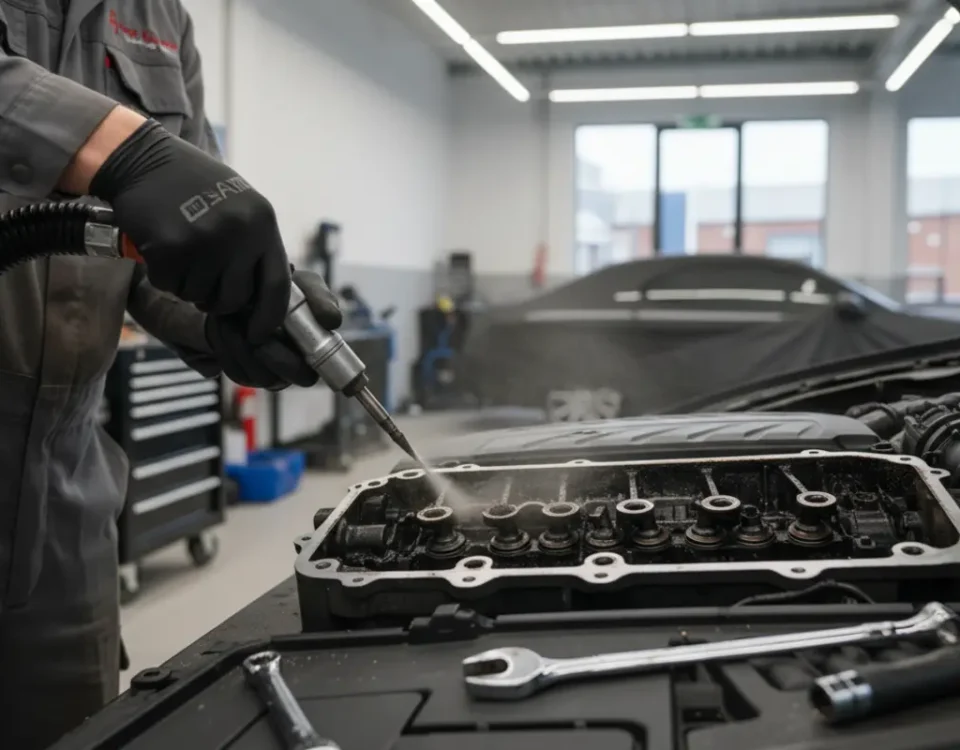
When this happens, the soot continues to build up inside the filter. Over time, this leads to restriction in the exhaust flow, increased back pressure and reduced engine performance. Other faults, such as injector problems or turbo issues, can also make the situation worse. If these underlying causes are not addressed, cleaning alone may only offer a temporary fix. A proper inspection ensures the root cause is found and sorted.
Common Warning Signs Your Land Rover Defender DPF Needs Cleaning
Your Defender will usually give clear signs when the DPF is struggling. Ignoring them can lead to more serious and expensive repairs.
- A persistent DPF or engine management warning light
- Loss of power or the vehicle entering limp mode
- Higher fuel consumption than normal
- Black smoke when accelerating
- Frequent regeneration attempts
If the vehicle feels restricted or labours under load, excessive exhaust back pressure could be the cause. A full diagnostic check will confirm whether a forced regeneration is suitable or if a more thorough clean is required.
Professional Land Rover Defender DPF Cleaning Service In Walsall
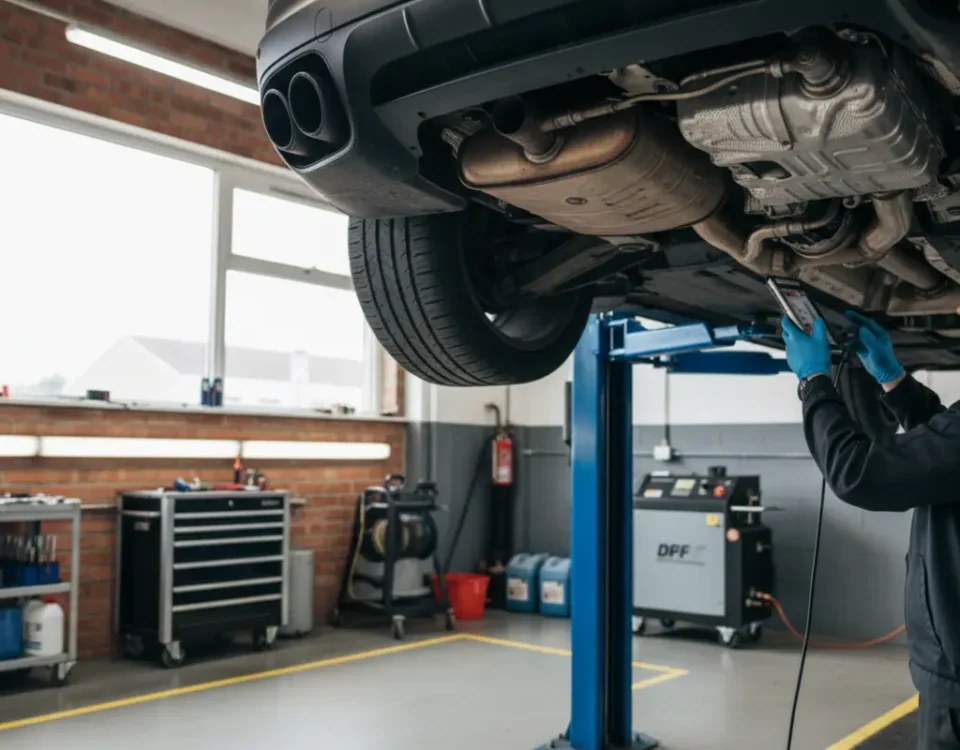
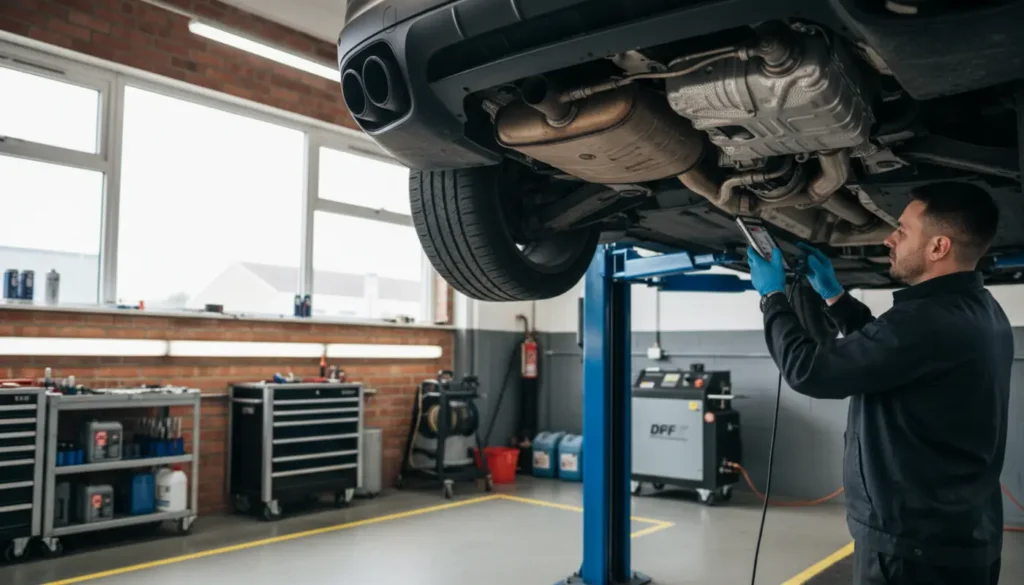
DPF faults are rarely just about clearing a blockage. DKU Performance approach each job by first understanding why the problem developed. Using OBD diagnostics, which plug directly into the vehicle's onboard system, they assess soot levels, pressure readings and sensor data before recommending any work.
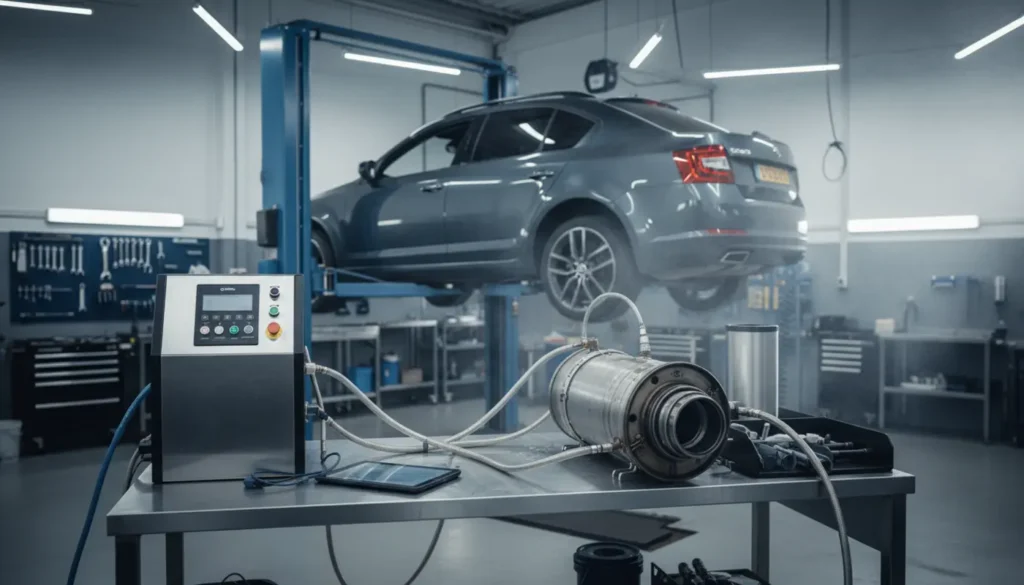
In some cases, a controlled forced regeneration will resolve the issue. In others, the DPF may need to be removed and cleaned using specialist chemical and pressure based methods. All work is carried out in house, which means related exhaust or ECU concerns can be dealt with at the same time. This joined up approach helps prevent repeat issues and keeps your Defender ready for its MOT.
DPF Cleaning Methods Explained Clearly
There are several ways to deal with a blocked DPF, and it helps to understand the difference. Passive regeneration happens naturally when driving at steady higher speeds, allowing heat to burn off soot. Active regeneration is controlled by the ECU, which increases exhaust temperature automatically.
If these processes fail, a workshop can perform a forced regeneration using diagnostic equipment. For heavier blockages, the DPF may need to be removed for deeper cleaning. In rare situations where the filter is damaged or completely saturated with ash, replacement may be the only safe option.
Forced Regeneration Chemical Flush And Ultrasonic Cleaning
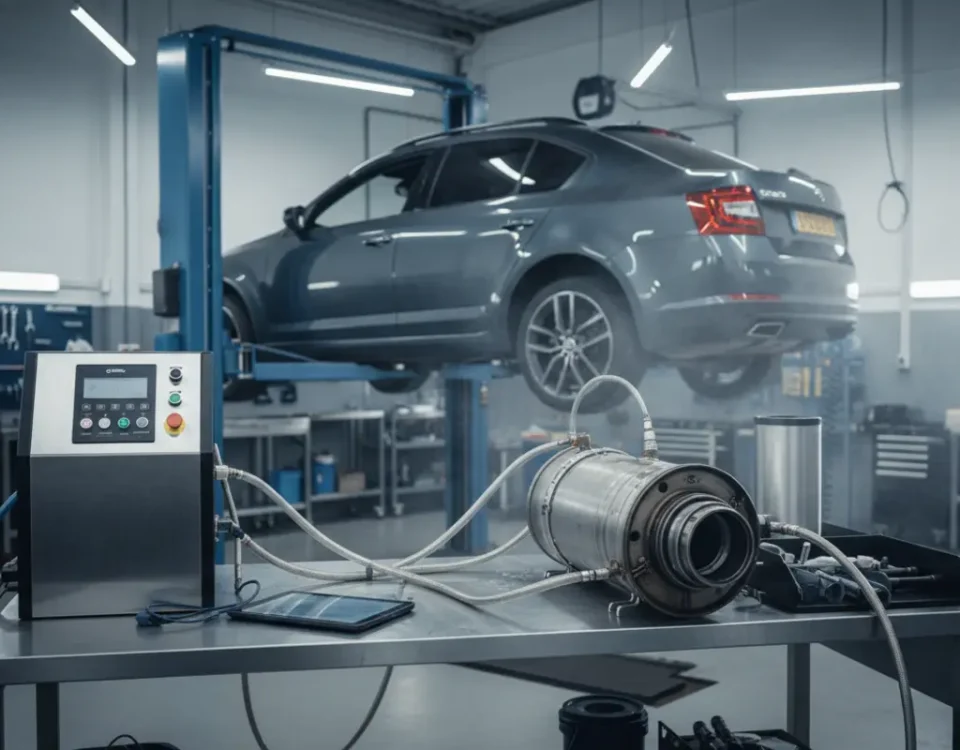
Forced regeneration uses the vehicle's own system to raise exhaust temperatures under controlled conditions. When soot deposits are more stubborn, a chemical flush or off vehicle clean can break down residue that heat alone cannot remove.
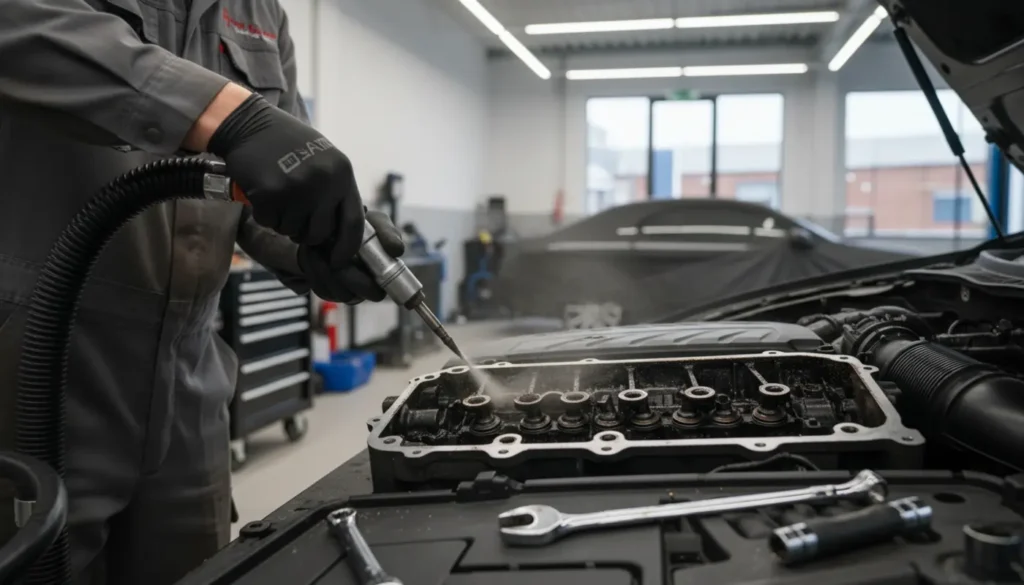
Ultrasonic cleaning may also be used to gently remove fine particles from deep within the filter. The aim is always to choose the least invasive method that delivers reliable results, without carrying out unnecessary work.
How Walsall Driving Conditions Affect Land Rover Defender DPF Cleaning
Local driving habits have a bigger impact than many owners realise. School runs, short commutes and heavy traffic prevent the DPF from reaching the temperatures required for proper regeneration. At the same time, towing, green lane driving or heavy off road use increases soot production.
Whether your Defender is working hard or mainly used for short town journeys, the DPF can still struggle. Planning occasional longer motorway drives at steady speeds can give the system the opportunity it needs to clear itself more effectively.
DPF Cleaning Versus Replacement Cost Comparison
In most cases, professional cleaning is far more affordable than replacing the DPF and can restore performance while maintaining emissions compliance. However, cleaning is not always enough.
If the filter substrate is cracked, melted or heavily contaminated with ash, replacement may be necessary. A trustworthy specialist will explain the condition of your existing unit and outline the options clearly, so you can make an informed decision without pressure.
UK MOT Rules And DPF Compliance
In the UK, if your vehicle was fitted with a DPF from the factory, it must remain fitted and functioning correctly. Removing or tampering with it for road use is illegal and will result in an MOT failure, along with possible fines.
Professional cleaning or approved replacement is the correct and legal route. Further details can be found in the UK government guidance on modifying vehicles.
Practical Steps To Prevent Future DPF Problems
Small changes in driving and maintenance habits can greatly reduce the risk of repeat issues.
- Take the vehicle for a 20 to 40 minute steady drive each week if most journeys are short
- Respond to warning lights promptly rather than delaying checks
- Use the correct low ash engine oil recommended for your Defender
- Arrange periodic diagnostics to catch early signs of trouble
Why Walsall Defender Owners Choose DKU Performance
When a vehicle is not performing as it should, you want honest advice and a proper fix. DKU Performance have built a strong reputation across Walsall for clear communication and dependable workmanship. With experience in diesel systems, fabrication and ECU tuning, the team focus on resolving the cause of the issue rather than simply clearing a fault code.
You can view real examples such as the Defender 110 case study or learn more about system operation in this explanation of DPF regeneration explained. For trusted diagnostics and Land Rover Defender DPF cleaning support, visit DKU Performance.
Frequently Asked Questions
How will I know if my Defender needs DPF cleaning?
Warning lights, reduced engine power, higher fuel use or visible smoke are common signs. If you notice any of these, a diagnostic check is the safest next step.
Can a forced regeneration always clear a blocked DPF?
No, it is effective for soot build up but will not fix physical damage or heavy ash deposits that require deeper cleaning or replacement.
Is it legal to remove the DPF from my Defender in the UK?
No, removing it for road use is illegal and will usually lead to MOT failure along with potential penalties.
How long does DPF cleaning take at a specialist workshop?
The time depends on the level of blockage and the method used, but many cleaning jobs are completed within the same working day.
Will cleaning the DPF stop repeated blockages?
Cleaning restores normal function, but long term reliability depends on addressing any underlying engine or driving pattern issues that caused the blockage in the first place.