Golf R Mk8 Carbon Cleaning and DPF Service in the UK
Ever wondered why your Golf R Mk8 can start to feel slightly rough in town? It is not always something serious, but short trips, cold starts and modern direct injection all play a part in how quickly carbon builds up and particulate filters begin to clog.
Once you understand what is happening inside the engine and exhaust system, it becomes much easier to plan the right fix. Whether you are thinking about a diagnostic check, carbon cleaning or a DPF service, knowing the cause helps you make a confident decision. DKU Performance is a UK performance specialist offering carbon cleaning, DPF care and ECU work, guiding owners towards the most suitable service path for the Golf R Mk8 using real world data and OBD readings.
Golf R Mk8 Carbon Cleaning And DPF Service In The UK
The Golf R Mk8 uses modern direct injection technology and, depending on the model, a petrol particulate filter or diesel particulate filter. Direct injection sends fuel straight into the cylinder, which means the inlet valves no longer benefit from the natural cleaning effect seen in older engines. Over time, carbon forms on the intake ports and valves, reducing airflow and affecting throttle response.
At the same time, the particulate filter in the exhaust traps soot to control emissions. When you mostly drive in town, the engine often does not stay hot long enough to complete a proper regeneration cycle. The result is more soot, more buildup and warning lights appearing sooner than expected.
Why Golf R Mk8 Owners Face Carbon And Filter Issues In UK Driving
UK driving conditions are a big factor. Stop start traffic, short daily runs and cooler weather all make it harder for the engine and exhaust system to operate at ideal temperatures. Carbon deposits form more quickly on intake components, while the filter slowly fills because regeneration does not complete.
Planning your maintenance in two parts makes things clearer. One side is intake carbon, which affects how the engine breathes and responds. The other is the exhaust filter system, which manages soot and emissions. A proper diagnostic session will show which area needs attention first.
For more detail on how this works in practice, the DKU page on DPF cleaning service and their explanation of What is DPF regeneration break everything down in straightforward terms.
How Carbon Builds Up On The EA888 Gen 4 Engine
Carbon buildup happens when oil vapour, blow by gases and combustion residue settle on cooler intake surfaces. Over time, this layer hardens and becomes difficult to remove without specialist cleaning. The EA888 Gen 4 engine used in the Golf R Mk8 is well engineered, but it is not immune to this process.
The intake runners, inlet valves and throttle body are most affected. Drivers often notice slower throttle response, slightly lower fuel economy or the car not feeling as sharp as before. A diagnostic check combined with inspection usually confirms the cause.
DPF And GPF Differences For UK Owners
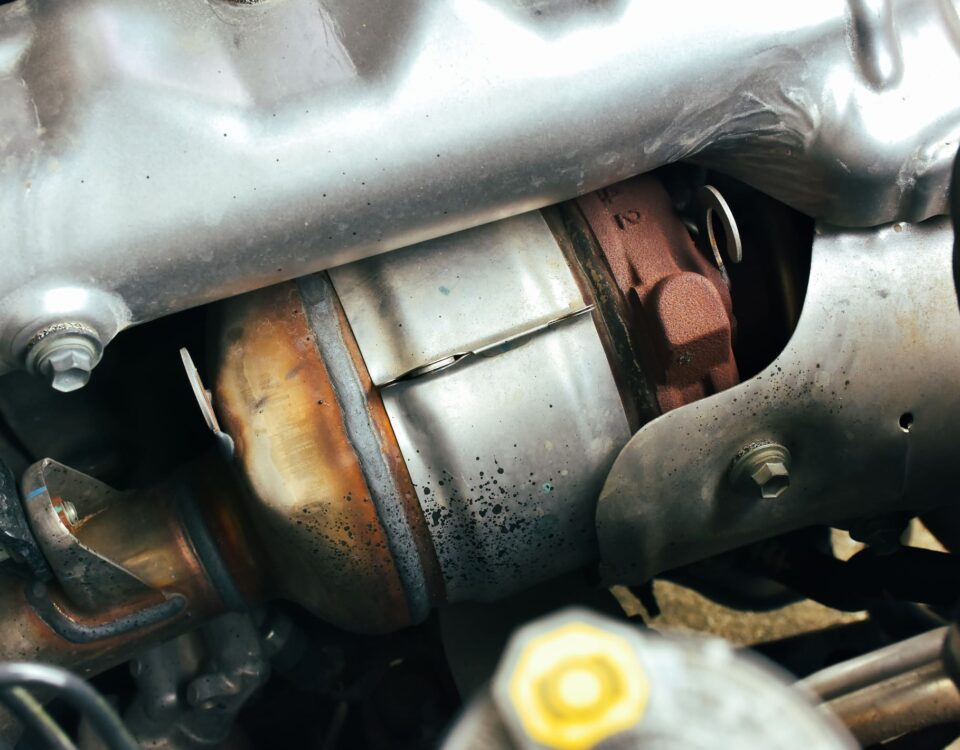
Petrol versions use a GPF while diesel versions use a DPF. Both systems trap soot particles, but they operate slightly differently. Passive regeneration occurs during longer steady drives when exhaust temperatures are high enough. Active regeneration is triggered by the ECU when certain conditions are met. If neither process completes, manual intervention may be required.
For a clear explanation in a UK context, the RAC guide to DPFs explains how these systems work and why warning lights appear.
Why Short Urban Journeys Accelerate Buildup
Short trips keep the engine cooler for longer. Cooler combustion produces more soot, and the exhaust system does not reach the temperature needed for regeneration. Over time, the filter becomes restricted and the engine may reduce performance to protect itself.
It can feel frustrating, especially if you maintain the car well. Even a performance model like the Golf R Mk8 can struggle when used mainly for quick daily errands.
Signs Your Golf R Mk8 Needs Carbon Cleaning Or DPF Regeneration
Symptoms usually fall into two groups. Intake related issues affect smoothness and response, while filter problems often trigger dashboard warnings or higher fuel consumption.
- Rough idle or misfire when warming up
- Reduced throttle sharpness and lower MPG
- Engine management or DPF warning light staying on
- Stronger exhaust smell or visible smoke under acceleration
How Walnut Blasting And Intake Carbon Cleaning Work
Walnut blasting is a precise cleaning method that uses crushed walnut shell media to remove stubborn carbon without damaging metal surfaces. The intake manifold is removed, each valve is carefully cleaned, and everything is reassembled to manufacturer standards. It is thorough and very effective for heavy deposits.
Lighter cleaning methods can be used for early stage buildup, where cleaning products are introduced through the intake while the engine is running. A reputable workshop will choose the method based on inspection results rather than guesswork.
Understanding Regenerations Blockages And Forced Regens
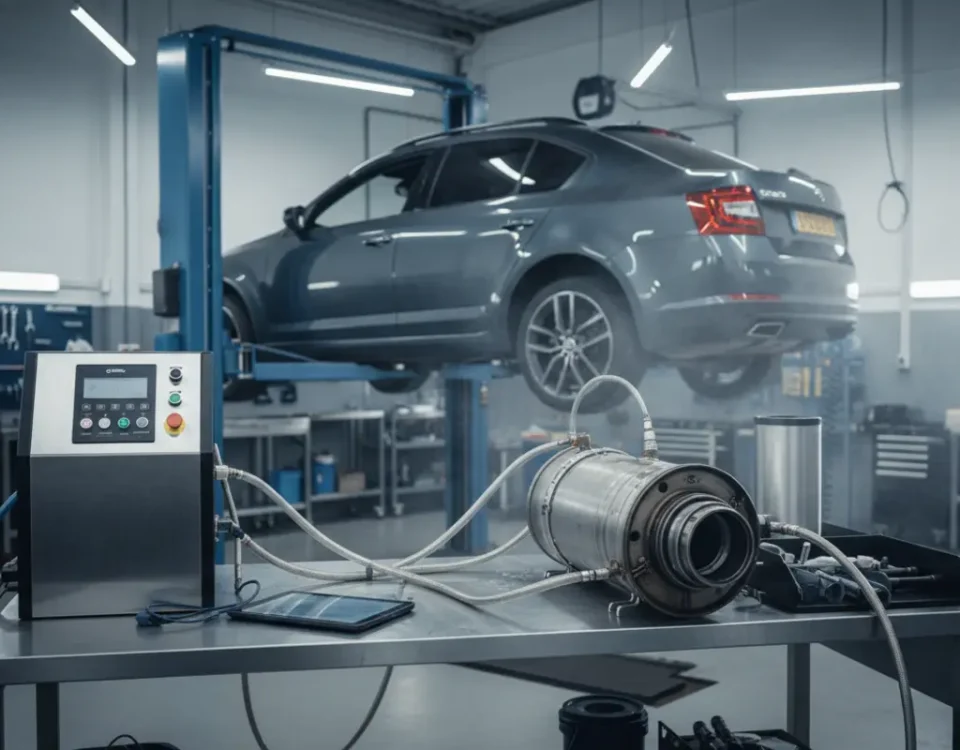
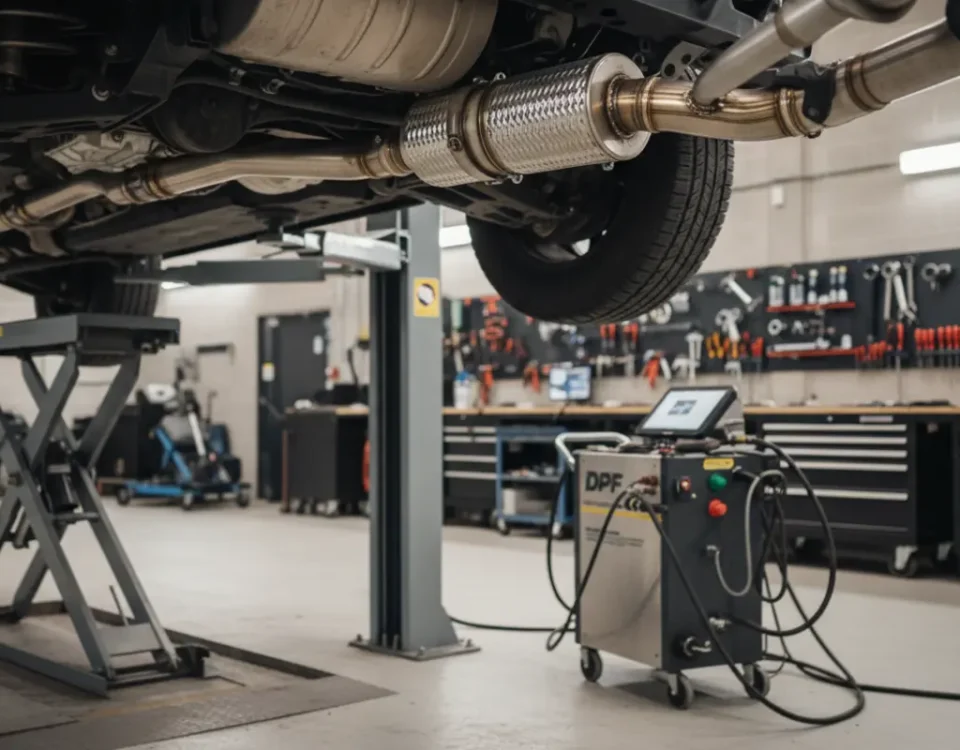
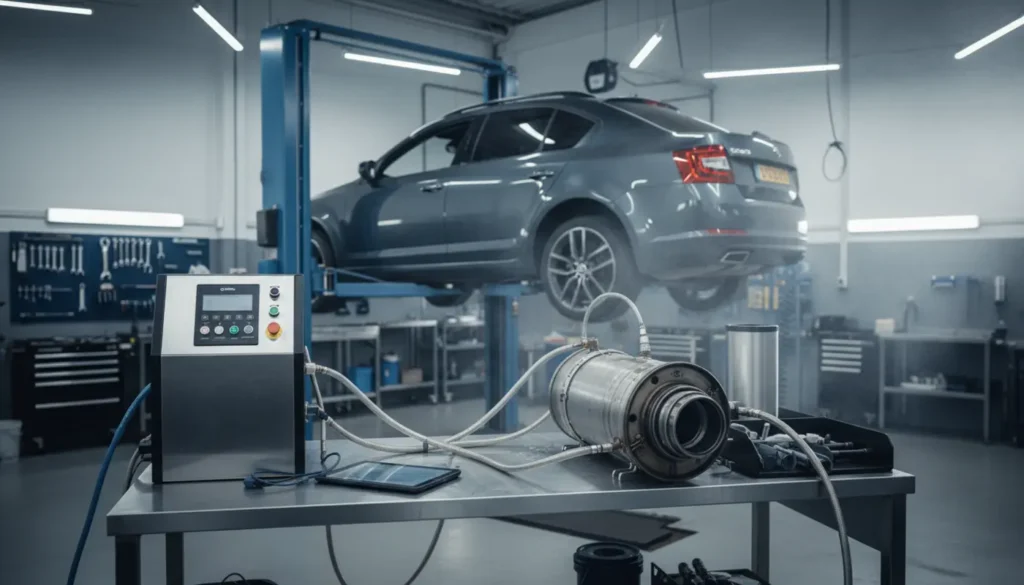
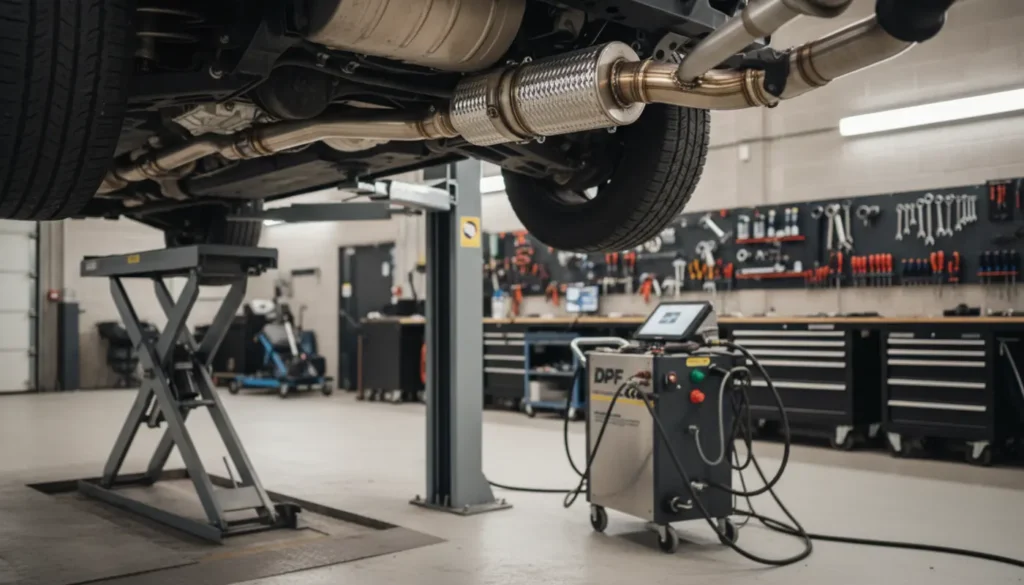
Passive regeneration happens naturally during longer drives. Active regeneration is managed by the ECU and raises exhaust temperatures to burn off soot. When soot levels become too high, a technician may need to carry out a forced regeneration using diagnostic equipment. If this does not solve the issue, the filter may need to be removed and professionally cleaned.
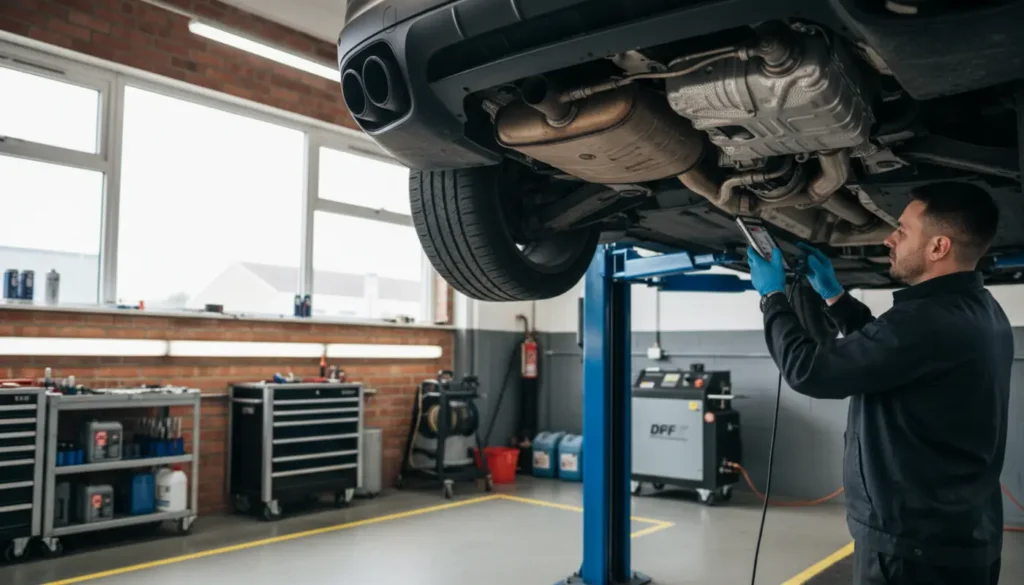
Technicians assess soot load, temperature readings and driving history before deciding on the best approach. This is why a clear diagnostic process matters before agreeing to repairs.
Choosing A UK Specialist Or Volkswagen Approved Garage
Selecting the right garage can make the experience far less stressful. Look for specialists who explain findings clearly and show the data behind their recommendations. Experience with the EA888 engine and proper diagnostic tools is essential.
DKU Performance combines ECU diagnostics with carbon cleaning and DPF services, providing documentation for your records. That level of transparency gives real peace of mind.
Always ask for a written diagnosis, a detailed quote and confirmation of what will be checked after the work is completed. Clear communication avoids surprises later.
Typical Costs And What To Expect Financially
Costs vary depending on the condition of the vehicle. A simple forced regeneration is generally more affordable than removing and cleaning a filter. Full replacement is the most expensive option and is usually only necessary when cleaning is no longer effective.
If walnut blasting is required, labour costs will be higher due to the strip down involved. Although it is a bigger job, it properly restores airflow and performance.
Preventing Buildup Through Driving Habits And Maintenance
Prevention is always better than repair. Including a longer drive where the engine remains warm for at least 20 to 30 minutes can help the regeneration process complete. Using quality fuel and the correct engine oil also reduces residue.
Allowing the car to stretch its legs occasionally can help keep the intake and exhaust system cleaner, as long as it is done safely and within the law.
Using Diagnostic Tools And DPF Monitoring Software
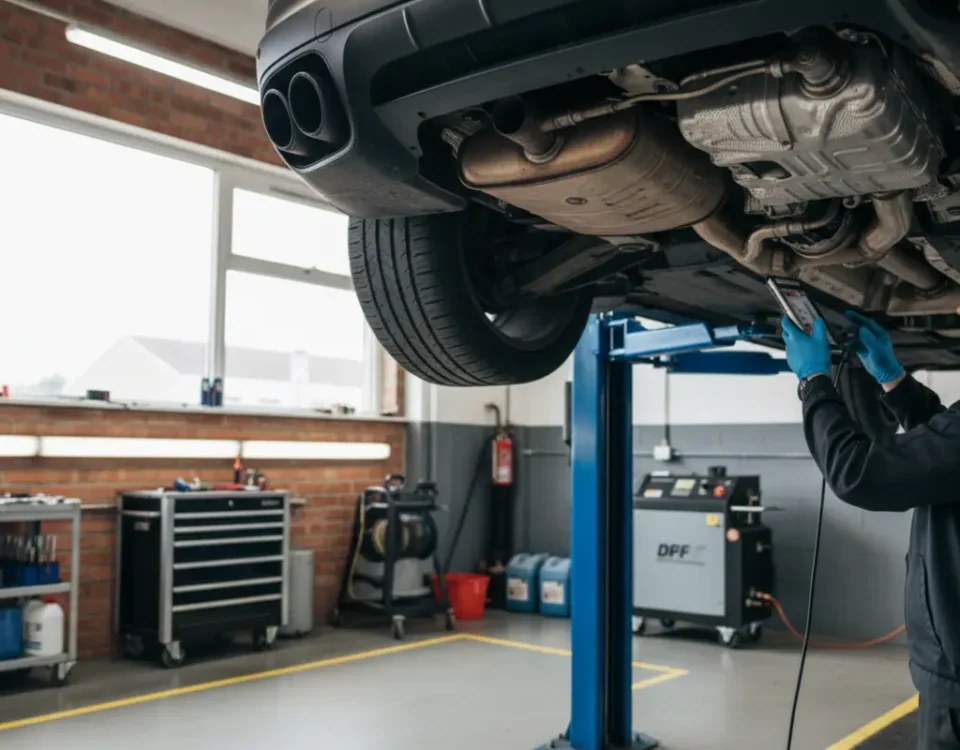
Basic OBD tools can display soot levels, fault codes and regeneration history. They are useful for spotting patterns early and understanding how your driving habits affect the system. A specialist garage will go further with live data logging and deeper analysis.
Keeping a note of warning lights, recent journeys and previous work can make future diagnostics quicker and more accurate.
Frequently Asked Questions
How often should a Golf R Mk8 be checked for carbon buildup?
There is no fixed interval, but if you notice rough running, reduced response or higher fuel use, it is sensible to arrange a check rather than wait.
Is walnut blasting safe for the EA888 engine?
When carried out by an experienced technician, walnut blasting is safe and highly effective at removing stubborn deposits.
Will a long motorway run always fix a particulate filter warning light?
Not always. A longer drive can help if soot levels are still moderate, but if the warning light remains on, a proper diagnostic is needed.
Can carbon cleaning improve fuel economy?
Restoring proper airflow often improves efficiency and throttle response, especially if buildup was restricting performance.
How should I choose a garage for DPF and carbon work?
Choose a garage that provides clear diagnostics, honest explanations and data to support their recommendations. That approach reduces guesswork and protects your investment.