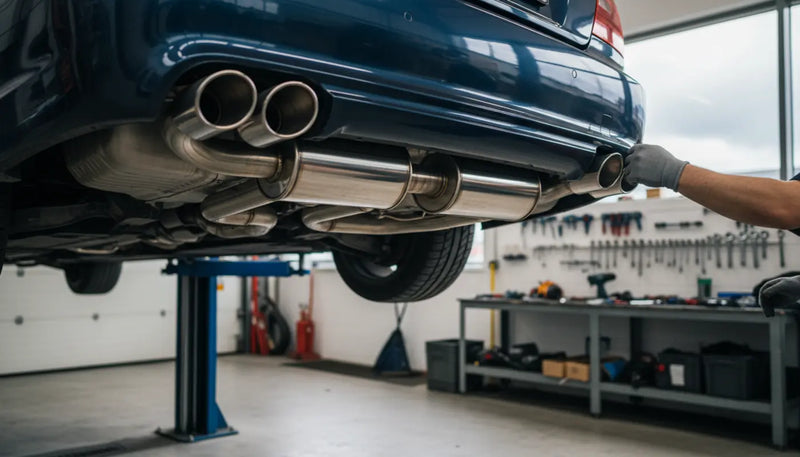
Exhaust manifolds transport exhaust gases from the engine to the exhaust pipe and away from the car, making them an integral part of any exhaust system and vital for passenger safety. Smaller engines with two, three or four cylinders typically only have one manifold, while larger engines with a “V” arrangement (V6, V8, V12) have two manifolds, one for each bank.
Exhaust manifolds are essential, as they help to channel waste products (exhaust gases) away from the engine so that it can suck in more air to burn. Moreover, exhaust manifolds keep passengers safe from dangerous gases by transporting exhaust from the combustion chamber to the exhaust pipe, venting them safely outside the vehicle.
Aluminium exhaust vs stainless steel
Because they have to withstand high temperatures and a lot of pressure, exhaust manifolds are typically made from tubular steel, stainless steel or iron. Contrastingly, exhaust pipes can be made from a much wider range of materials, and one material – aluminium – is becoming increasingly popular as an alternative to stainless steel exhausts.
Aluminium is lighter and more malleable than stainless steel, meaning that aluminium exhausts are typically cheaper than stainless steel at the cost of reduced durability. Conversely, stainless steel exhausts are tough and durable, making them well worth investing in though neither is truly superior.
What is the purpose of an exhaust manifold?
Exhaust manifolds are designed to collect exhaust fumes from the combustion chamber and direct them into your exhaust system, venting the gases safely outside your car. Furthermore, exhaust manifolds are designed to be airtight, minimising heat loss and reducing the temperature in your engine bay, preventing sensitive components (like your onboard computer) from heat damage.
How much does it cost to replace an exhaust manifold?
According to a survey of garages across the UK, replacing an exhaust manifold costs between £150 and £850, with the average bill working out at roughly £420, including parts and labour. However, replacing the exhaust manifolds on cars with larger engines (especially high-performance sports cars) will cost a lot more.
How are exhaust manifolds different from headers?
Although exhaust manifolds and headers seem to perform the same function – directing exhaust gases away from the engine – there are substantial differences between these parts:
Exhaust manifolds funnel exhaust gases into one pipe, which feeds into the exhaust pipe and are typically made of cast iron in a blocky configuration for durability and heat absorption. Contrastingly, headers use individual pipes for each cylinder (usually made of smooth stainless steel), which lower back pressure and improve engine performance at the cost of increased noise and mechanical complexity.
How to replace an exhaust manifold
Exhaust manifolds are a vital part of any car, directing harmful burnt exhaust gases outside your vehicle and helping your engine to work efficiently. However, these manifolds are subjected to high temperatures and harsh chemicals on a regular basis, which means that they may develop cracks, holes or blockages and require you to replace them.
If your exhaust manifold is broken or worn out and needs replacing, we recommend you go to a professional garage, but it is possible to replace it yourself if you have the necessary tools. Removing the exhaust manifold of any vehicle is a long and tedious process that involves at least 16 steps which can be summarised as below:
- Determine all the symptoms and warnings of a broken or leaked exhaust manifold.
- Take the vehicle to the professional mechanic
- If you are skilled enough to do it yourself, prepare to replace your exhaust manifold by collecting all the necessary tools.
- Make sure your engine is cool and disconnect the battery from your vehicle
- Remove the engine cover.
- Remove the parts in the way of the exhaust manifold.
- After removing all the nuts and bolts from the exhaust manifold, spray lubricant on them.
- Remove the exhaust manifold from the cylinder head.
- Remove the exhaust pipe.
- Remove the old gaskets and dispose of them. You will need new ones.
- Clean all the ports on the cylinder head and apply lubricant
- Install the new exhaust manifold
- Use new gaskets between the exhaust pipes and the manifold.
- Attach the exhaust manifold below the vehicle, and tighten the nuts.
- Reassemble all the removed parts.
- Reattach the battery and test the repair.
What are the symptoms of a bad exhaust manifold?
When your exhaust manifold is worn out or broken, it will typically display some warning signs before a serious malfunction, such as excessive engine noise, reduced engine performance or a noticeable smell of exhaust:
- Excessive Engine Noise: If the manifold is cracked or damaged, it may leak or fit poorly, resulting in hissing, tapping or vibrating noises.
- Reduced Engine Performance: A damaged exhaust manifold can interfere with the combustion cylinders, causing reduced fuel efficiency, acceleration and power.
- Unpleasant Smells: A leaking exhaust manifold will vent hot gases into your engine bay, causing a smell of exhaust and potentially burning, if the heat damages other engine components.
If you notice any of these signs, you should seek professional advice as soon as possible because a broken exhaust manifold can cause other engine issues if left unchecked.
Can you drive a car with a bad exhaust manifold?
A malfunctioning exhaust manifold can be extremely dangerous, so you should never drive with a worn or damaged manifold if you can help it at all. However, if you think your exhaust manifold might be damaged and have no other options, you can drive for short periods if you’re careful.
Over time, a damaged or worn out exhaust manifold will leak hot gases into your engine bay, increasing the risk of damage to your engine parts and lungs. Without effective heat shielding, your engine will vent hot gases, potentially damaging engine parts and directing toxic exhaust fumes into the cabin, putting you at risk of serious malfunction and respiratory illness.
Conclusion
Exhaust manifolds are essential for keeping your car running smoothly and safely, which is why they are designed to last for 6-8 years and thousands of miles. However, bad driving habits, environmental factors and physical damage can reduce this lifespan, so you should check your exhaust manifold regularly to ensure that it’s working safely.