A Lotus Emira custom stainless steel exhaust in the UK is a strong upgrade for owners who want a better sound, cleaner flow, improved character, and a smart OEM plus finish. The right system can make both the V6 and four cylinder Emira feel more personal and more enjoyable without making the car too loud for normal road use.
The key is careful specification. A good exhaust is not just a louder pipe fitted under the car. Poor design can lead to drone, awkward fitment, heat issues, and MOT concerns, so the system needs to suit the engine, the car, and the way it is driven.
DKU Performance is a Walsall based performance specialist with around two decades of hands on experience in custom stainless steel exhaust fabrication, ECU remapping, carbon cleaning, and performance upgrades. For Lotus Emira owners across Walsall, Birmingham, and the wider West Midlands, DKU builds each system around the vehicle and the owner's aims, not a generic idea of what loud should mean.
Lotus Emira Custom Stainless Steel Exhaust UK For V6 And Four Cylinder Owners
The Lotus Emira is a great platform for exhaust development because both engine options have their own feel and sound. The Toyota sourced supercharged 3.5 litre V6 has a rich tone, strong mechanical character, and the kind of soundtrack many owners want to bring to life. The AMG derived 2.0 litre turbocharged four cylinder has a sharper and more modern delivery, but the turbo changes how exhaust pulses and sound reach the tailpipe.
That means a Lotus Emira custom stainless steel exhaust UK build should not treat both models as the same car with different badges. The V6 can usually support a deeper and fuller sound profile. The four cylinder needs careful resonator and silencer tuning to avoid harshness or unwanted rasp. A resonator helps control certain sound frequencies, while a silencer reduces volume and shapes the final tone. Both engines can benefit from improved exhaust gas flow, but pipe diameter, silencer volume, valve strategy, and tailpipe layout all need to suit the engine rather than only the rear bumper.
A bespoke system also lets you choose the final balance. Some owners want more drama for weekend drives, while others want quiet motorway comfort with a little extra character when they press on. DKU builds custom stainless steel exhausts in house, using high quality T304 stainless steel, mandrel bends, and made to measure fabrication to suit each car and customer requirement.
Why The Lotus Emira Responds Well To Exhaust Upgrades
The Lotus Emira responds well to exhaust upgrades because it has a strong engine character, a mid engine layout, and a design that rewards careful sound tuning. A well made system can improve tone, response, and appearance while keeping the car refined enough for real UK roads.
The Emira already has serious presence, so the best upgrade should enhance what is already there rather than change the car into something that feels out of place. A quality exhaust can add depth and definition to the V6, or give the four cylinder a more purposeful voice, while still keeping cold starts and steady cruising sensible.
For many owners, the aim is not simply more volume. It is a cleaner, more engaging sound that suits the car's premium feel. That is where a bespoke system can make a real difference, because it allows the pipework, silencers, resonators, tailpipes, and finish to be planned around the car and the owner.
OEM Exhausts Versus Bespoke Stainless Steel Systems
The original Lotus Emira exhaust has to meet many needs at once, including global markets, production costs, noise rules, emissions packaging, warranty needs, and daily comfort. That does not make it poor. It simply means it is designed as a broad compromise rather than a system tailored to your exact sound preference, styling goal, or driving use.
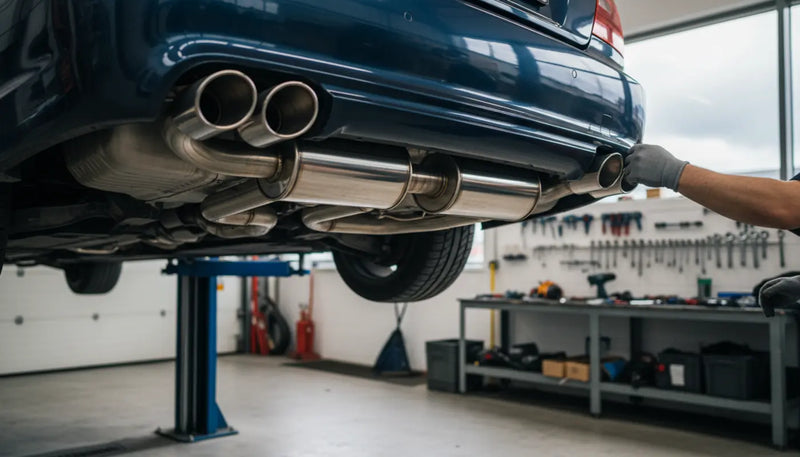
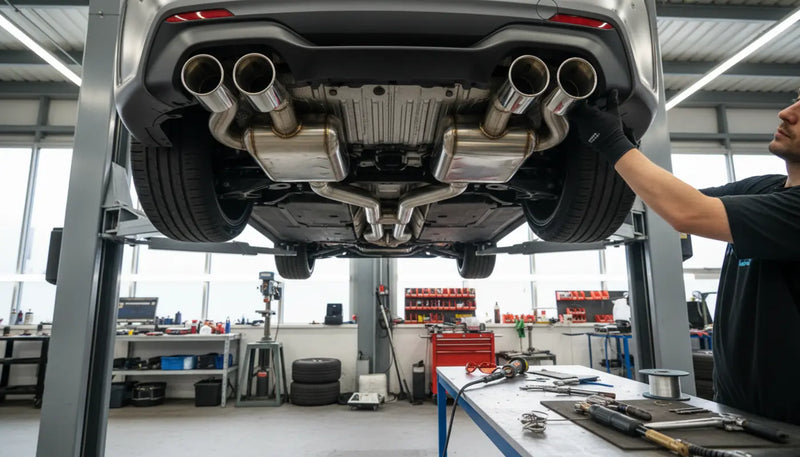
A bespoke stainless steel system gives DKU more control over the details. The team can consider pipe routing, bend quality, silencer placement, bracket strength, tailpipe position, diffuser clearance, and the sound level you want. A good custom exhaust should look intentional, sit evenly, avoid contact with surrounding trim, and remain comfortable on longer UK journeys.
Cat back systems are a popular choice for road focused Emira owners because they usually replace the exhaust sections behind the catalyst area while keeping key emissions parts in place. If you want a clear plain English explanation of system layout, DKU has a helpful article on cat back exhaust systems that explains the idea in simple terms.
What A Bespoke Lotus Emira Exhaust Can Include
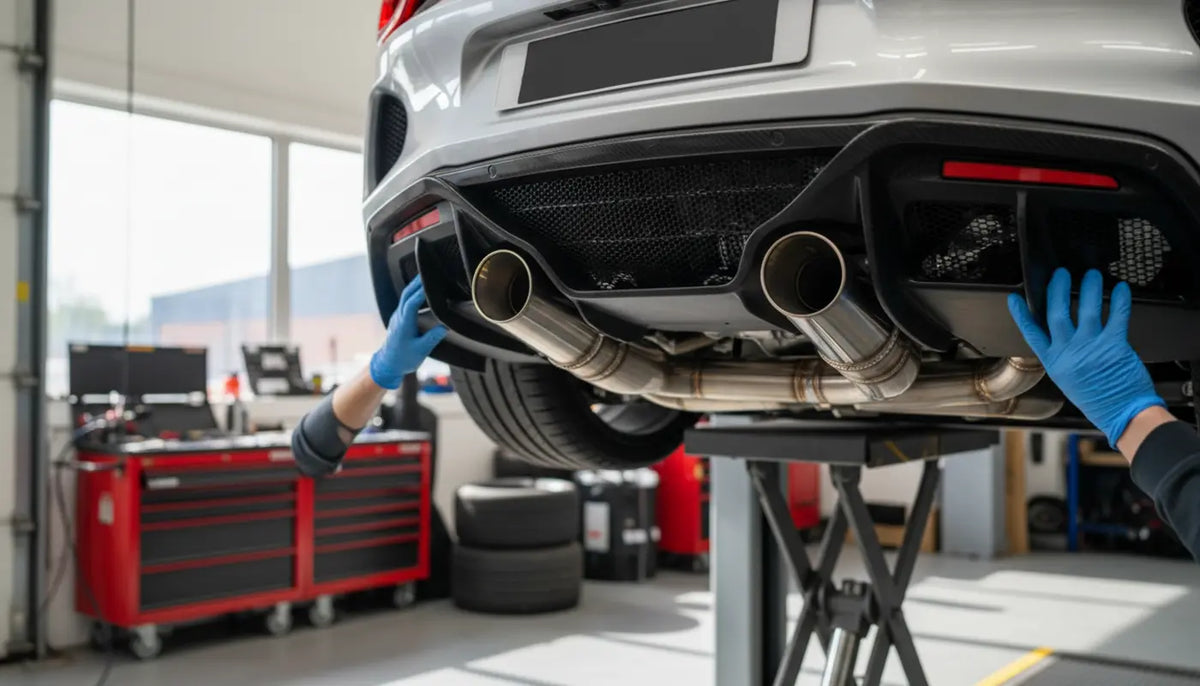
A bespoke Lotus Emira exhaust can include made to measure stainless steel pipework, tailored silencers, resonators, tailpipes, and careful fitting around the rear diffuser and underbody. Each part should be chosen to support the sound, appearance, flow, and comfort level the owner wants.
- Made to measure T304 stainless steel pipework shaped around the Emira underbody and rear packaging.
- Mandrel bends designed to help maintain the internal pipe size through curves and support smoother exhaust flow. In simple terms, the pipe keeps a cleaner shape instead of being pinched through bends.
- Resonator and silencer choices to tune volume, tone, and motorway comfort.
- Tailpipe configuration and finish options that suit the rear diffuser and desired OEM plus appearance.
- Careful fitment checks for heat shielding, suspension movement, bumper clearance, and hanger loading.
Performance Benefits For V6 And Four Cylinder Models
A performance exhaust can help gases leave the engine more efficiently, but expectations should stay realistic. Reduced back pressure can help where the original system is restrictive. Back pressure means resistance in the exhaust path, but it is not the full story. Gas speed, pipe diameter, bend quality, silencer design, and engine calibration all affect the final result.
On the supercharged V6, owners often look for a richer tone, cleaner high rev character, and a stronger connection when accelerating. On the turbocharged four cylinder, the exhaust design has to work with the turbo, which naturally quietens and reshapes some of the sound before it reaches the rear section. This is why a system copied from the V6 would not be the right answer for the 2.0 litre car.
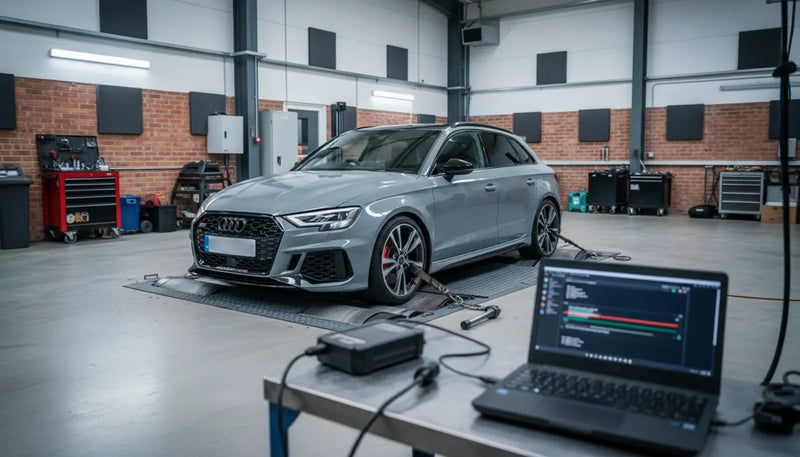
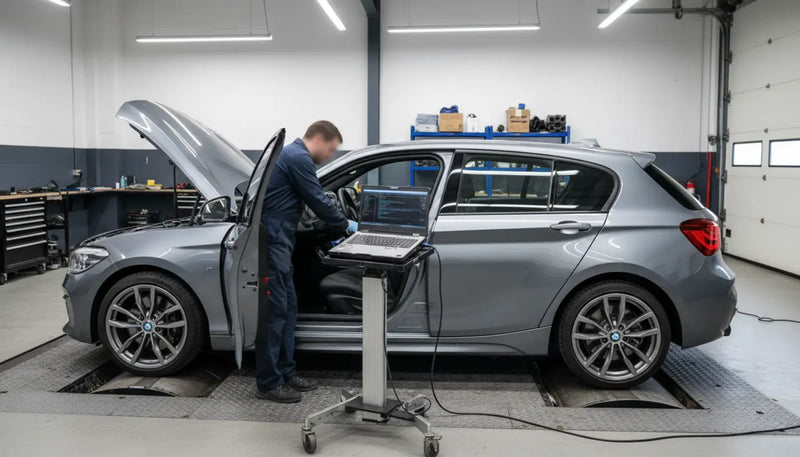
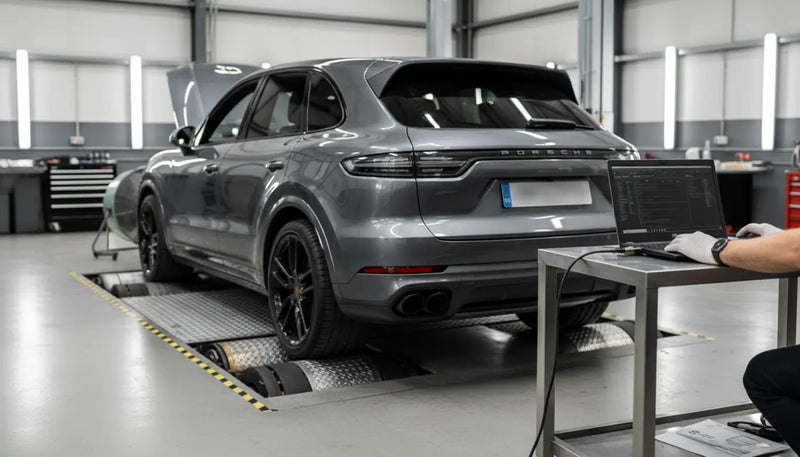
Real world power and torque gains vary depending on the exact system, baseline condition, retained emissions hardware, fuel, calibration, and test method. DKU avoids made up figures because every car and setup is different. Where performance proof matters, before and after dyno testing is the honest way to show what has changed, especially if the exhaust is paired with suitable ECU remapping later.
A sensible dyno process starts with a baseline run before any changes are made. The car is then tested again after the work, ideally under similar conditions, so the result is easier to compare. If dyno data is part of your plan, DKU can discuss the best route before fabrication begins, including whether the goal is proof of gains, smoother delivery, or a better match between the exhaust and future calibration.
Sound Engineering For A Modern British Sports Car
The best Emira exhaust sound is not simply the loudest one in the car park. It should suit the car's mid engine layout, premium feel, and sports car purpose. A well engineered system can add depth, definition, and drama while keeping cold starts, low speed cruising, and motorway journeys civilised enough for normal UK use.
For the V6, the goal is often a fuller tone with more presence under throttle, but without heavy cabin boom at steady revs. Resonators and silencers shape frequencies, not just volume. If those parts are too small or poorly matched, the car may sound exciting for five minutes and tiring for the next hundred miles.
For the four cylinder, the challenge is different. Turbocharged engines can sound flatter or sharper depending on pipework and silencer design, so the system needs to manage rasp, resonance, and unwanted overrun effects. Done properly, the AMG derived engine can gain a more purposeful voice while still sounding refined.
If sound control is your biggest concern, DKU also covers practical ways to reduce unwanted exhaust volume without hurting performance in its article on making an exhaust quieter. The same thinking applies to the Emira. Tone, comfort, and flow should work together.
Material Choices For A Lotus Emira Exhaust Build
DKU Performance builds its custom exhaust systems in house using high quality T304 stainless steel, which is a strong all round material for UK road cars. It offers good corrosion resistance, practical fabrication benefits, and long term value. For most Emira owners who want a durable road focused system, T304 is a sensible starting point.
T316 stainless steel is sometimes discussed because it offers greater corrosion resistance in harsh conditions, especially where salt and moisture exposure are major concerns. It is usually more expensive and is not automatically better for flow or sound, so it should be chosen for the right reason rather than because a higher number sounds more impressive.
Titanium is the premium lightweight option. It can reduce system weight and has a very distinct motorsport feel, but it is more expensive, more demanding to fabricate, and needs careful heat management. Material choice matters, but weld quality, wall thickness, hanger design, silencer construction, and fitment are just as important.
DKU Performance's Fabrication Process In Walsall
A proper Emira exhaust build starts with a conversation. DKU will want to understand whether the car is a V6 or four cylinder, how it is used, what sound level you want, whether the priority is road comfort or weekend drama, and what visual finish will suit the car. That early consultation helps avoid building a system that sounds great outside but becomes tiring inside.
The vehicle is inspected so the team can assess factory routing, mounting points, rear diffuser space, heat shielding, and clearance around nearby parts. From there, DKU plans the pipework, silencers, resonators, tailpipes, and brackets around the car. Mandrel bending helps preserve pipe shape through bends. TIG welding is a precise welding method that can create neat and controlled joints when carried out properly.
DKU's workshop experience spans a wide range of performance and prestige vehicles, including documented exhaust work shown across its project portfolio. A useful example of the team's custom exhaust approach on a lightweight performance car is the Alfa Romeo 4C case study, which is relevant for owners who care about compact packaging, sound, and neat rear end presentation.
Cat Back Design And OEM Plus Styling
Many Lotus Emira owners do not want a visually aggressive exhaust that looks out of place on a beautifully shaped sports car. OEM plus styling is often the best balance. It means tailpipes that suit the rear diffuser, exits that sit level and even, and finishes that complement the car rather than overpower it.
If you want to keep the Emira looking close to factory, but with a little more intent, tailpipe size should be chosen with proportion in mind. Larger outlets do not automatically increase performance, and oversized tips can make an otherwise elegant car look a little too keen. Polished, brushed, or darker finishes can all work, depending on the colour of the car and your taste.
Rear diffuser integration also matters because the Emira has tight packaging and heat sensitive surrounding trim. A well fitted system should allow for movement as the exhaust heats and cools, while keeping suitable clearance from the bumper, diffuser, suspension, and underbody parts. It is the kind of detail you may not notice when it is right, but you will notice quickly if it is wrong.
UK MOT Compliance And Road Legality
A custom exhaust can be road legal in the UK, but the completed vehicle must remain suitable for road use. Noise, emissions equipment, construction quality, and insurance disclosure all matter. The official MOT inspection guidance explains that exhaust noise should not be unreasonably above the level expected from a similar vehicle with a standard silencer. You can read the GOV UK MOT exhaust noise guidance for the official wording.
It is also important not to confuse a cat back system with removing emissions equipment. Catalysts, particulate filters, and sensors are fitted for a reason, and bypassing or removing required equipment can create legal, MOT, and insurance problems. DKU's responsible position is clear. Using an illegally modified vehicle on public roads is an offence.
If the car is intended for track use, road use, or both, that should be discussed before fabrication begins. Track sound limits and road expectations are not the same thing, and a system that feels exciting during short spirited drives may not suit daily road use. Good planning can prevent awkward conversations with neighbours, MOT testers, and your own ears.
Why West Midlands Emira Owners Choose DKU Performance
Lotus Emira owners across Walsall, Birmingham, and the wider West Midlands choose DKU Performance because the work is built around the actual car and customer. The team designs, fabricates, and fits exhaust systems in house, uses high quality T304 stainless steel, and backs custom exhaust systems with a lifetime guarantee. That gives owners confidence that the system has not simply been bought from a shelf and made to fit.
DKU also offers 0 percent APR finance on purchases over 4 or 12 months, which can make a bespoke build easier to plan. More importantly, the workshop approach is practical and honest. The right exhaust should improve the car's sound, appearance, and driving enjoyment while respecting UK road use, MOT expectations, and the owner's daily comfort.
For Emira V6 and four cylinder owners, the best next step is to discuss the car, intended use, sound preference, material choice, road use, and desired finish before committing to a specification. If you are ready to explore a Lotus Emira exhaust upgrade, contact DKU Performance and the team can help shape a build that feels like it belongs on the car from day one.
Frequently Asked Questions
Is A Custom Stainless Steel Exhaust Legal On A Lotus Emira In The UK?
It can be legal if the completed vehicle remains compliant with noise, emissions, MOT, and road use requirements. Required emissions equipment should not be removed for road use unless legality has been properly confirmed.
Is The V6 Or Four Cylinder Better For An Exhaust Upgrade?
Neither is universally better because they need different tuning. The V6 suits a richer sound profile, while the turbo four cylinder needs careful design to manage tone, rasp, and refinement.
Will A Cat Back Exhaust Increase Power?
It can help improve flow, but gains vary by car, system design, calibration, and test method. Before and after dyno testing is the best way to confirm real results.
Will A Custom Exhaust Cause Drone On Motorways?
Drone can happen if resonators, silencers, and pipe sizing are poorly matched. A well designed system aims to control low rev resonance while still improving sound under throttle.
Can The Exhaust Keep An OEM Plus Look?
Yes, a bespoke system can be built with subtle tailpipes, neat diffuser alignment, and a factory inspired finish. Many Emira owners prefer this balanced look over an overly aggressive style.