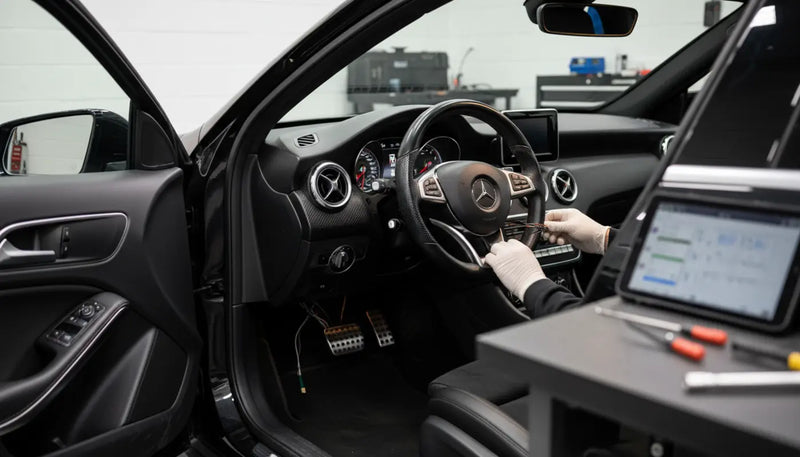
Audi RS4 B9 2.9 TFSI ECU remap UK Stage 1 tuning is a software upgrade that gives the RS4 stronger acceleration, sharper throttle response and better mid range pull without changing the standard hardware. For many owners, the aim is not to turn the car into something harsh or difficult to live with. It is to make an already quick RS4 feel more responsive, more eager and better matched to everyday UK driving.
The B9 RS4 Avant is already a serious performance car, with Audi quoting 450 PS, 600 Nm and a 0 to 62 mph time of 4.1 seconds for the 2.9 TFSI quattro model. A professional Stage 1 ECU remap improves how the engine control unit manages boost control, fuelling, ignition timing, torque delivery and throttle response, while keeping the car smooth enough for daily use.
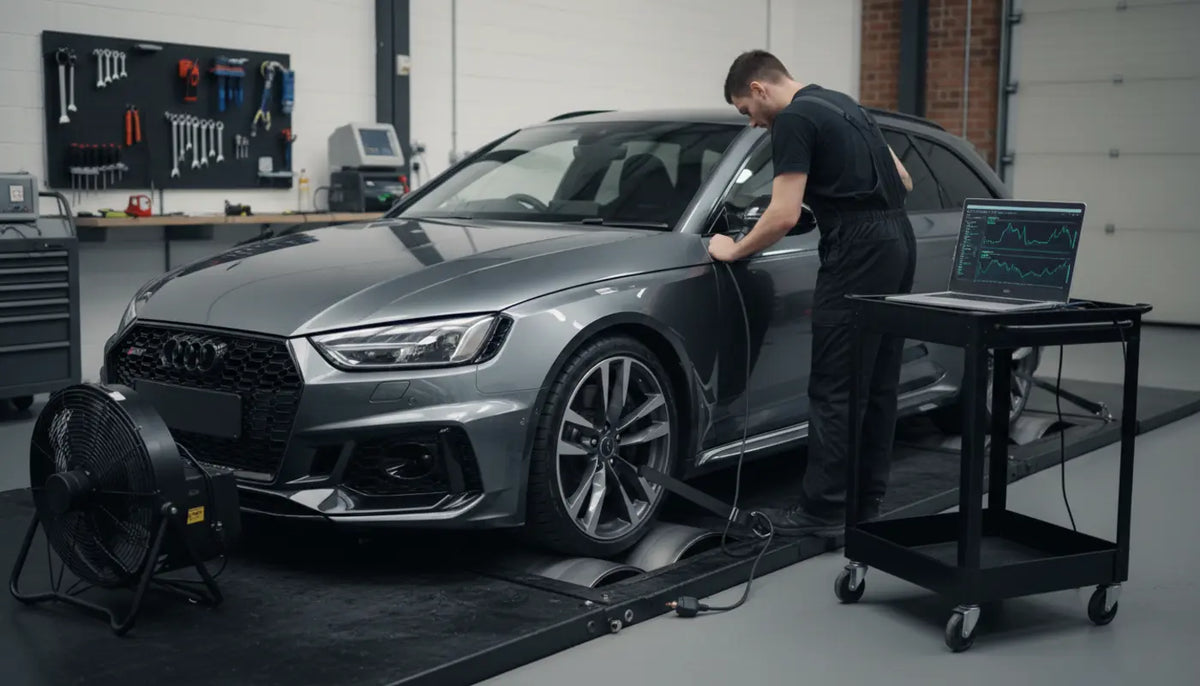
DKU Performance helps RS4 owners tune their cars with care, using in house ECU remapping, OBD programming, dyno validation and real world road testing from its Walsall workshop. That matters on a high value car like an RS4, because the goal is not just a bigger power figure. It is stronger performance that feels safe, measured and reliable.
Audi RS4 B9 2.9 TFSI ECU Remap UK Explained
An Audi RS4 B9 2.9 TFSI ECU remap UK upgrade changes the engine software to release more performance from the twin turbo V6 while keeping the factory hardware in place. The ECU is the car's engine control unit, often described as the engine's brain. It controls boost pressure, fuel injection, ignition timing, throttle behaviour and torque requests.
Stage 1 tuning is usually the first and most sensible step for a standard RS4 B9. It is designed for cars with original turbos, standard engine internals, factory cooling and standard exhaust hardware. The remap refines how the engine delivers power, so the car feels stronger when pulling away, overtaking and accelerating through the mid range.
For UK drivers, this type of remap is popular because it keeps the RS4 practical and refined. The car can still be used for school runs, motorway trips and daily driving, but with a sharper response when you ask for more power.
What Makes The Audi RS4 B9 2.9 TFSI Engine So Tuneable
The Audi RS4 B9 uses the EA839 2.9 TFSI V6, a compact petrol engine with two turbochargers, direct injection and a wide spread of torque. In simple terms, it is a strong factory engine with good tuning potential when the software is adjusted carefully. Each turbocharger supports one cylinder bank, which helps the engine build torque quickly and gives the RS4 its strong low down and mid range pull.
That twin turbo layout is one reason the RS4 responds so well to ECU remapping. A Stage 1 remap adjusts the control strategies inside the ECU, allowing the engine to deliver more of what it is capable of while still respecting temperature limits, knock control and drivetrain protection.
It is also worth understanding that PS, bhp and wheel horsepower are not the same. Audi usually quotes PS at the crank, while some dyno results show bhp or power measured at the wheels. A professional tuner should explain what is being measured, because clear figures help owners compare results properly and avoid confusion.
Why UK Owners Choose Stage 1 ECU Remapping
UK RS4 owners often choose Stage 1 ECU remapping because it gives a clear performance gain without needing upgraded turbos, intercoolers or exhaust parts. If you want stronger overtaking power, faster response and more confidence when joining fast roads, Stage 1 usually offers the best balance.
This is why Audi ECU remapping is popular with drivers across Walsall, Birmingham and the wider West Midlands. A good Stage 1 tune should not make the car feel rough, noisy or difficult to manage. It should feel close to factory, just stronger and more responsive when you press the throttle.
For many RS4 owners, the biggest change is not only the peak power figure. It is the way the car reacts in normal driving. The throttle feels more alert, the mid range feels more urgent and the engine feels less held back when accelerating from everyday speeds.
Audi RS4 B9 Stage 1 Remap Gains And Realistic Expectations
A realistic Stage 1 Audi RS4 B9 remap should be discussed as a measured range rather than a fixed promise. Factory cars vary, fuel quality varies, dynos vary and even temperature can affect results. On a healthy standard RS4, many owners can expect an estimated range of around 520 to 540 PS and 700 to 750 Nm, but the final result should always be checked with before and after testing.
The factory benchmark is 450 PS and 600 Nm, with 0 to 62 mph quoted at 4.1 seconds. With careful Stage 1 tuning, good fuel, strong tyres and suitable conditions, some cars may move into the high 3 second range for 0 to 62 mph. That said, this figure is difficult to promise because traction, tyres, road surface, launch technique, fuel, temperature and measuring equipment all play a part.
On UK roads, the more useful gain is often how quickly the car responds from 30 mph, 50 mph or during an overtaking move. A well mapped RS4 should feel stronger without feeling unsettled, and the extra torque should arrive in a way that suits the quattro drivetrain.
For best results, the car should be checked before tuning. A remap cannot fix weak spark plugs, tired coils, boost leaks, poor fuel, cooling issues or old oil. It can make existing weaknesses easier to notice, which is why health checks are an important part of proper performance tuning.
What A Stage 1 Remap Changes On The RS4 B9
A Stage 1 remap keeps the standard hardware and focuses on calibration. On the RS4 B9, the tuner works with the ECU maps that manage driver demand, boost pressure, fuelling, ignition timing and torque limits. The car still uses its original turbochargers, intercooling system, engine internals and exhaust layout, but the software is refined to deliver more performance safely.
Boost pressure optimisation is a key part of the process, but it is not just a case of adding more boost. The calibration must also manage fuel delivery, air charge temperatures, ignition advance, knock sensitivity and torque modelling through the gearbox and quattro drivetrain. In plain English, the tune needs to help the engine make more power while keeping heat, fuel mixture and drivetrain load under control.
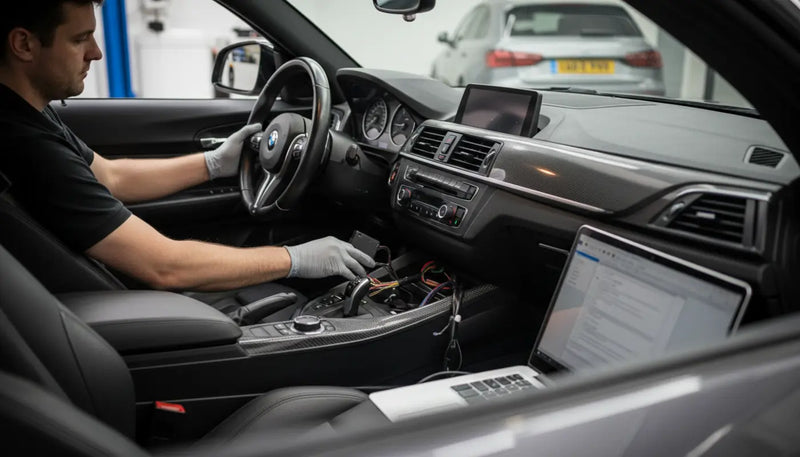
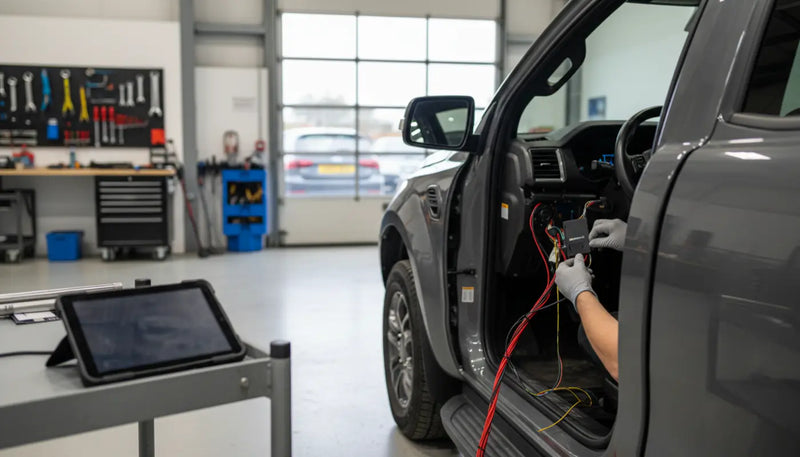
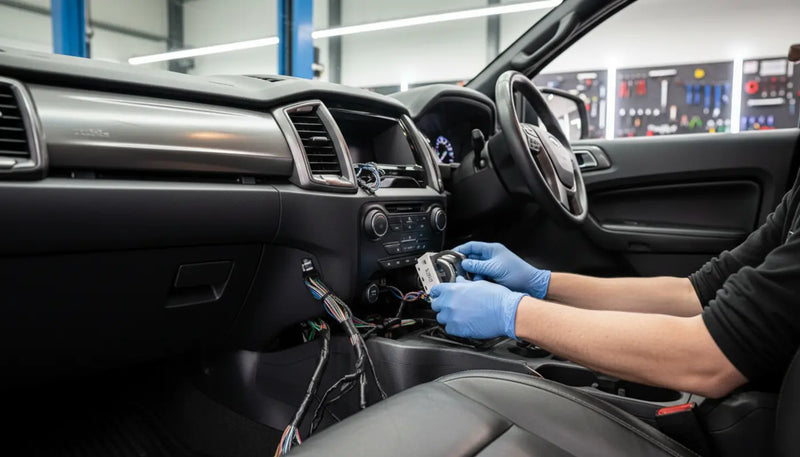
DKU Performance carries out ECU work using modern equipment connected through the OBD port where suitable, with data extracted, analysed and optimised before validation. For RS4 owners thinking about future upgrades, performance tuning upgrades should be planned as a complete package rather than a collection of parts fitted without a clear goal.
DKU Performance Stage 1 Remap Process In Walsall
At DKU Performance, the Stage 1 remap process starts with a clear conversation about the car, its mileage, service history, fuel used and any existing modifications. The team then evaluates the vehicle's current performance and engine data before making changes. This careful approach is important on an RS4 because the engine, gearbox and quattro system all need to work together smoothly.
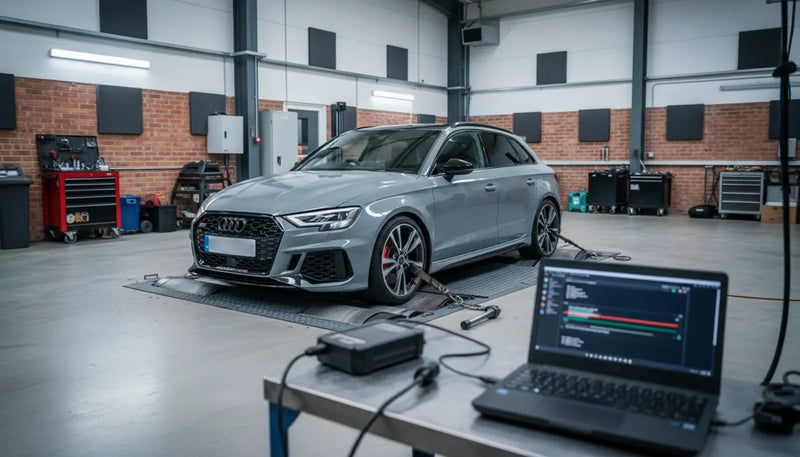
The original ECU data is read through the OBD port where suitable, then analysed to find safe areas for improvement. The calibration is refined around ignition timing, fuelling, torque delivery and throttle response, followed by testing and validation using dyno equipment and real world driving. DKU Performance carries out ECU remapping in house, validates results on a dyno and supports the work with clear performance data for transparency.
Owners can also explore DKU's wider Audi project background through examples such as this Audi RS5 case study. Every model and engine must be treated on its own data, but completed Audi performance work helps show the workshop's hands on experience with enthusiast vehicles.
Custom Calibration Versus A Generic Stage 1 File
A custom calibration uses data from the specific vehicle being tuned, while a generic Stage 1 file applies a pre written tune intended for a typical example of the same model. That does not mean every generic file is poor, but it does mean there is less room to respond to your exact car, its fuel quality, condition and any hardware differences.
For the RS4 B9, custom mapping is valuable because small details matter. The tuner can review actual boost, ignition correction, lambda behaviour, temperatures and torque intervention rather than relying only on assumptions. Lambda behaviour simply means how the air and fuel mixture is working. Ignition correction shows whether the engine is happy with the timing or pulling it back for safety.
If the car is running too hot, showing signs of a boost control issue or pulling timing under load, that should be found before chasing headline figures. A well judged tune is not only about making power. It is about making power in a way the car can manage repeatedly.
Stage 1 Versus Stage 2 For The Audi RS4 B9
Stage 1 is the sensible first step because it is software led and designed for a standard car in good mechanical health. Stage 2 usually involves supporting hardware, which may include intake, cooling or exhaust changes depending on the chosen calibration route. It may also raise extra questions around emissions equipment, MOT compliance and road legality.
For a daily driven RS4, Stage 1 often gives the best balance of power, refinement and reliability. Stage 2 may suit owners chasing more aggressive performance targets, but it needs a proper plan and an honest discussion about cost, heat management and legal road use.
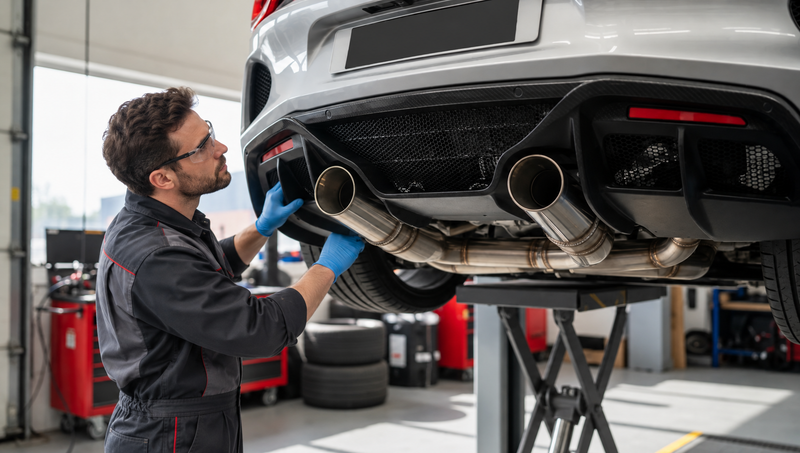
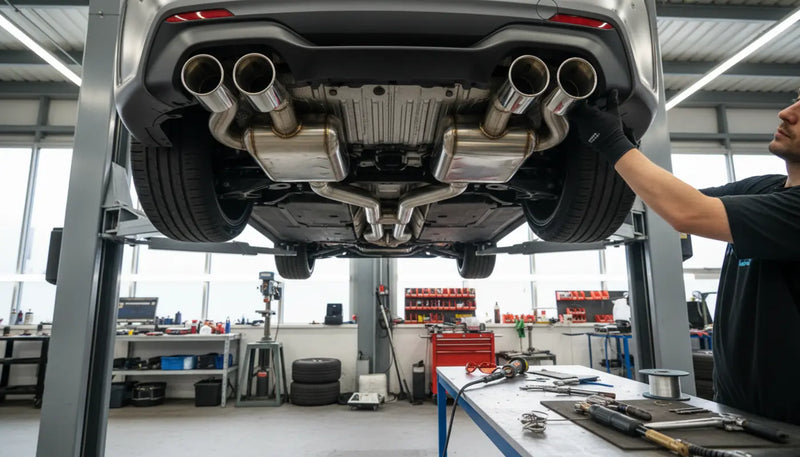
If you want more sound as part of a wider performance package, DKU also designs and builds custom stainless steel exhausts in house, using T304 stainless steel and offering a lifetime guarantee on custom systems.
Reliability, Servicing And Safe Tuning Habits
Reliability after a Stage 1 remap depends heavily on the condition of the car and the quality of the calibration. More boost and torque increase load on the engine, turbos, cooling system, gearbox, tyres and brakes. That does not make tuning unsafe by default, but it does mean the car should be maintained properly and driven with mechanical sympathy.
Before tuning, an RS4 owner should check service history, fault codes, oil condition, coolant behaviour, ignition components, boost hoses, battery health, tyres and brakes. After tuning, premium fuel is usually recommended because the calibration relies on consistent combustion quality. The engine should be warmed properly before hard use, and after sustained high load driving it is sensible to let temperatures settle before switching off.
DKU Performance also offers maintenance focused support across a wide range of vehicles, which fits neatly with responsible tuning. A strong map on a poorly maintained car is not a smart shortcut. It is a quick way to find problems that should have been fixed first.
UK Insurance And Audi Warranty Considerations
An ECU remap is a performance modification and should be declared to your insurer before driving the modified car. The Financial Ombudsman Service guidance explains that undeclared modifications, including ECU remapping, can create serious insurance problems if a claim is made. It is best to contact your insurer, explain the change and keep written confirmation of cover.
Warranty needs careful handling too. A remap does not mean every part of the car is automatically excluded from warranty, but it can affect claims linked to the engine, turbochargers, gearbox or related damage. Read your Audi warranty terms, speak to the warranty provider if needed and keep all mapping, dyno and service records.
RS4 Stage 1 Remap Checklist For UK Owners
Before booking a Stage 1 remap, use this simple checklist to make sure the car and the tuning plan are both ready.
- Confirm the exact RS4 B9 model year, software version and engine specification.
- Check service history, oil quality, spark plugs, coils, cooling system and fault codes.
- Use the correct premium fuel before baseline testing and mapping.
- Ask whether power figures are crank, wheel, PS, bhp or Nm figures.
- Request before and after dyno testing with clear data logging.
- Declare the remap to your insurer and keep written confirmation.
- Clarify warranty implications before tuning, especially on newer cars.
Why RS4 Owners Choose DKU Performance In Walsall
RS4 owners across Walsall, Birmingham and the West Midlands choose DKU Performance because the workshop combines hands on performance experience with a practical, customer focused approach. The business has around two decades of automotive background, in house ECU remapping capability, dyno and road validation, and a strong reputation for bespoke performance work.
Rather than chasing one size fits all claims, DKU focuses on understanding the car, the owner's goals and the safest route to stronger performance. If you want an Audi RS4 B9 Stage 1 remap, the best next step is to share your registration, mileage, service history and current modifications so the team can advise properly.
Frequently Asked Questions
How Much Power Does A Stage 1 Audi RS4 B9 Make?
Power varies by vehicle condition, fuel, software version and dyno method. As a careful guide, a healthy RS4 B9 may achieve around 520 to 540 PS and 700 to 750 Nm with a professional Stage 1 remap, but this should be confirmed with before and after testing.
Is Stage 1 Safe On A Standard Audi RS4 B9?
Stage 1 can be a sensible option on a healthy standard RS4 when the calibration is written and validated properly. Existing faults should be diagnosed before tuning, because a remap should improve a good car rather than hide a problem.
What Fuel Should I Use After A Stage 1 Remap?
Most tuned RS4 B9 vehicles should be run on high quality premium petrol, commonly 98 RON or better where recommended by the tuner. Consistent fuel quality helps protect performance, response and reliability.
Do I Need To Tell My Insurer About An ECU Remap?
Yes, an ECU remap is a modification and should be declared before driving the car. Ask for written confirmation that your cover remains valid, and keep that confirmation with your vehicle records.
Can My RS4 Be Returned To Standard?
In many cases the original file can be retained and reinstalled where appropriate. Ask DKU Performance about the available options for your specific ECU, software version and tuning setup.