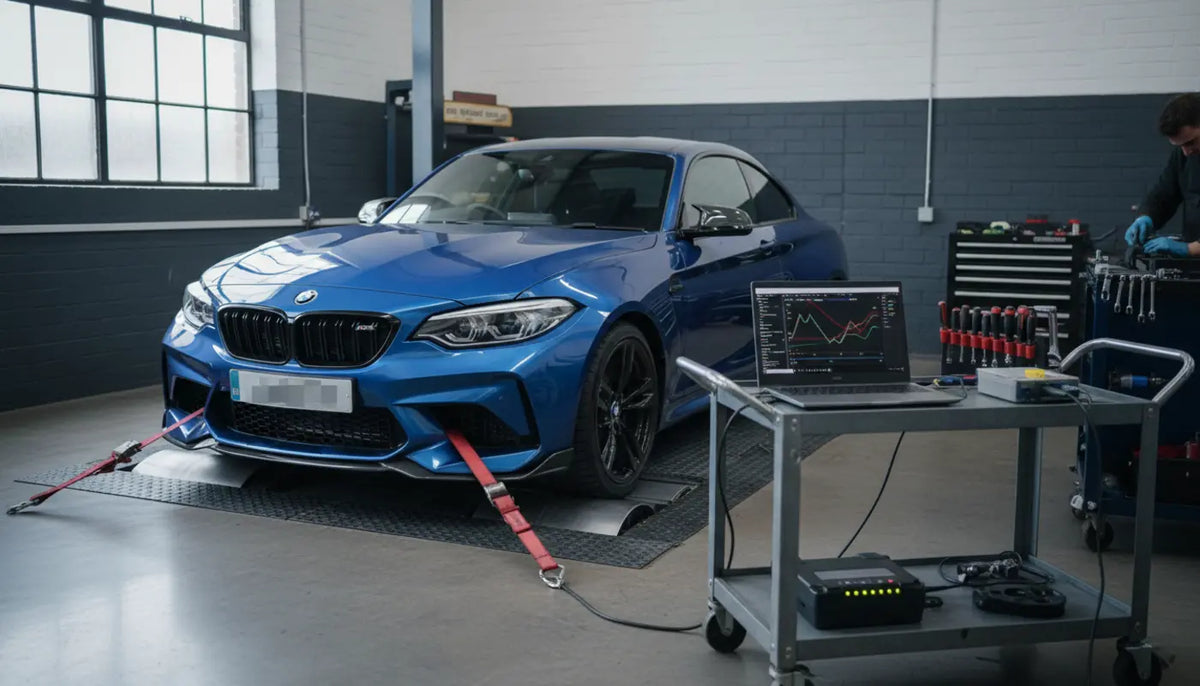
A BMW M2 G87 with the S58 engine can gain stronger, more usable performance from a Stage 1 ECU remap when the work is carried out with proper checks, safe calibration and dyno testing. The aim is not to make the car difficult to drive, but to improve how it responds, pulls and delivers torque on UK roads.
The G87 M2 is already a serious performance car, so Stage 1 tuning is best seen as a careful refinement of the standard setup. A good remap adjusts boost control, fuelling, ignition timing, throttle response and torque delivery so the car feels sharper and stronger across the rev range.
It is also normal to feel cautious before tuning a modern BMW M car. Warranty, insurance, engine safety and choosing the right specialist all matter, especially when the car already feels quick from the factory. That careful approach is sensible, and it usually leads to better long term results.
DKU Performance helps BMW owners across Walsall, Birmingham and the wider West Midlands with in house ECU remapping, dyno validation and clear advice before any changes are made.
BMW M2 G87 S58 Stage 1 ECU Remap Gains In The UK
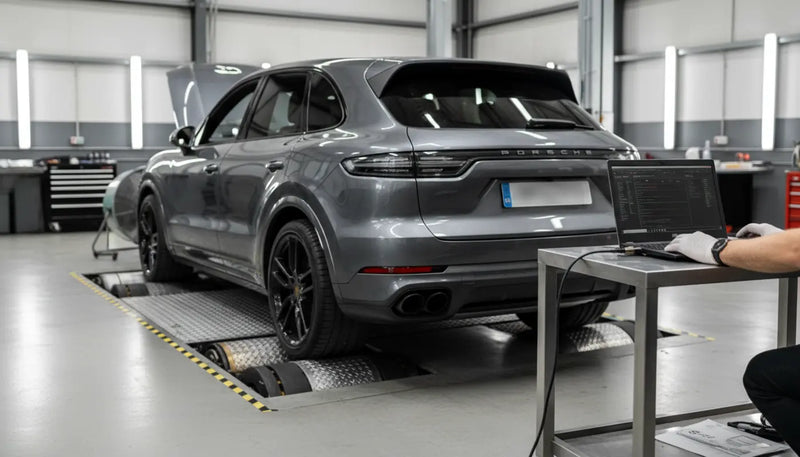
A BMW M2 G87 S58 Stage 1 ECU remap can improve peak power, mid range torque and throttle response while keeping the original hardware in place. The exact gains depend on the car's starting power, fuel quality, gearbox, ECU software, temperature and mechanical condition, so a proper baseline dyno test is the best place to start.
For many UK owners, the biggest difference is felt during real road driving rather than only at the top of a power graph. The car should feel stronger when overtaking, more eager when rolling onto the throttle and smoother in the way torque builds through the rev range.
A well written map can make an already fast M2 feel more alert without making it harsh, jumpy or unpleasant in traffic. DKU Performance talks customers through dyno results in plain English, so you understand what has changed rather than being handed figures with no clear explanation.
Before and after results should always be labelled clearly. Wheel horsepower, hub figures and estimated crank power are not the same thing, and mixing them together can cause confusion. The fairest process is to run a baseline test, apply the calibration, repeat the test in similar conditions and explain the results clearly.
What Is The BMW M2 G87 S58 Engine?
The BMW M2 G87 uses the S58 engine, a 3.0 litre twin turbo straight six that has quickly become one of the most exciting modern BMW M engines to tune. It offers strong factory power, a wide torque curve and a high revving feel that suits both daily driving and weekend enjoyment.
As standard, early G87 M2 models were rated at around 460 hp and 550 Nm, while later versions moved closer to 480 hp, with torque varying by gearbox and specification. That matters because not every M2 starts from the same baseline, so a proper assessment should begin with the exact car in front of the tuner, not a random figure found online.
The S58 is appealing because it responds well to careful calibration, especially in the mid range where most road drivers feel performance most often. Stronger overtaking response, sharper throttle input and improved torque delivery are often more useful than chasing one large peak horsepower number that only appears at the top of a dyno graph.
Why The S58 Is A Strong Remap Candidate
The S58 combines direct fuel injection, twin turbocharging and advanced engine management, which gives the ECU strong control over how the engine delivers power. In simple terms, the ECU is the engine's main control unit, and remapping is the process of fine tuning that software to make better use of the hardware already fitted.
For UK owners, the appeal is clear. The M2 G87 already feels quick, but a custom Stage 1 map can make it feel more responsive without needing major hardware changes. Even so, the strength of the engine does not make every tune safe by default, because fuel quality, heat, vehicle condition, torque targets and calibration choices all matter.
If you want to understand the wider tuning process before booking, DKU Performance explains its approach to ECU remapping in a simple, customer friendly way.
What Is A Stage 1 ECU Remap?
A Stage 1 ECU remap is a software based performance upgrade that usually keeps the standard hardware in place. On the BMW M2 G87 S58, that means the factory turbos, intake, exhaust system and emissions equipment are normally retained, while the ECU calibration is adjusted to improve power delivery.
Stage labels are common industry terms, not official legal standards, so one company's Stage 1 may not be the same as another. A responsible tuner should explain exactly what is being changed, what fuel is recommended, how the car will be tested and what result is realistic for your vehicle.
A Stage 1 remap may adjust boost pressure, fuelling maps, ignition timing, torque limiters and throttle response. The goal is not simply to add more boost and hope for the best. Good calibration is controlled, measured and repeatable.
Generic File Versus Custom Calibration
A generic file is a pre written map applied to a similar vehicle, while a custom calibration is adapted to the individual car. On a performance model like the G87 M2, custom tuning is usually the more sensible route because the tuner can consider the car's fuel, mileage, ECU software version, existing modifications and live data.
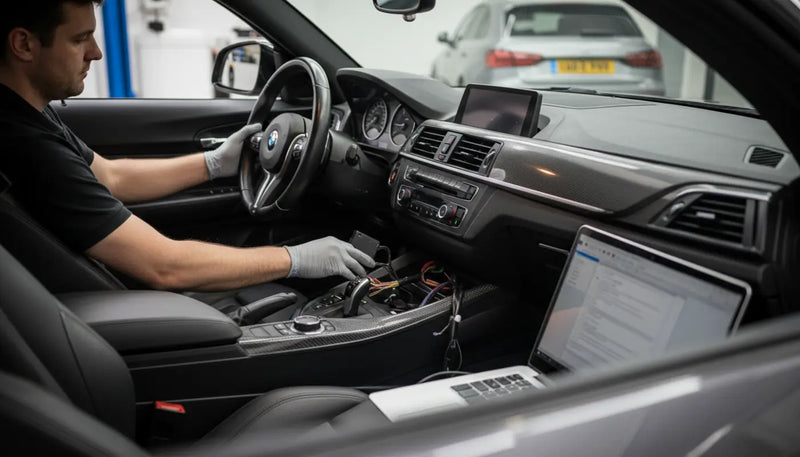
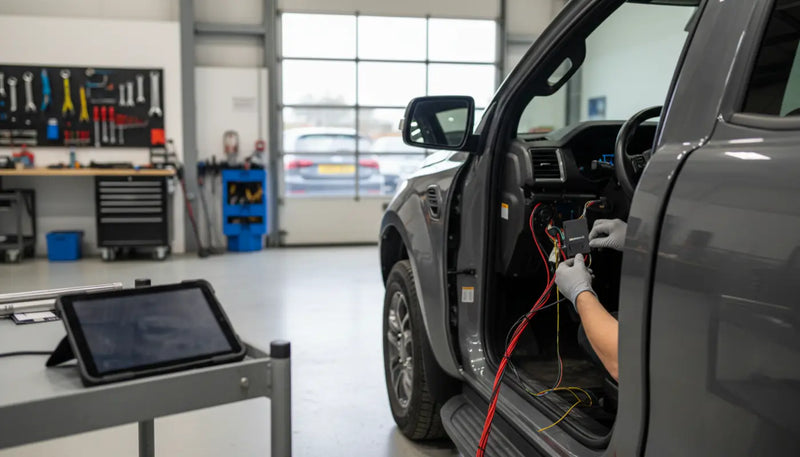
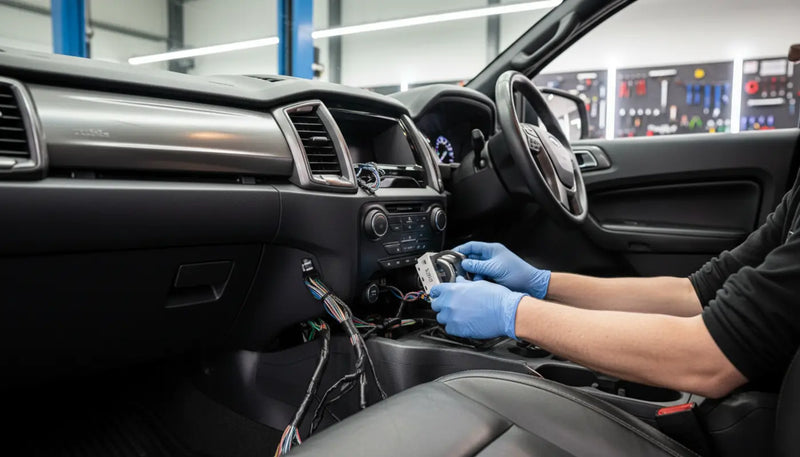
DKU Performance uses modern OBD equipment, dyno testing and real world validation as part of its ECU work. OBD simply means the diagnostic port in the car, which allows data to be read and, where access allows, software to be programmed without unnecessary strip down work.
BMW M2 Stage 1 Power Gains And Road Feel
BMW M2 Stage 1 power gains should always be judged alongside drivability, heat control and repeatability. A healthy S58 on suitable premium fuel will usually respond well, but no honest tuner should promise the exact same final figure for every car.
On the road, the improvement is often felt most clearly in the mid range. The car can pull harder from lower revs, respond more quickly to throttle input and feel more confident during overtakes. This makes the car feel more complete without changing its everyday character.
Peak figures still matter, but they are only part of the picture. A smooth torque curve, safe ignition behaviour and stable temperatures are just as important if you want the car to feel strong every time you drive it, not just during one dyno pull.
What About 0 To 62 Mph Times?
A remap can improve acceleration, but 0 to 62 mph times are affected by more than power alone. Tyres, road surface, temperature, gearbox strategy, launch control, traction and driver input can all change the result.
This is especially true with a high torque rear wheel drive car, where grip can become the limiting factor. More power is useful, but if the tyres cannot put it down cleanly, the stopwatch may not show the full benefit.
DKU Performance's BMW M2 G87 Remap Process In Walsall
DKU Performance begins with the basics because a strong tune starts with a healthy car. The team can check the vehicle, discuss service history, review any existing modifications and scan for fault codes before tuning work begins.
A baseline dyno run then helps show how the car performs before calibration. This gives the owner a proper starting point rather than relying only on factory figures or online claims.
Live data such as boost behaviour, temperatures, fuelling and ignition correction can then be reviewed to guide safe calibration choices. The team helps owners choose a sensible route rather than chasing big numbers for the sake of it, because the best tune is the one that suits the car and the driver.
Where ECU access allows, the original software can be read through the OBD port, analysed and adjusted. Modern BMW ECU work can depend on software version and access status, so a professional check is important before assuming every car can be flashed in exactly the same way.
DKU Performance also has a long history with performance cars, in house fabrication and tuning related work, including tuning upgrades for drivers who want a joined up plan rather than a one off guess. That practical background is useful when discussing future stages, supporting parts and how the car will be used day to day.
What DKU Checks During Calibration
- Boost target and actual boost behaviour
- Fuelling and air fuel control under load
- Ignition timing and correction activity
- Intake temperature and heat soak behaviour
- Torque delivery and drivability
- Fault codes and warning light status
After calibration, repeat testing helps confirm the improvement and gives the owner evidence of what has changed. The handover should include sensible fuel advice, maintenance guidance and a reminder to speak with the insurer before driving the car as modified.
What Is Included In A Stage 1 S58 Remap?
A Stage 1 S58 remap normally focuses on software changes that make the standard hardware work more effectively. Boost pressure control is one part of this, but more boost is not automatically better because the engine also needs correct fuelling, stable temperatures and sensible ignition timing.
Fuelling maps control how much fuel the engine receives under different conditions. Under heavy load, the calibration must support safe combustion, especially when the car is running on UK pump fuel. Premium 97 to 99 RON fuel is often preferred for tuned performance engines because it gives the calibration more resistance to knock.
Ignition timing is another key area. Adjusting timing can improve power, but too much can cause knock, which is harmful combustion inside the engine. This is why live data matters. A good tune does not ignore the car's safety systems. It works with them to create repeatable performance.
Throttle response can also be refined so the car feels sharper without becoming jumpy or difficult in traffic. That balance is important on an M2 because many owners use these cars on normal roads as well as for weekend drives.
Stage 1 Versus Stage 2 Versus Stage 3 For The BMW M2 G87
Stage 1 is usually the sensible starting point for a standard BMW M2 G87 because it improves performance without demanding major hardware changes. Stage 2 often adds supporting modifications such as intake, exhaust or cooling changes, depending on the tuning route and road legality requirements.
Whether Stage 1 is enough for your M2 depends on how you use the car, how much performance you want and how comfortable you are with extra cost, heat management and maintenance. For many road drivers, Stage 1 gives the best balance between performance, value and daily usability.
Stage 3 moves into more serious tuning, often involving larger turbos, fuelling upgrades, extra cooling and greater drivetrain considerations. It can be exciting, but it also brings more cost, more complexity and a greater need for careful maintenance.
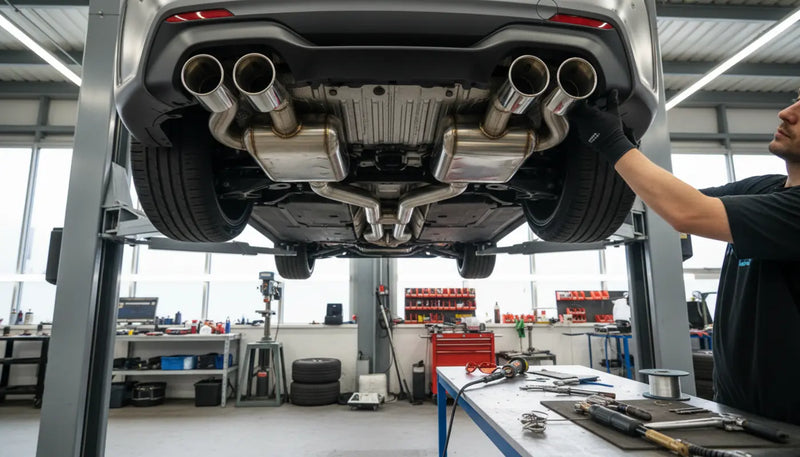
Owners thinking beyond Stage 1 should plan the full route before buying parts. DKU Performance's background in bespoke stainless steel exhaust systems can be useful when discussing flow, sound and future hardware goals, especially for customers who want quality workmanship and a tailored finish.
For an example of BMW related work from the DKU portfolio, the BMW M2 case study shows the type of performance car experience the workshop has across its project history.
Reliability, Insurance And Warranty Considerations
A Stage 1 remap can be suitable for a healthy S58, but reliability depends on far more than the engine badge. Service history, oil quality, spark plugs, ignition coils, cooling performance, fuel quality and driving style all affect long term results.
Before tuning, owners should make sure the car is well maintained and free from hidden faults. After tuning, it makes sense to watch for warning lights, service the car properly and use the recommended fuel. Treat the extra power with respect and the car is far more likely to reward you.
Insurance is not optional small print. ECU remapping is a modification and should be disclosed to your insurer, so contact them before the work and get confirmation in writing. For neutral UK consumer guidance on how modifications can affect cover, the Financial Ombudsman Service gives a helpful explanation.
Warranty is also worth checking properly. A remap may not automatically cancel every part of a manufacturer warranty, but a warranty provider may investigate whether non standard software contributed to a fault. If the car is still under BMW warranty or a third party warranty, ask for current written terms before tuning.
Road legality matters too. A road focused Stage 1 remap should not be treated as permission to remove petrol particulate filters, catalytic converters or other emissions equipment. Using an illegally modified vehicle on public roads can lead to legal, insurance and MOT problems.
Why Walsall And Birmingham Owners Choose Local Dyno Support
Choosing a local specialist gives BMW M2 owners the benefit of a physical inspection, baseline testing, live data logging and follow up support. For drivers around Walsall, Birmingham, Wolverhampton, Coventry and the wider West Midlands, that can be far more reassuring than a remote file with no meaningful conversation.
A proper local process also gives you the chance to discuss how you use the car. A daily driven M2, a weekend road car and an occasional track car should not always be calibrated with the same priorities. The best result is the one that suits your car, your fuel, your driving and your expectations.
If you are comparing tuning options, it is also worth reading DKU Performance's advice on choosing a remapping company, as it explains what to look for before trusting anyone with your ECU.
Booking A BMW M2 G87 S58 Stage 1 Remap In Walsall
If you are considering a BMW M2 G87 S58 Stage 1 remap, bring as much information as you can. Useful details include the model year, gearbox, current mileage, service history, fuel used, existing modifications and whether the car is under warranty.
DKU Performance can then advise on suitability, ECU access, testing and realistic expectations before the work begins. The aim is simple, stronger performance, clear evidence, sensible calibration and a car that still feels like a premium BMW M product rather than a difficult project car.
If you want safe, measured gains from your BMW M2 G87 S58, contact DKU Performance to ask questions, discuss your goals and book an assessment. The team will help you understand the best route before any tuning work starts.
Frequently Asked Questions
How Much Power Can A Stage 1 BMW M2 G87 Remap Add?
Power gains vary depending on the car, fuel, ECU software, dyno conditions and calibration strategy. A proper before and after dyno test is the best way to see what your own M2 has gained.
Does A Stage 1 Remap Need Hardware Upgrades?
Stage 1 is normally designed for standard hardware, although the car must be mechanically healthy. Any existing modifications should be checked before calibration.
Is The BMW S58 Safe To Remap?
The S58 is a strong tuning platform, but safety depends on the quality of the map, fuel, maintenance, temperatures and how the car is driven. Conservative, data led calibration is key.
Do I Need To Tell My Insurer About A Remap?
Yes, you should declare an ECU remap to your insurer before driving the modified car. Ask for written confirmation of cover, premium changes and any exclusions.
Will A BMW M2 Remap Affect Warranty?
It may affect warranty claims, especially if a fault is linked to non standard software. Check the current terms with BMW or your warranty provider before tuning.