BMW M140i B58 ECU Remap – Stage 1 & Stage 2 Power Gains
A BMW M140i B58 ECU remap can unlock strong and usable power gains from the factory 3.0 litre turbocharged straight six engine. Stage 1 is usually the best choice for owners who want sharper response and more torque on standard hardware, while Stage 2 suits drivers who want extra power with the right supporting parts and careful heat control.
If you own a BMW M140i, you already know it doesn't feel slow as standard. The appeal of remapping comes from the fact that the B58 engine has more to give, especially through the mid range where UK drivers feel the biggest difference during overtaking, motorway joining, and quick road driving.
A well written Stage 1 or Stage 2 remap can make the car feel sharper, stronger, and more eager without turning it into a difficult weekend toy. DKU Performance helps BMW owners across Walsall, Birmingham, and the wider West Midlands unlock that potential through careful ECU remapping, OBD flashing, dyno testing, and real driving checks, with a customer focused approach that keeps performance and reliability working together.
BMW M140i B58 ECU Remap Gains Explained
A BMW M140i B58 ECU remap changes the engine software so the car can make better use of its turbocharged engine. The ECU, also called the engine control unit, manages boost pressure, fuel delivery, ignition timing, throttle behaviour, and safety settings. When these areas are adjusted properly, the M140i can gain noticeable power while still feeling smooth and easy to drive.
The B58 engine is known for responding well to tuning because it has a strong base design, efficient turbo setup, direct fuel injection, and smart factory engine management. From standard, many owners know the M140i as a car with around 340 PS and 500 Nm, depending on the exact model, gearbox, and condition.
The point of a good remap is not just to chase the biggest number. It should improve the way the car drives every day, with better throttle response, stronger pull from lower revs, and more confidence when the road opens up. That balance is what makes the M140i such a popular tuning choice in the UK.
What Is The BMW M140i B58 Engine?
The BMW M140i uses the B58, a 3.0 litre turbocharged petrol straight six engine that has become a modern favourite among hot hatch and performance car owners. It is smooth, strong, and very tunable, which places the M140i in a sweet spot for drivers who want serious power in a compact rear wheel drive package.
The reason it responds so well to tuning is not magic. The engine has a strong structure, a capable turbocharger, good fuel delivery, and an ECU that gives skilled tuners useful control over how power and torque arrive. That means the car can be made faster without making it feel rough or awkward in normal traffic.
For many owners, the appeal is simple. The M140i can remain comfortable enough for daily use while gaining the kind of mid range punch that makes it feel far more urgent. It is the sort of upgrade that makes a familiar car feel fresh again without removing the BMW character.
Why The B58 Is A Strong Remap Candidate
The B58 is a strong remap candidate because it combines daily comfort with real tuning headroom. Its turbocharged straight six layout gives smooth power delivery, while the factory engine management allows the tune to shape how boost, torque, and throttle response are delivered.
For many owners, Stage 1 is more than enough for daily driving. A BMW M140i Stage 1 remap improves the areas you feel most, including rolling acceleration, overtaking power, and throttle response. Stage 2 builds on that by adding supporting parts that help the engine breathe better and manage heat more effectively.
If you are new to tuning stages, it helps to think of Stage 1 as software optimisation and Stage 2 as software with supporting hardware. The right choice should be based on how you use the car, not just the highest figure someone has posted online.
BMW M140i Stage 1 Remap Power Gains
A BMW M140i Stage 1 remap focuses on improving the factory hardware through software. No major bolt on parts are normally required, so it is often the best route for owners who want a stronger car without building a full modification list.
During Stage 1 tuning, boost pressure, fuelling, ignition timing, and throttle response are adjusted to suit safe road use. Realistic results vary because every car is slightly different. Fuel quality, gearbox type, vehicle condition, ambient temperature, tyres, and maintenance history all affect the final result.
As a sensible guide, many healthy B58 powered M140i models can move from the standard 340 PS area into the 400 to 420 PS range, with torque often rising into the 600 to 650 Nm area. The headline figures are useful, but the main improvement is how the car feels on the road.
A good Stage 1 calibration gives stronger pull from low and mid revs, quicker response when you press the throttle, and more confidence when overtaking. It should still idle cleanly, move through town smoothly, and behave like a BMW should when you are just popping to the shops and somehow taking the long way home.
What Changes During A Stage 1 Tune?
Stage 1 tuning changes the ECU software that controls how the B58 engine uses air, fuel, and spark. Boost pressure optimisation helps the turbo work more effectively, while fuel and ignition changes help the engine turn that extra airflow into usable power.
Throttle mapping can also be refined so the car feels more responsive without becoming jumpy. A proper calibration is not about pushing every setting as far as possible. The aim is to create repeatable power that the engine can deliver safely and consistently.
DKU Performance checks the car first, extracts and reviews data through the OBD port, fine tunes the ECU software, and then validates the results through dyno equipment and real driving. Stage 1 suits owners who want a clear jump in performance while keeping the car close to factory hardware form.
BMW M140i Stage 2 Remap Power Gains
A BMW M140i Stage 2 remap is designed for owners who want more than a software only tune. It normally uses supporting modifications that help the engine manage extra airflow and heat, which allows the calibration to safely request more from the B58.
On the M140i, Stage 2 supporting parts often include improved cooling, better intake flow, and suitable exhaust related upgrades where they are appropriate for UK road use. With the right setup, a healthy Stage 2 M140i can often reach around 440 to 470 PS and 650 to 720 Nm, although the final result depends on the car and parts fitted.
Stage 2 can deliver stronger peak power and a harder pull at higher speeds, but the tune must match the exact hardware on the vehicle. A generic file that ignores live data is not the same as a carefully checked calibration that has been tested on the car in front of the tuner.
Owners should also remember that power figures can be quoted in different ways. Crank figures and wheel figures are not the same, dynos can read differently, and UK weather can affect results. A repeatable, well logged Stage 2 tune is worth more than a one off number that only appears on a perfect day.
Stage 2 Supporting Modifications
Stage 2 tuning works best when the hardware supports the software. An upgraded intercooler helps reduce intake air temperatures, which matters because cooler air is denser and more stable during repeated acceleration. Better heat control also helps the ECU maintain performance instead of reducing power when temperatures rise.
Exhaust flow can also matter when aiming for higher output. DKU Performance designs and builds custom stainless steel exhaust systems in house using high quality T304 stainless steel, so the team can advise on flow, sound, and fitment where exhaust upgrades suit the customer's goals.
A good intake setup can help the turbo breathe more easily, but bigger is not always better. The right combination depends on the car, the tune, and how it will be used. Some owners want strong road performance with factory like manners, while others prefer a more focused weekend setup.
Any Stage 2 upgrade should stay suitable for UK road use, emissions requirements, and insurance declaration. It is not the most exciting side of tuning, but it matters if you want more power without awkward problems later.
BMW M140i Before And After Figures
BMW M140i before and after figures can give a useful guide, but they should not be treated as fixed promises. Your final result depends on fuel quality, gearbox, vehicle health, tyres, weather, dyno type, and supporting parts.
- Stock M140i, around 340 PS, around 500 Nm, and around 4.6 to 4.8 seconds to 62 mph depending on gearbox and conditions.
- Stage 1 remap, around 400 to 420 PS, around 600 to 650 Nm, and around 4.0 to 4.3 seconds to 62 mph with good traction.
- Stage 2 remap, around 440 to 470 PS, around 650 to 720 Nm, and around 3.7 to 4.1 seconds to 62 mph with the right setup and conditions.
The torque gain is usually what owners notice first. It makes the car feel stronger in everyday driving, especially when you roll onto the throttle in higher gears. The 0 to 62 mph figure can improve too, but traction, tyres, road surface, and driver input can make a big difference. The car needs grip as well as grunt.
DKU Performance BMW M140i B58 Remap Process In Walsall
DKU Performance follows a measured approach to BMW M140i B58 ECU remapping because power is only useful when it is controlled, repeatable, and suited to the car. The process starts with checking the vehicle's current condition and engine data, rather than assuming every M140i is ready for more boost straight away.
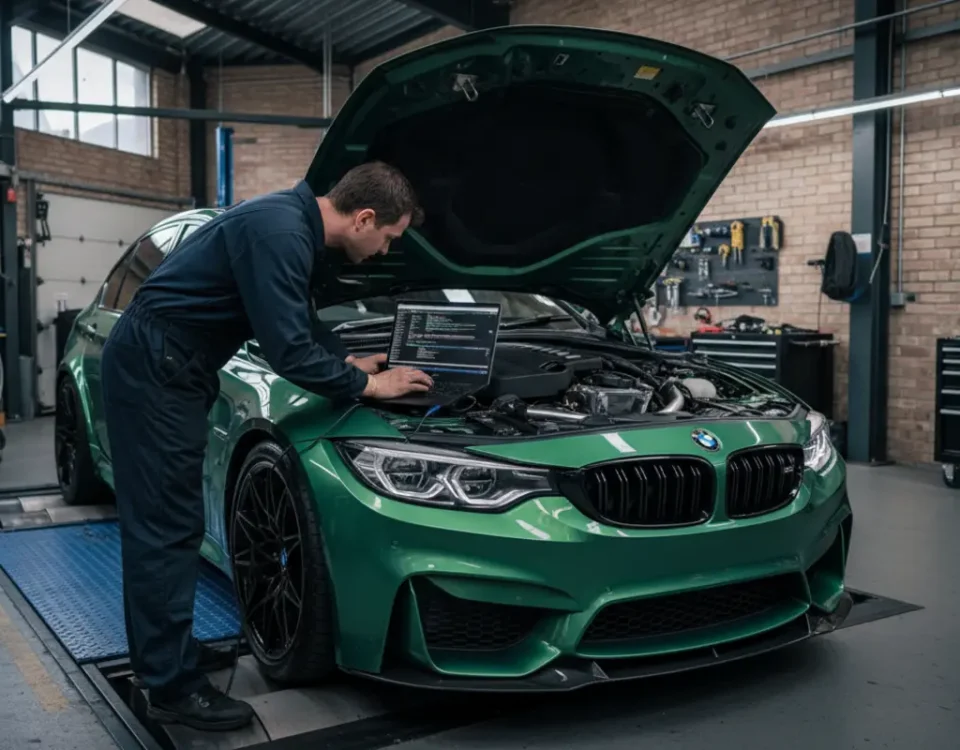
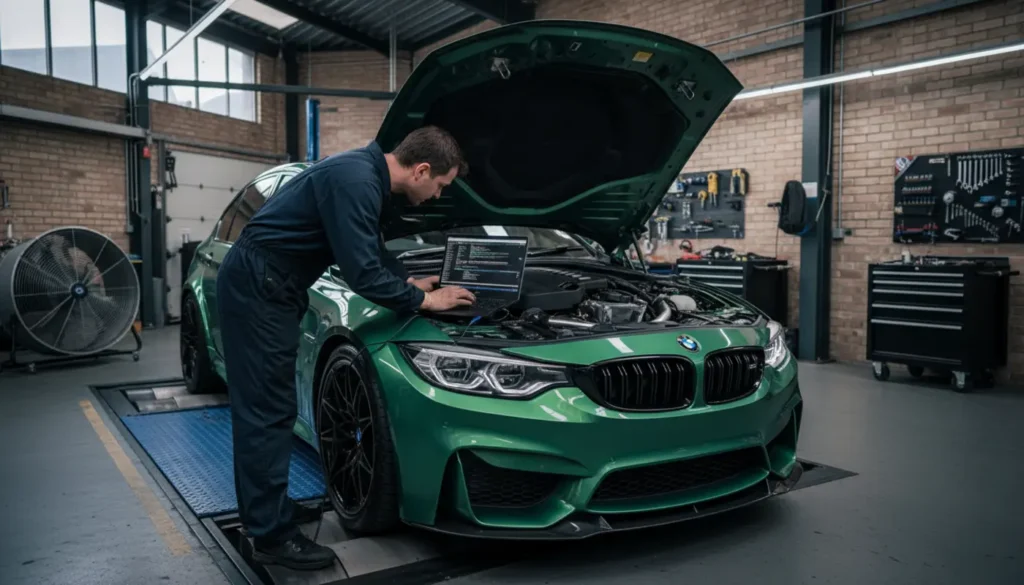
The team uses modern equipment connected through the vehicle's OBD port, which allows data to be extracted and reviewed. DKU Performance then adjusts the ECU software carefully, including areas such as fuel delivery, ignition timing, boost behaviour, and throttle response.
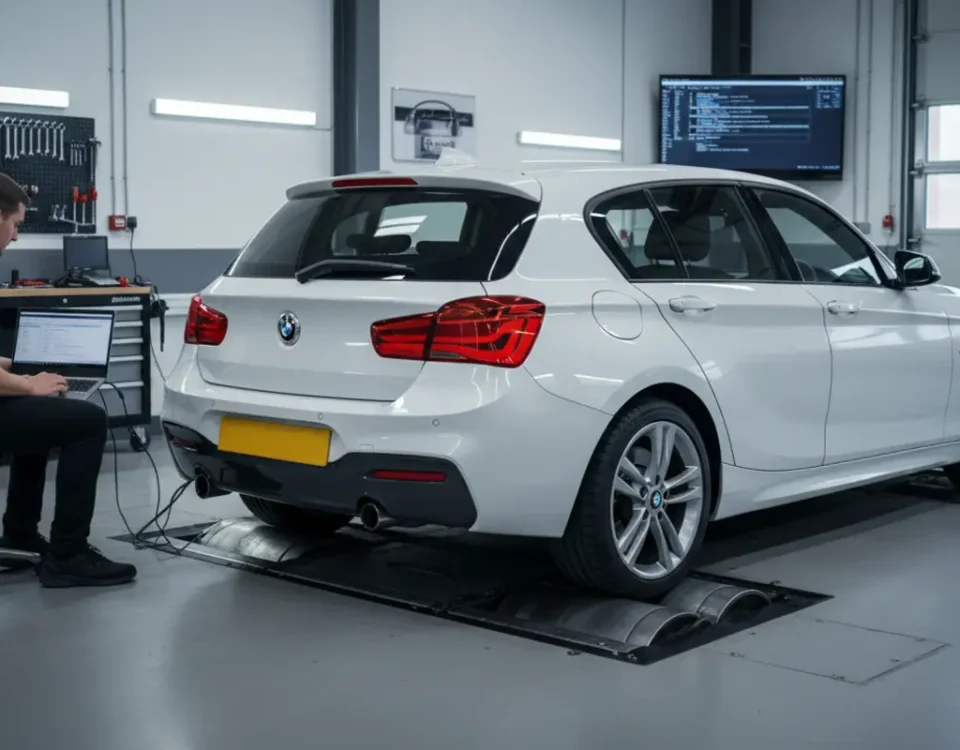
After the software work, the car is tested and validated on the dyno and through real driving checks. This matters because two M140i models can look identical but behave differently. One may have fresh servicing, strong fuel quality, and healthy sensors, while another may have tired plugs, heat soak, or small faults that only appear under load.
Dyno Testing And Data Logging For Safe Results
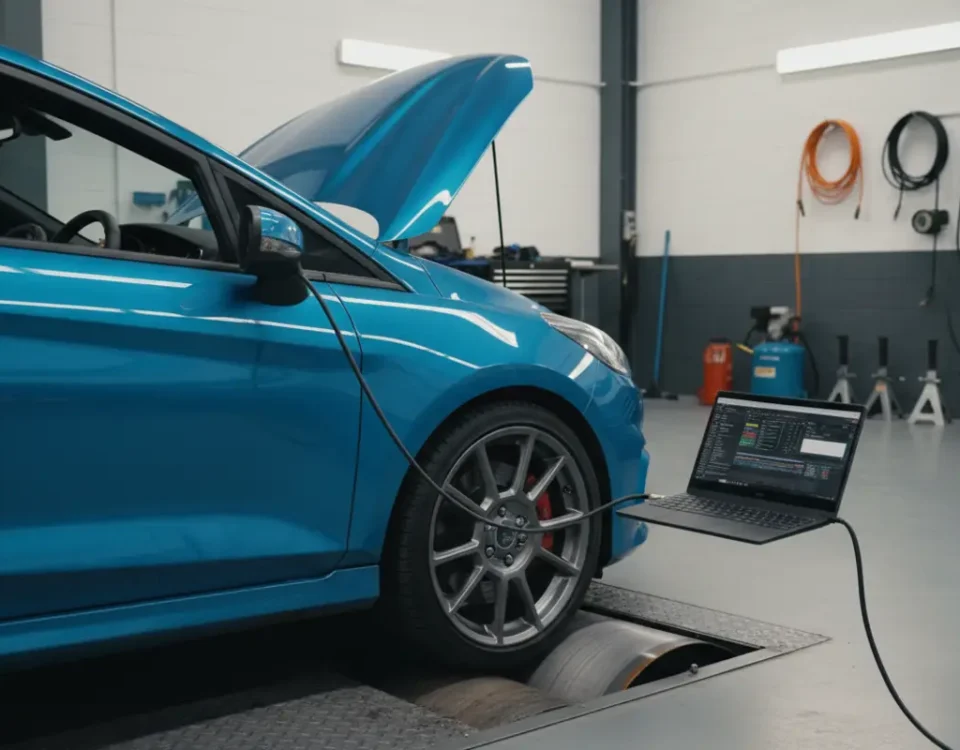
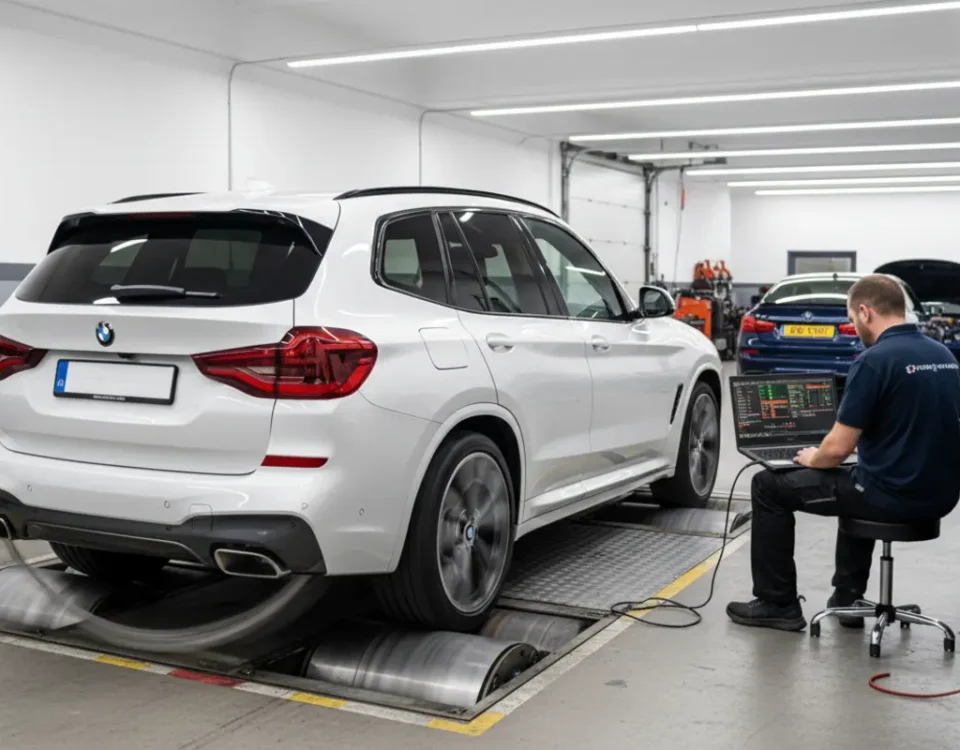
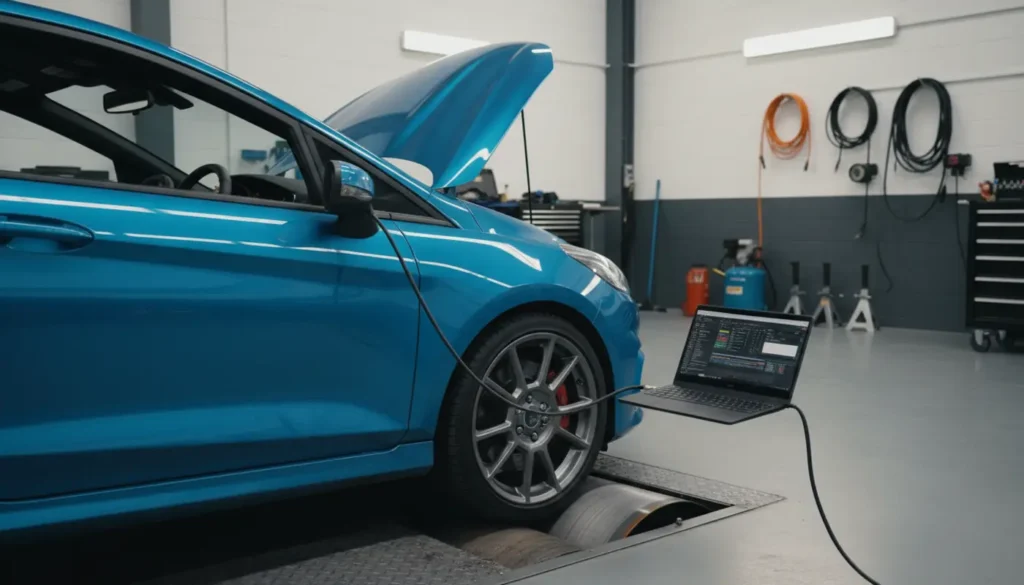
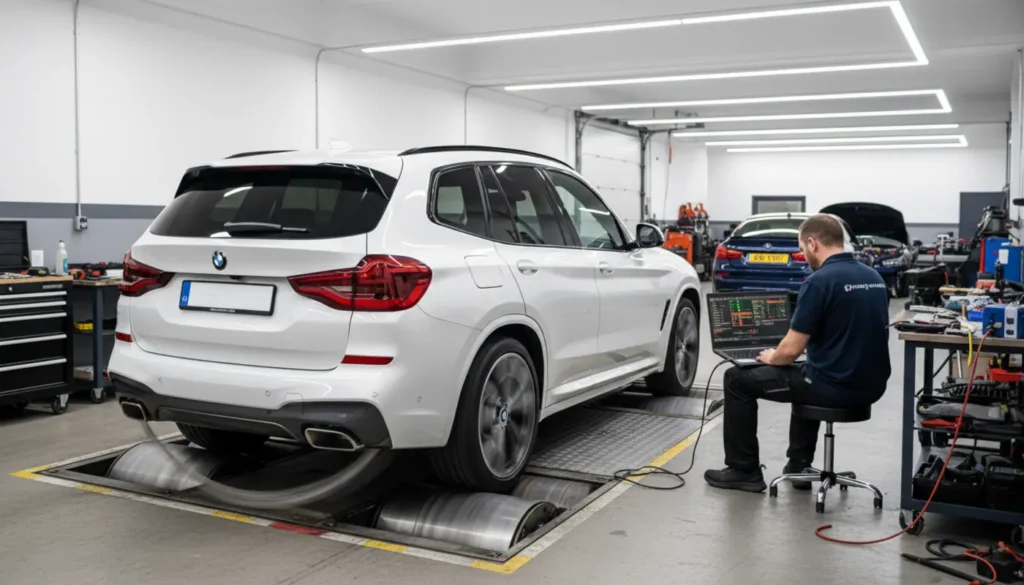
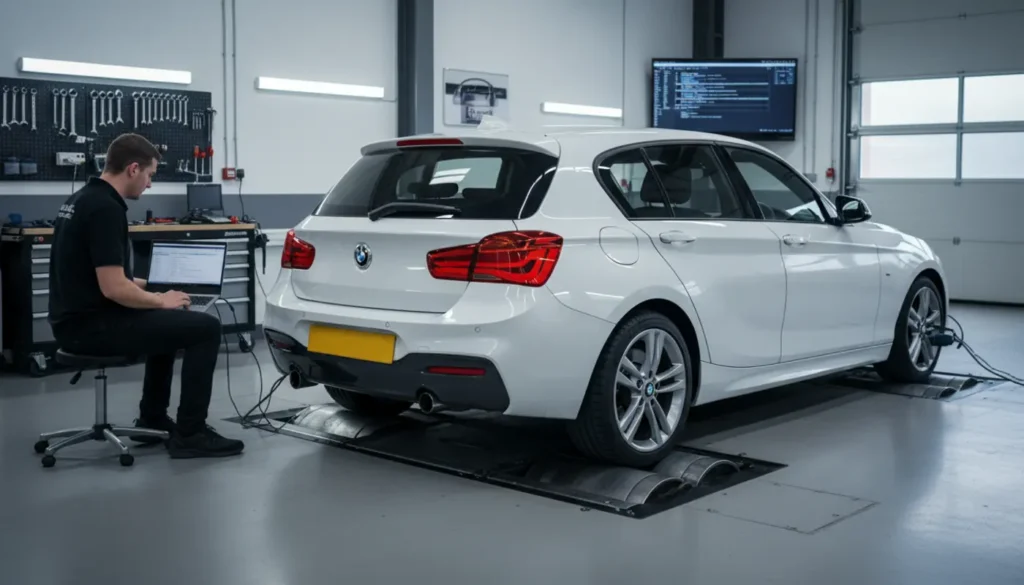
Dyno testing and data logging help confirm that a BMW M140i remap is producing safe, consistent power. A rolling road dyno gives a controlled place to check power delivery, torque curve behaviour, and repeatability, while live data logging shows what the engine is doing under load.
In simple terms, logging helps the tuner see boost behaviour, air temperatures, fuel delivery, and correction activity. It confirms whether the car is happy, not just louder and more enthusiastic. That is especially important on a turbocharged engine like the B58, where heat and load must be managed carefully.
DKU Performance has built its reputation through hands on performance work, from bespoke exhaust fabrication to ECU calibration and vehicle upgrades. The workshop's BMW experience gives owners confidence that the team understands how the B58 behaves on the road as well as on a screen.
A safe tune should feel strong but composed. It should not surge, hesitate, or show warning lights after a few spirited drives. Proper logging, sensible calibration, and honest advice all help keep the B58 doing what it does best, which is delivering smooth and rapid performance without unnecessary drama.
Reliability And Longevity After A B58 Remap
Reliability after a B58 remap depends on the quality of the tune, the health of the car, and how well it is maintained afterwards. The B58 has a strong reputation, but remapping increases load, torque, and heat, so a sensible and well tested calibration is the better long term choice for most road cars.
Before tuning, owners should make sure servicing is up to date and the car is mechanically healthy. Spark plugs, ignition coils, cooling system condition, intake leaks, and fuel quality all matter more once output is increased. If the car already has a fault, a remap will not fix it. It will usually make the problem show itself sooner.
Heat management becomes even more important at Stage 2. Repeated acceleration can raise intake and exhaust temperatures, which is why supporting hardware and careful calibration matter. Sensible warm up habits, quality fuel, and regular maintenance all help keep the B58 happy after tuning.
UK Insurance And Warranty Considerations
UK owners should treat ECU remapping as a vehicle modification. You should tell your insurer before or immediately after the work is carried out, because undeclared modifications can affect your cover. If you are unsure how your insurer views remapping, ask them directly and keep a record of the conversation. General UK vehicle information is available through GOV UK.
Warranty is another point to consider. It is not the most exciting part of tuning, but it is worth checking properly before you chase more power. If your BMW is still covered by a manufacturer or approved used warranty, a remap may affect claims linked to the engine, gearbox, or drivetrain.
The simple rule is to be honest, declare the modification, and make sure the car remains legal for road use. It is far better to sort the admin early than to have a stressful conversation after something has gone wrong.
Stage 1 Or Stage 2 Which Should You Choose?
Stage 1 is usually the best choice if you want strong gains, everyday manners, and no major hardware changes. It gives the M140i a sharper and more muscular feel while keeping the build simple, which is why it suits many UK owners so well.
Stage 2 makes sense if you already plan to upgrade supporting parts and want a more serious performance step. It can offer stronger top end power and more tuning headroom, but it also brings higher costs, more parts to maintain, and greater responsibility around heat management, insurance, and warranty.
- Choose Stage 1 if you want a software only upgrade with stronger torque and sharper response.
- Choose Stage 2 if you are ready for supporting hardware and want a more focused performance setup.
- Pause before tuning if the car has unresolved faults, unclear warranty cover, or insurance questions.
The best choice is the one that matches how you actually use the car. A daily driven M140i in Birmingham traffic needs smoothness, cooling stability, and low speed manners just as much as dyno power. A weekend road car may justify more hardware, but it still needs proper calibration if you want it to last.
Why M140i Owners Choose DKU Performance
BMW M140i owners across Walsall, Birmingham, and the wider West Midlands choose DKU Performance because the workshop understands both sides of performance tuning. More power is exciting, but it needs to be delivered with care, clear advice, and proper testing.
DKU Performance is a West Midlands performance specialist with around two decades of hands on automotive experience. The team works across ECU remapping, tuning upgrades, custom exhaust fabrication, carbon and DPF cleaning, vehicle maintenance, and security systems, giving customers practical support beyond a single software file.
If you are considering a Stage 1 or Stage 2 B58 remap, the smartest next step is a conversation about your car, your goals, and how you use it. Whether you want a quick daily driver with stronger mid range punch or a hardware supported Stage 2 build, DKU Performance can help you approach the upgrade properly from the start.
If you are ready to find out what your M140i can safely achieve, speak with DKU Performance in Walsall and get advice based on your car, your goals, and your driving style.
Frequently Asked Questions
Is A BMW M140i B58 Remap Worth It?
Yes, for many owners it is one of the most rewarding upgrades because the B58 responds well to careful calibration. The biggest everyday difference is usually stronger mid range torque and sharper throttle response.
Does A Stage 1 M140i Remap Need Hardware Upgrades?
A Stage 1 remap is normally designed for standard hardware, assuming the car is healthy and well maintained. A pre tune check is still important before increasing power.
What Mods Are Needed For Stage 2 On A BMW M140i?
Stage 2 usually needs supporting hardware such as improved cooling, better airflow, and suitable exhaust related upgrades where legal and appropriate. The exact list should match the car and the owner's goals.
Will A Remap Affect My Insurance?
Yes, a remap is classed as a modification and should be declared to your insurer. Not declaring it could affect your cover if you need to make a claim.
Can DKU Performance Remap My BMW M140i In Walsall?
Yes, DKU Performance offers ECU remapping using OBD equipment, data analysis, dyno validation, and real driving checks. Get in touch with the team to discuss your M140i and the right stage for your setup.