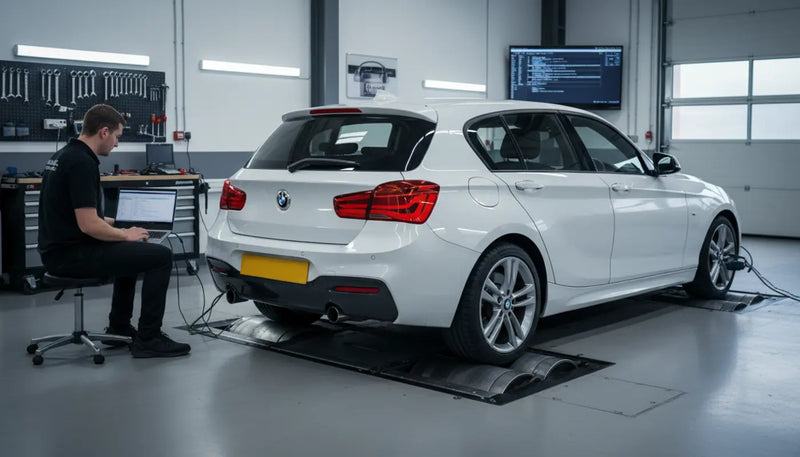
Engine performance is a major factor in your car's speed, power, fuel efficiency, and drive quality, but many people don’t give it the consideration it deserves.
To help you maintain your car, we’ve highlighted several factors that affect engine performance and how to address them, including maintenance and suggested modifications.
The modern internal combustion engine is a mechanical marvel, but many things can affect your engine performance and even damage your car if left unchecked. In this article, we’ll be highlighting all the little things that can affect your engine performance and recommending ways to keep your engine ticking along at peak performance, including:
Engine Maintenance
Most modern engines are made to last for well over 100,000 miles, and it’s not unusual to see an engine surpass 200,000 miles with proper care and maintenance. Your engine should last for around ten years if you give it routine maintenance, and even longer if you give it a great deal of care, including preventative maintenance.
Without proper maintenance, your engine will accumulate dirt, oil, and minor damages, making it much more likely to suffer a catastrophic failure before the 100,000 miles or 10-year milestones. Fortunately, even simple measures like changing your air filter and motor oil help maintain your car engine, so you don’t need to look for ECU remapping near me to find a mechanic to run a complete diagnostic on your car.
What does Engine Maintenance Involve?
Routine maintenance is essential for keeping your car running, and while there is no one-size-fits-all guide, most car manufacturers recommend you carry out maintenance at certain intervals. You should always refer to the owner’s manual, seller, or service professional for specific advice on servicing your car, but we’ve included some useful guidelines below:
Every 3,000 – 7,000 miles:
You should replace the motor oil and oil filters according to the manufacturer’s guidelines, most of which suggest replacing them between three and seven thousand miles. Additionally, most manufacturers encourage you to inspect the levels of transmission fluid, coolant, power steering fluid, windshield washing fluid and the wipers, tires, and all exterior lights.
Every 15,000 – 30,000 miles:
After 15,000 miles, you should consider replacing the air and fuel filters and inspecting the battery, coolant, and power steering fluid. Additionally, inspect the coolant, radiator hoses, HVAC system, brake pads, and all the components of your suspension system. To carry out this level of maintenance, it may be worth taking your car into a garage and having a professional double-check these parts.
Every 35,000 – 50,000 miles:
After 35,000 miles, your electrical systems may show signs of wear, so inspect and replace your car battery, spark plugs and spark plug wires as needed. However, very few people will be able to carry out these repairs themselves, so you may wish to search for garages that offer ECU remapping near me, as they should also be able to inspect your electrical systems.
Every 60,000 miles:
After 60,000 miles, extensive maintenance may be required, so you should replace your oil and air filters, brake pads, brake fluid, radiator hoses, coolant, power steering fluid, and timing belt. You should also thoroughly inspect your HVAC, suspension, and tires to ensure that all the engine, transmission, cooling, brake, and suspension components are in good working order.
Regular Tyre Maintenance
When thinking about a car’s performance and handling, tires are just as important (if not more than) the engine, as they are responsible for turning your input into motion. To ensure that your tires are in good working order, you should regularly inspect them for signs of wear and damage by looking out for warning signs like:
Shoulder Wear:
The shoulders (inner and outer edges) of your tyres wear out more rapidly if your tyres are under-inflated, so consider topping up the air levels if you notice shoulder wear. Under-inflated tyres can also cause performance issues with breaking and fuel efficiency, so you should ensure they are kept at the right air pressure by checking them regularly.
Centre Wear:
Contrastingly, excess wear on the centre of your tyres is caused by over-inflated tyres, which also increase your risk of a blow-out, affect your ability to brake, and increase fuel consumption. To find the recommended tyre pressure for your car, we recommend reading the owner’s manual or searching the manufacturer’s official website for guidance.
One-Sided Wear
Tyres that are only worn on one side are a symptom of incorrect camber alignment – the angle of the tyres which can be observed by standing in front of your car. Your tyres should be positioned vertically, so if they are angled outwards (positive camber) or inwards (negative camber), they are misaligned, and you should have your wheels aligned as soon as feasible.
Spot Wear:
If a tyre only wears in one place, it is referred to as spot wear. Faulty suspension parts usually cause this, so you should inspect your maintenance if you notice a tyre only wearing in one place
Diagonal Wear:
Diagonal wear (also known as cupping wear) is the wearing of the tyre tread in several patches, typically in a diagonal pattern. This is usually caused by a faulty suspension, incorrect wheel alignment, or unbalanced tyres.
Feather-edged Wear:
If the tread blocks on your tyres are ‘feathered’ (i.e., worn down on one edge), this is known as feather-edge wear and is often caused by faulty camber alignment. If you notice feather-edge wear on your tyres, you should have your wheels aligned as soon as possible.
Tread Wear:
Lastly, even if your tyres aren’t showing any peculiar wear patterns, you should regularly check the level of wear sing the tread wear indicators – rubber bars running across the central belt of the tyre. Once your tyre wears down to the same level as the tread wear indicator, you need to replace your tyres.
Check the Brake Performance
Although it isn't frequently discussed, keeping your brakes well-maintained is one of the best things you can do to keep your car in safe working order. All brakes require regular inspections and servicing, and you should ensure that any replacement parts are of a consistent quality for the most reliable performance.
Strange noises, a hard or low pedal sensation, squealing, vibrations, warning lights on your dashboard, pulsing, and brake grabbing are all warning signs of faulty breaks. If you notice any of these red flags, seek immediate assistance from a qualified mechanic, as waiting until the brakes are "metal on metal" can result in car accidents and high repair costs.
Maintain Electronic Components
The battery, starter, and alternator are the three most significant parts of any vehicle's electrical system, as they are central to the normal functioning of the engine. Due to the cyclical nature of how these systems interact, an electrical issue in one component will affect the others and potentially cause a malfunction if left unchecked.
As discussed in the previous section on what engine maintenance involve, regular inspection and servicing of your car’s electrical systems is a vital part of maintenance. If an electrical part is malfunctioning, you should try to find a mechanic that can diagnose and repair electrical issues by searching for ECU remapping near me or going to a trusted garage.
Conclusion
Poor maintenance and parts failures are the most common cause of declining engine performance, so you should do your best to monitor and maintain your car’s mechanical, hydraulic and electrical systems for reliable performance. Any carelessness or mismanagement can lead to several faults in the engine and affect its performance significantly.